I always say I’m excited to announce a new book. But this time I’m even more excited than normal. Gracewing in the UK has done me a great favor in bringing out a book that pulls out all the stops. O Shining Light: Old English Meditations for Advent and Christmastide is the first stand-alone, poetic translation of the Old English Advent Lyrics, a poem that opens the Exeter Book. (The Exeter Book is the first anthology of English poetry, copied down in the southwest of England sometime in the later tenth century.) You can get a copy here!
The Advent Lyrics are a set of short meditations on the “O Antiphons” sung at Vespers leading up to Christmas, and several others. (O Come, O Come Emmanuel” is based on the O Antiphons too.) The early English poet gave us a heartfelt, brooding, and celebratory poem. At the same time, it can be hard for modern readers to see what he is doing clearly at first blush, so we’ve included commentary that breaks open the poetic and theological riches of the poem too. Guides for individual and group reflection too make the book perfect for devotional Advent reading.
I’m particularly delighted because of the following features: my wife Mamie and I collaborated on the Introduction and Commentary; Daniel Mitsui provided illustrations inspired by Anglo-Saxon manuscript illustrations that frame the poem thru-out; Br. Paul Quenon, a terrific poet, photographer, and Cistercian monk, provided a welcoming and astute foreword; and the crew at Gracewing set the work in splendid typeface imitative of Anglo-Saxon script. It’s a poet’s (this poet’s) dream book.
Oh, and for anyone who might want to hear the original poem read aloud, I have posted audio files of myself reading the lyrics here. You can follow along in your book, just like when we were kids! 🙂
this new supplemental subgrouping of sna poems, the “supplementum anthropocenum” will showcase occasional moments of exceptional, natural rupture in the urban and other built environments.
in one of my seminars this term, my students and i are talking about how ‘nature’ isn’t ‘out there.’ (and the troubles that arise from the view that it is.) thought i should start taking it seriously in this series too.
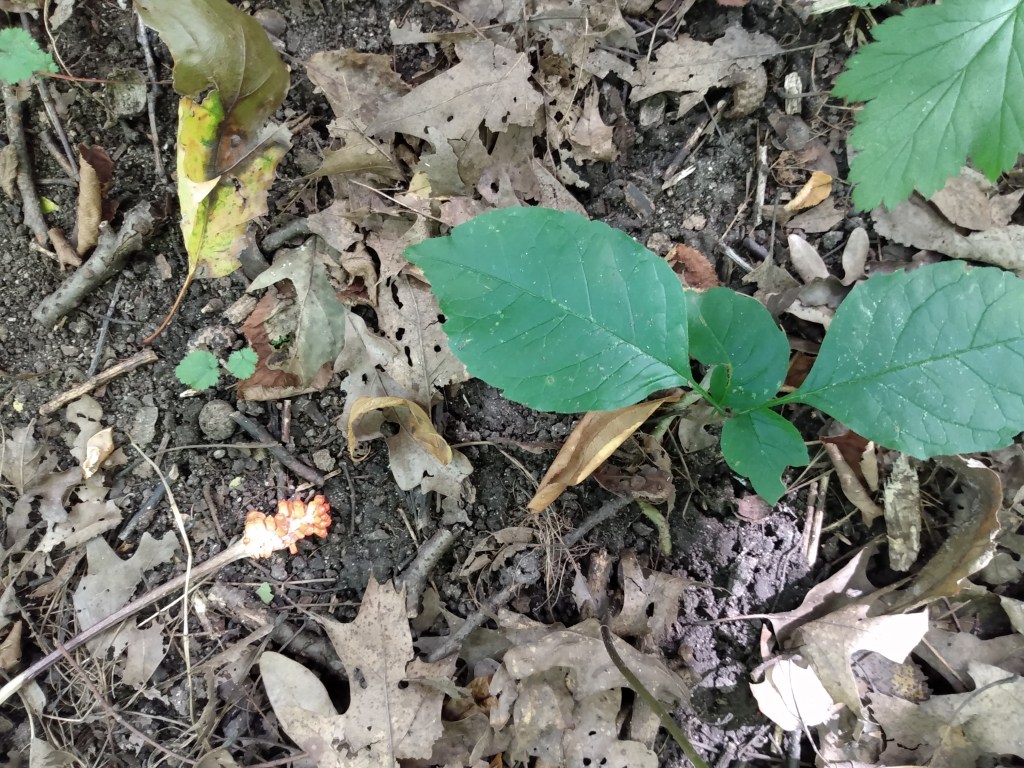
here, a patch of stinkhorns continues to work down the wood chips in a median strip heading into downtown milwaukee (it fruits a few times a year), while a vigorous stand of evening primrose beautifies an abandoned lot on the city’s lower east side. how is this not ‘nature’?
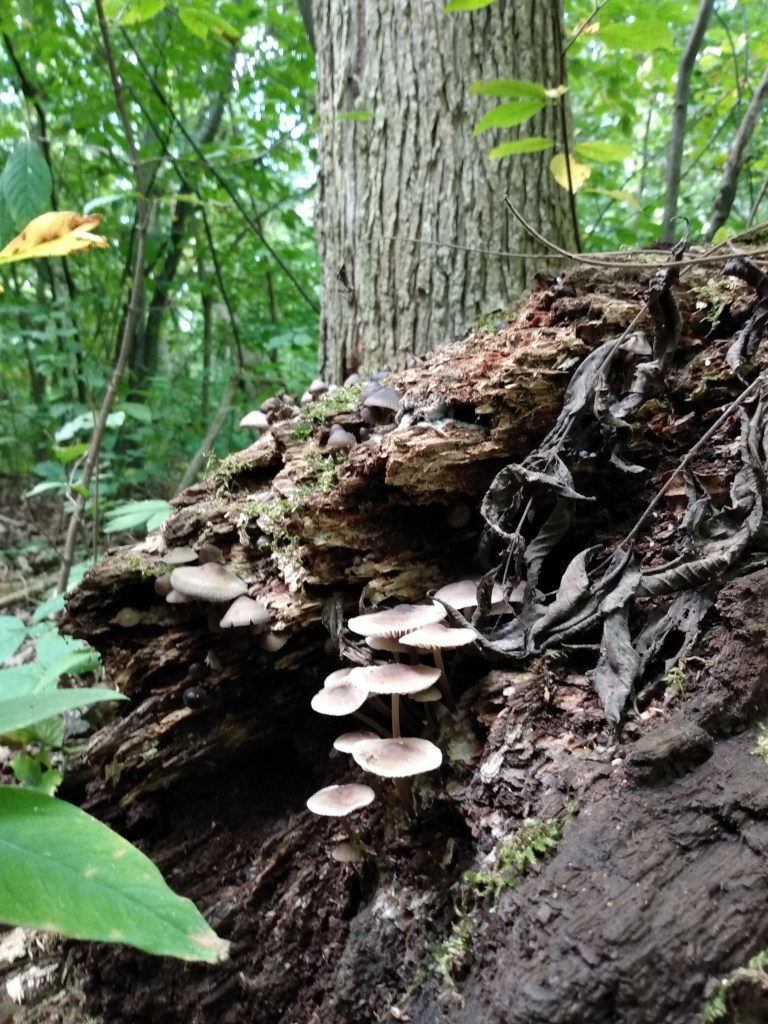
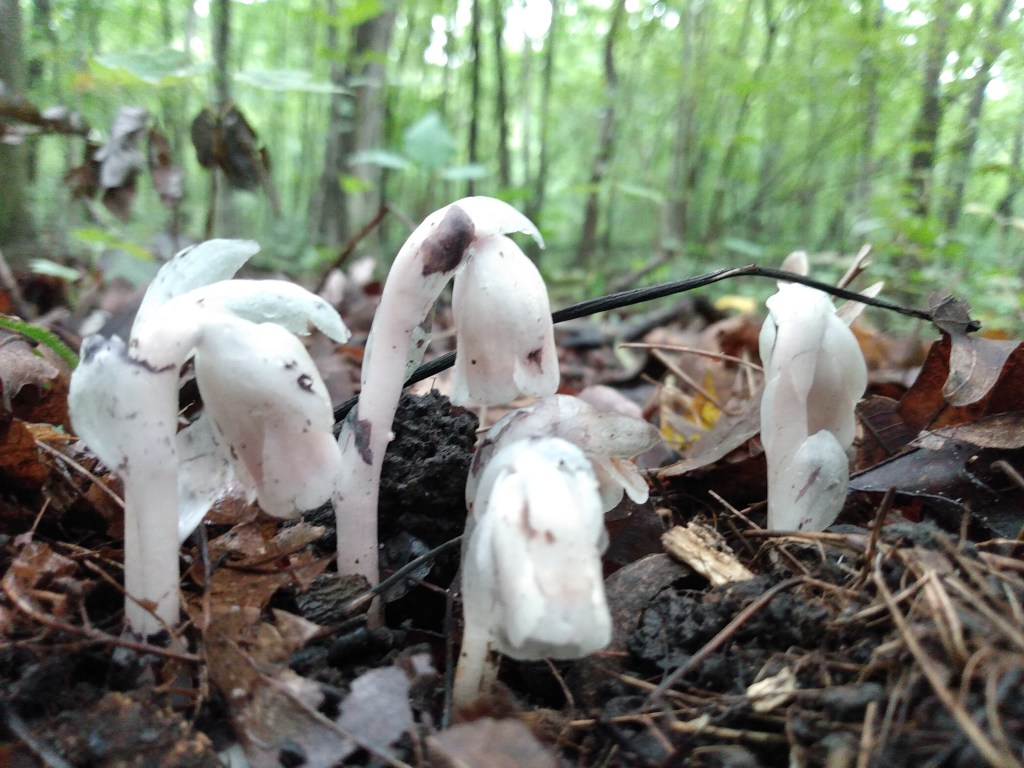
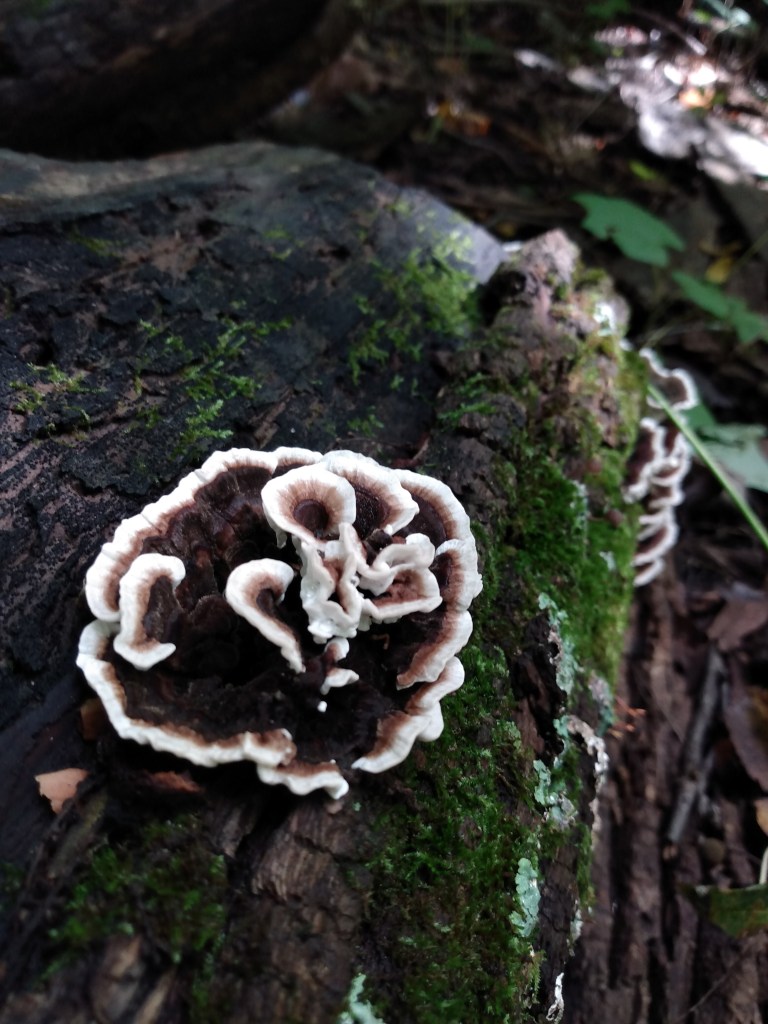
sanders park state natural area is set within a park and ringed ’round by exculpating road(!). two different kinds of forest grow on swells and swale, an ancient terrace of lake michigan. an intermittent stream flows thru the whole; lots of wildflower and fern species.
thanks to racine county parks for keeping this patch of earth.
In honor of today beginning Fall Embertide, the Quatuor Tempora (Four Times) of fasting and prayer that go way back in the Latin Church, here is a poem from my 2018 collection Sunk in Your Shipwreck, “My Embering.”
(For any liturgy buffs: I do know that in the Extraordinary Rite ordo for this year the Fall Ember Days are moved to next week, but it’s b/c of a technicality of the 1962 reform that I’m not worrying about–since I don’t follow the old rite anyhow, I’m sticking with the prior 1400+ year tradition.)
Muskego Park Hardwoods is an old-growth southern dry-mesic forest in Waukesha County, Wisconsin. Some past grazing has brought in new species of wildflowers, and a healthy blend of different hardwoods stand strong. Thanks to Waukesha County for preserving this old-growth community!
An essay of mine bringing together my interest in the Benedictine monastic tradition with my concerns about the pervasive (and pernicious) influence of Big Tech has just been published in The Windhover.
In the essay, I bring to bear on our screen-saturated consciousnesses two key, foundational insights of the western monastic tradition: the daily practice of calling to mind one’s own death (Rule of St. Benedict 4.47) and the call to treat all things like “the vessels of the altar” (Rule of St. Benedict 31:10).
In light of these and other teachings of the monastic tradition, I suggest that “If we were to tend to our own attention with care and concern, we might individually and collectively find ourselves again, find the stable parts of who we are, and begin to build something new with the technological advances that we have surrounded ourselves with . . .” Doing so would bring us into accord with Benedict’s prescription to “let peace be your quest and aim” (Rule of St. Benedict Prologue.17).
The Windhover doesn’t make its contents fully available online, so if you have an interest, please do help support a literary journal open to a variety of Christian perspectives and that publishes solid poems, fiction, and essays by buying a copy here.
toadflaxsurprise green heron on the rocksrough blazing star
lakeshore state park is surrounded by lake michigan with a view of downtown milwaukee. restored prairie growing over earlier construction debris is the organic highlight–what we can do if we put our collective minds to it.