after my second collection went to the publisher i’ve turned my eye toward finishing a couple other book projects, so not as much poetry writing of late, but the dry spell is broken momentarily as the new verse review just put out my translation of a fragmentary versification of the ‘christ and the samaritan woman’ scene from the gospels worked up in old high german verse likely in the 9th century. the general dialect (alemanic) is the same as where one of my maternal ancestral lines is from.
the meter has internal rhyme, which felt very clunky to me at first, but it’s grown on me somewhat. it was weirder when i found out about b/c my years of learning about dead germanic languages tended to assert that any rhyme in this literature was an import or quirky experiment. but plenty of old high german is written in this way, and before latin started rhyming regularly. huh.
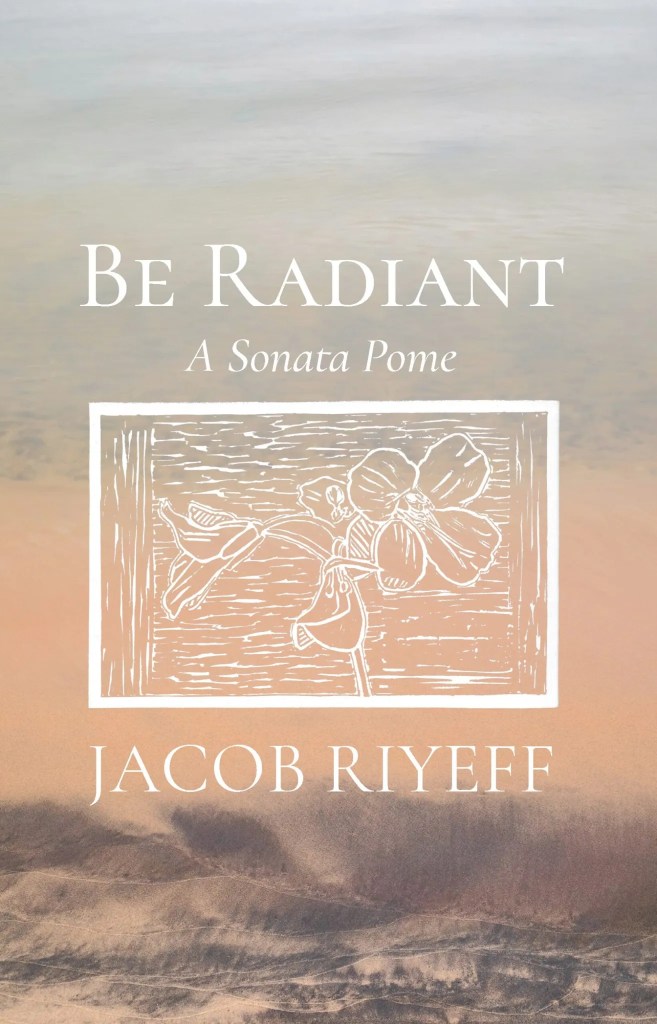
hey folks: it’s been a busy day, but i wanted to get this out before i retire for the evening. because today my second poetry collection, be radiant: a sonata pome,has been published by fernwood press!
this collection is everything from right before the pandemic to about a year ago, including some prints i’ve made for illustrations (was very pleased fernwood allowed me to get some visual work in the collection too). my copies are still en route, so i haven’t yet seen and held it, but today is the official release.
readers of this blog will see familiar material in a whole section of the collection devoted to the state natural area poems. 🙂
the blurbs (from very gracious fellow poets) are below, and you can order a copy here if you like and want to support my work. wishing everyone a peaceful night!
Faced by the specter of eco-catastrophe, what can we do to ward off anxiety and paralysis? We can contemplate and celebrate, as Jacob Riyeff does in this volume, that patch of the Earth which is our patrimony. Microscopically observed and lovingly curated, these lyrics articulate, layer by layer, a Midwestern landscape and time-scape radiant with the often-hidden beauty of life. Archaeology, geology, and botany fuse in a poetry that invites readers to unearth and reverence their own inheritance in our anything but common, Common Home.
–Laurentia Johns OSB, Stanbrook Abbey, England
Jacob Riyeff’s Be Radiant does precisely what it proclaims. Riyeff’s poetry comes in a variety of styles and forms, but each poem radiates with a sense of time and place. Riyeff, like the fungi he loves so much, is a poet rooted in place. His poems reflect this rootedness. Riyeff, as a scholar, is also rooted in the English language. He weds these two in poems like “The Ruin,” which is a translation of an Old English poem, and yet Riyeff places it before a burial mound in his home of Milwaukee. Consume these poems, and you will find yourself radiant as well.
–David Russell Mosely, poet and theologian
“Adaming creation beyond the Fall,” Jacob Riyeff-a Blakean hybrid of poet, mystic, and illuminator-brings us a new collection that visits “Paul the hermit in the desert”-but still has time to paddle his daughter out past the breakers under an afternoon sun. We see touches of earthy Kerouac, of nature-loving Wordsworth, all against a soaring, ancient spirituality. In “Spring Ephemerals,” he records, with telegraphic, haiku-like focus, intricate images of the damaged Wisconsin wilderness-dovetailing, later, with his translation of the Old English poem “The Ruin.” The sequence “Leads and Diggings” excavates his own family history through voice and narrative-and extends its core sample through the strata of geologic time. This poet is a hybrid of many pasts and worlds-in other words, an American original.
–Amit Majmudar, author of Twin A and What He Did in Solitary
well, we’ve crossed the line over 150 state natural areas visited. hadn’t thought we’d get here when this began, especially when this project started slowing down after things picked up once the worst of the pandemic was behind us. but here we are. a trip to door cty last week put us across the 150 line.
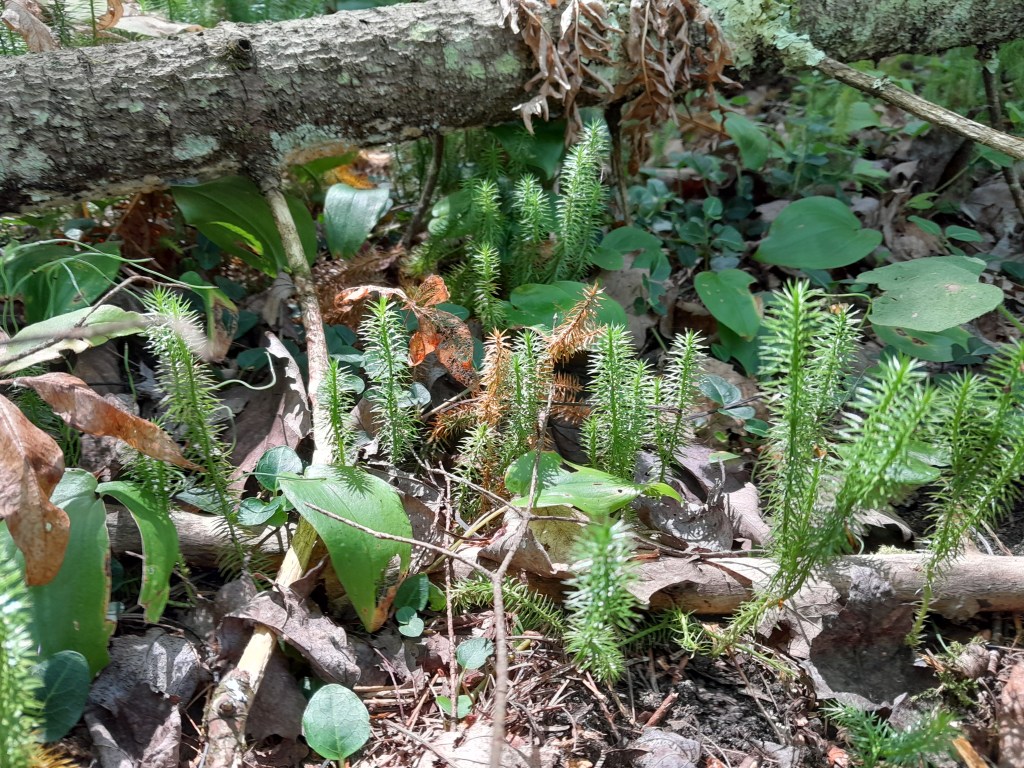
north bay sna in door cty is a varied site with undeveloped shoreline on lake michigan (rare in door cty), wetlands, springs and seeps, mesic and boreal forest. i only walked thru the coniferous woods at the beginning of the site from the dead end road, but was pleasantly surprised by the variety of plant life, club moss, et alia. got some weird vibes about a half hour in and trusted it since i was alone and turned round, but a fine afternoon jaunt nonetheless.
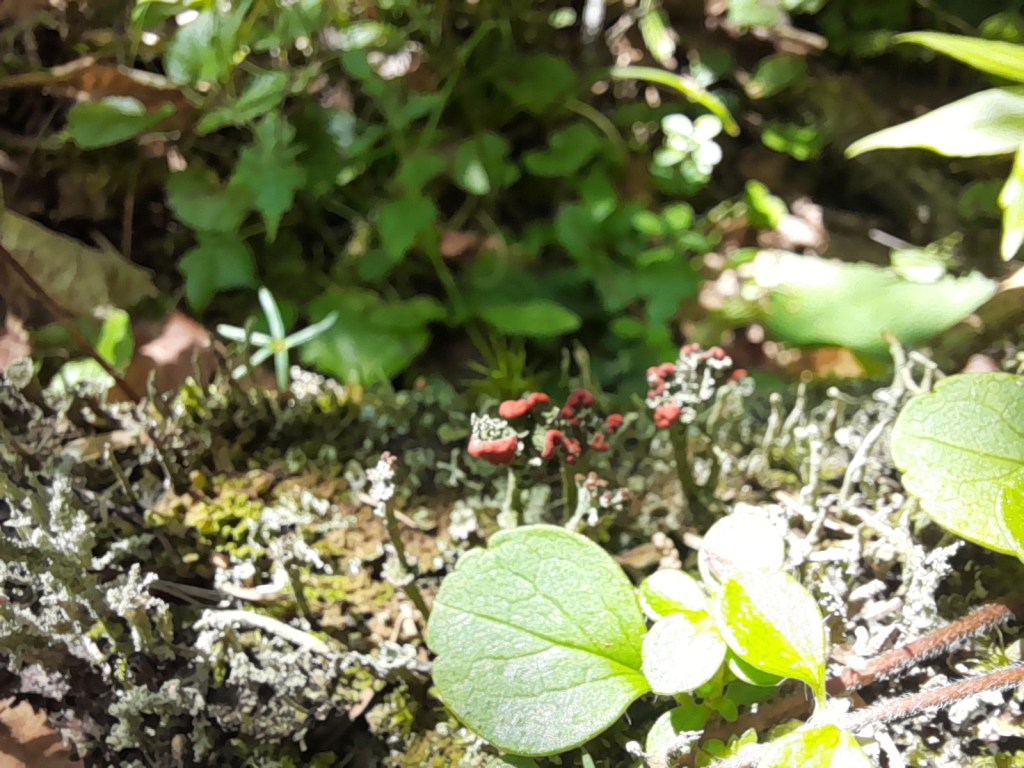
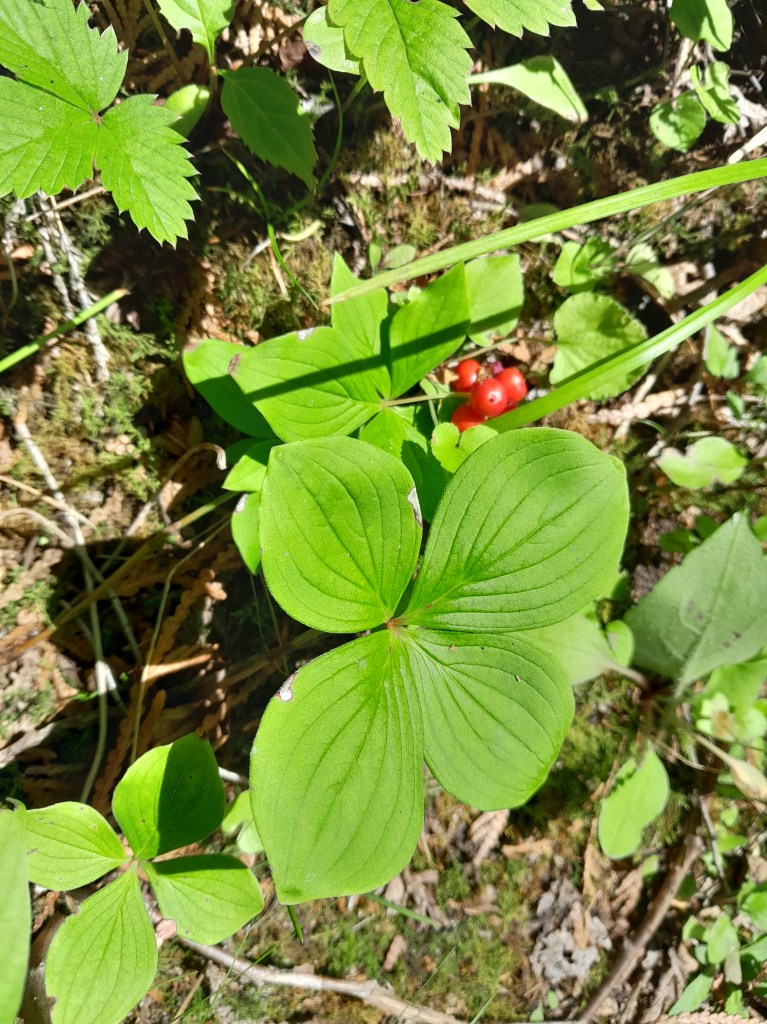
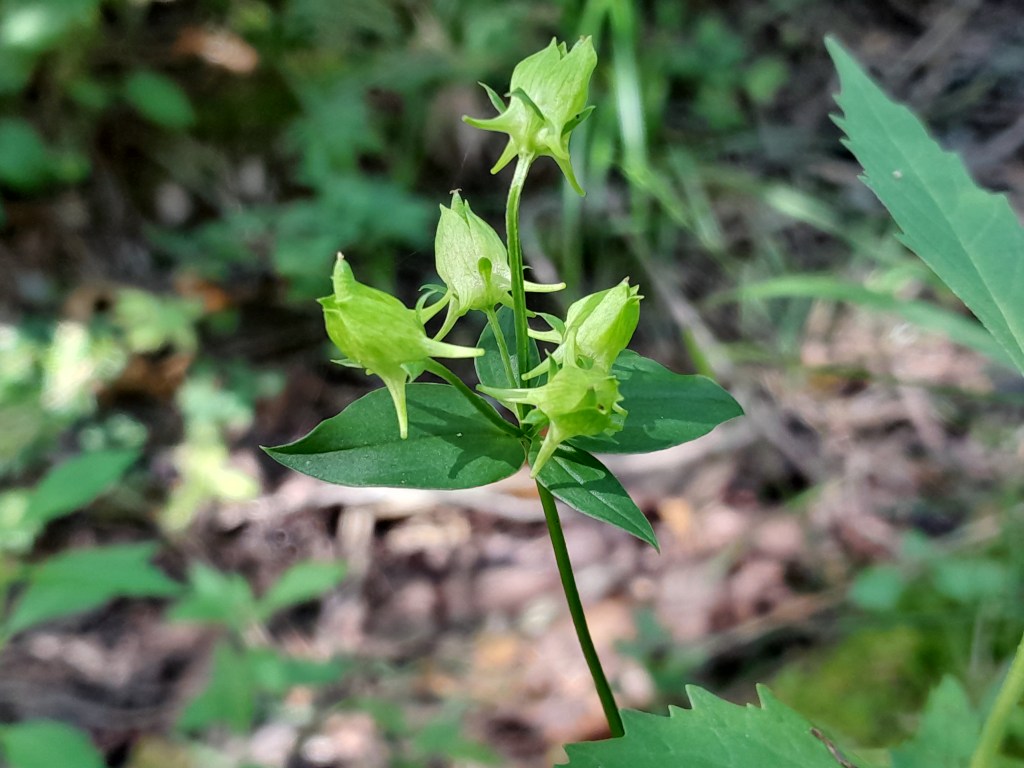
first id of pearly everlasting, spurred gentian, northern bugleweed, and red baneberry!
hi folks! back to short poems and close-up pictures of flowers and rocks and stuff soon, but here’s the final installment of the trilogy of essays i wrote this spring as the term wound up and we all handled the situation with chatbots in the educational space we inhabit with our students.
thanks to the plough team for getting this last salvo out into the world!
in my ongoing walk toward what i’m now thinking of as a “renewed humanism” in education, the arts, daily living, wherever, here’s another contribution to the discourse on our ‘artificial information processing’ (or ‘machine training application,’ or anything but the usual obfuscatory advertising phrase the industry’s gotten so many of us to use) present.
this one’s on the contribution the catholic intellectual tradition can make to help us see clearly and maintain awareness of the difference between living creatures and machines, between minds and computers, etc. tho it doesn’t draw on any dogmatic aspect of that tradition—rather the anthropological aspects. i hope it’s accessible to anyone and everyone of good will, irrespective of (a)theological commitments.
as a follow-up to our independence day hike, we stopped at two spots for some walks on our way to pick up the kids in the rock river valley. first up was the sprawling (in a good way) whitnall park in mke cty—prairie, woods, pond, so many plants—then newark road prairie sna as we got to the rock. good day.
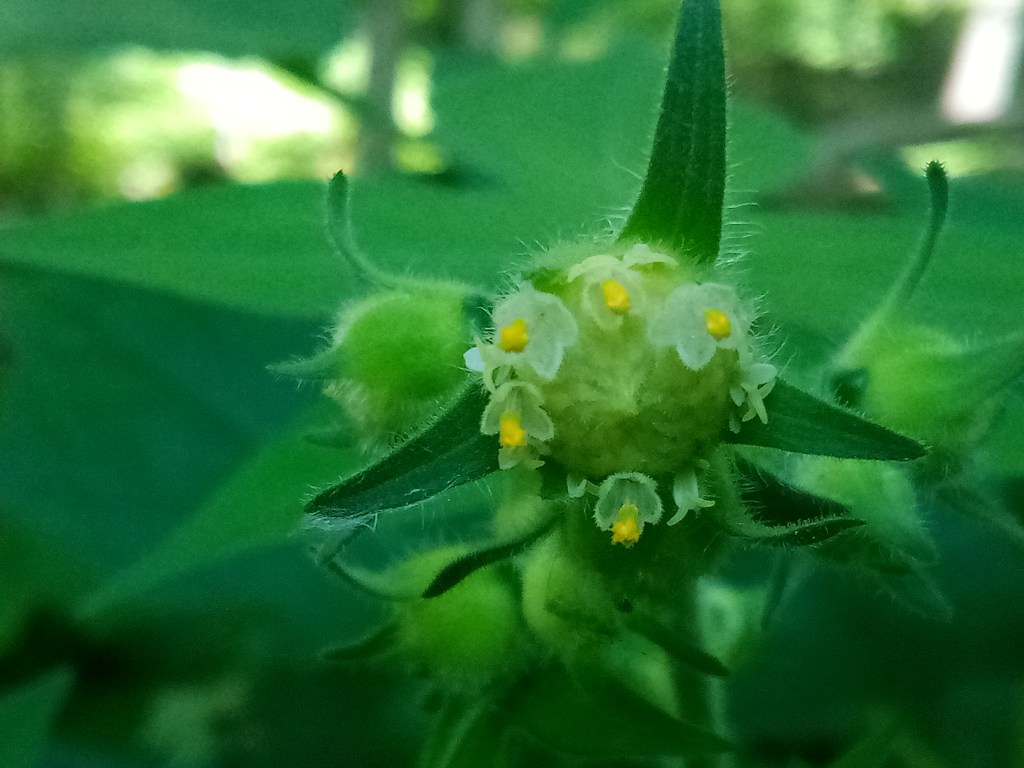
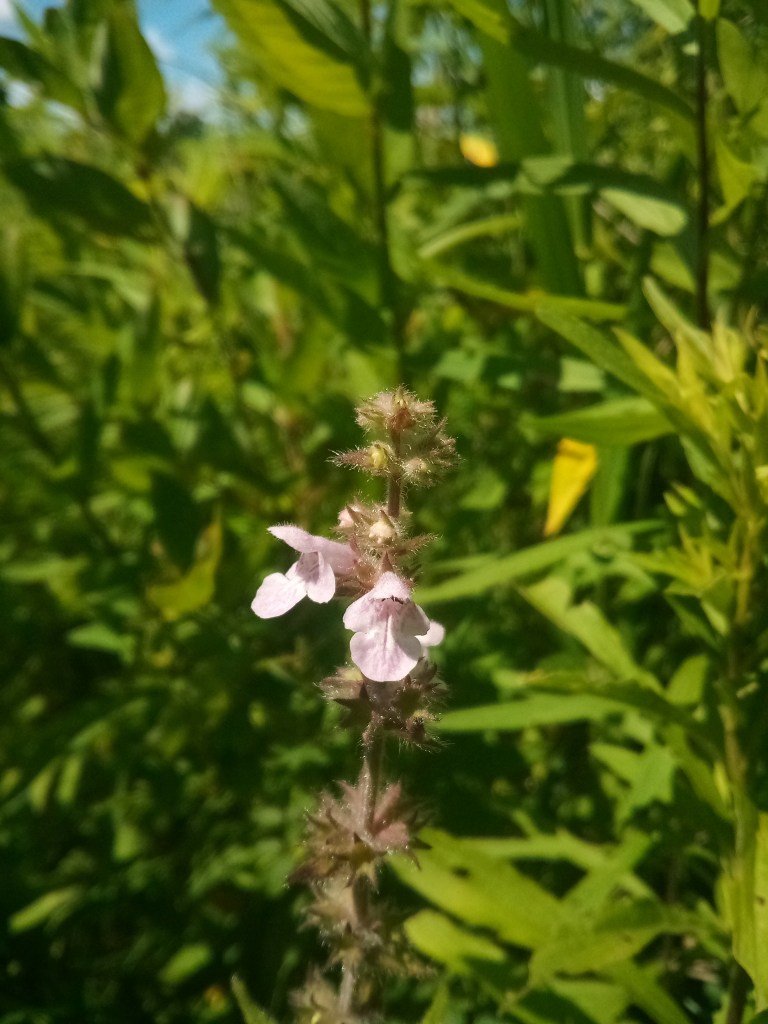
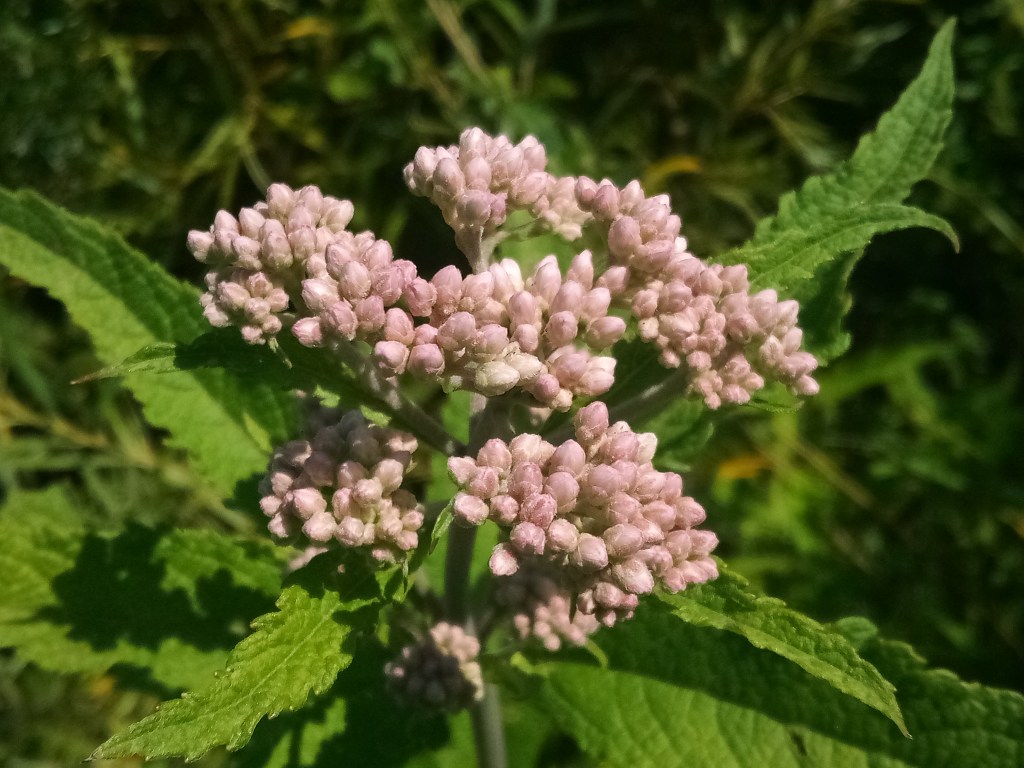
first id’s of american germander, tall hairy agrimony, black cohosh, leafcup, broadleaf enchanter’s nightshade, queen of the prairie. (!)
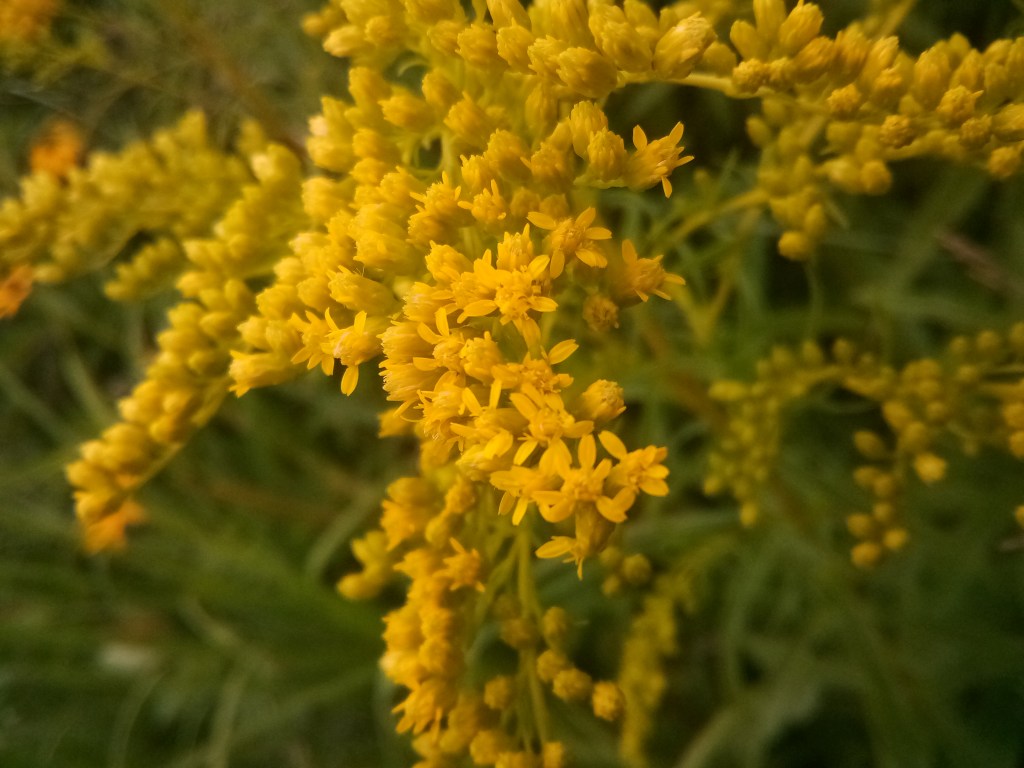
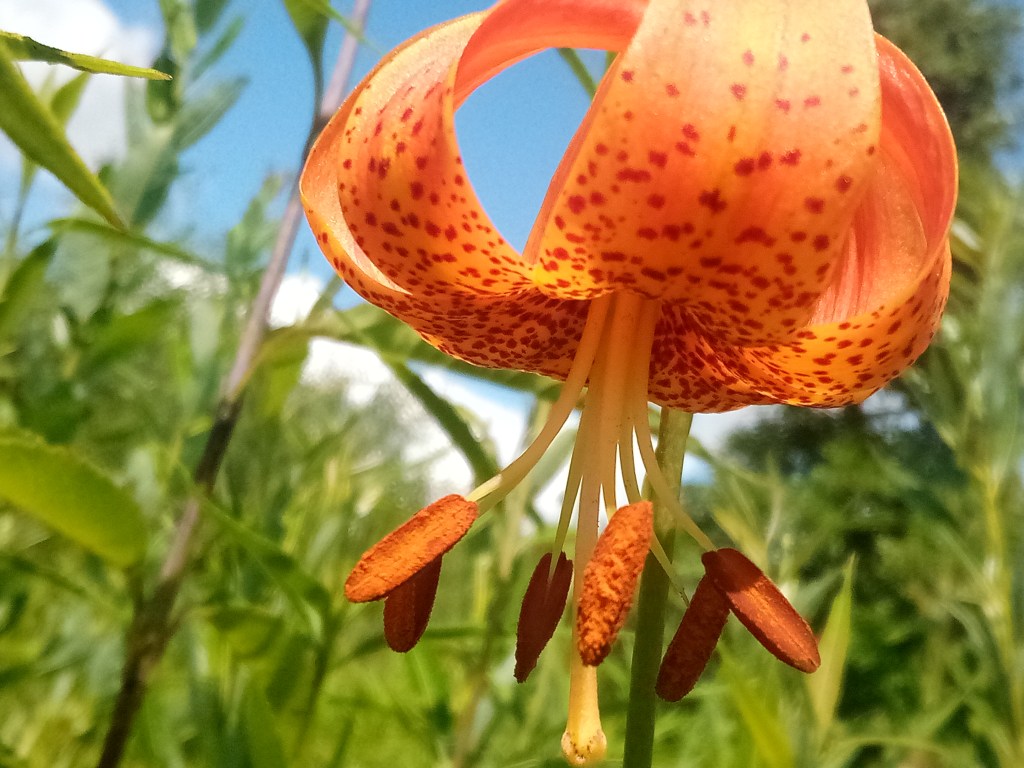
at newark road prairie sna (entry a while back) saw some other first id’s: prairie woundwort, spotted joe-pye weed, virginia mountain mint, michigan lily, and eastern prairie fringed orchid(! again). aside from disturbing a redwing blackbird family, a brilliant short stop.
been a while. but after a visit with family, me and the kids headed west to this dry mesic prairie remnant just past the terminal moraine in the driftless area (where the last glaciation didn’t touch). mostly situated on a dramatic hill, this prairie was grazed but not plowed, according to the wdnr’s website. lots of native species still inhabiting, a small oak proudly taking up the hill’s crest as its home.
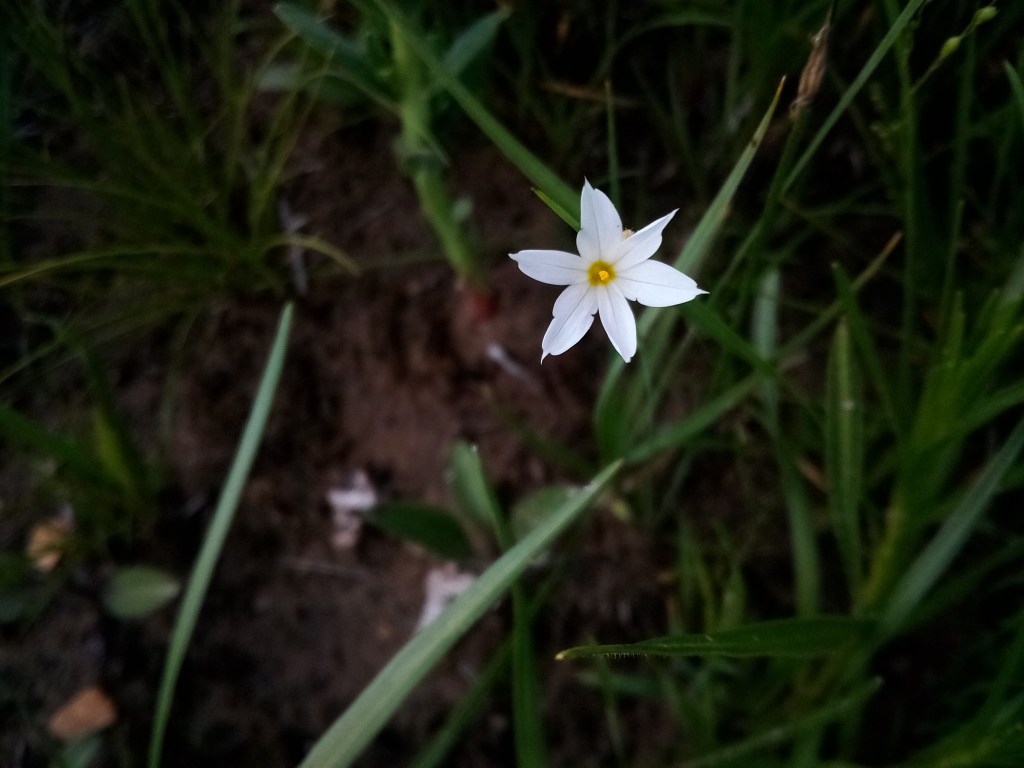
many first time id’s and a few old friends hanging out. first id’s of wood lily, seneca snakeroot, blue-eyed grass, flowering spurge, prairie phlox.
first day that a walk in the sun got uncomfortably hot this year. could have sat on the hilltop all day long.
did our early-spring visit to seminary woods at st. francis seminary in st. francis, wisconsin again last weekend. one of our two old-growth stands here in milwaukee county.
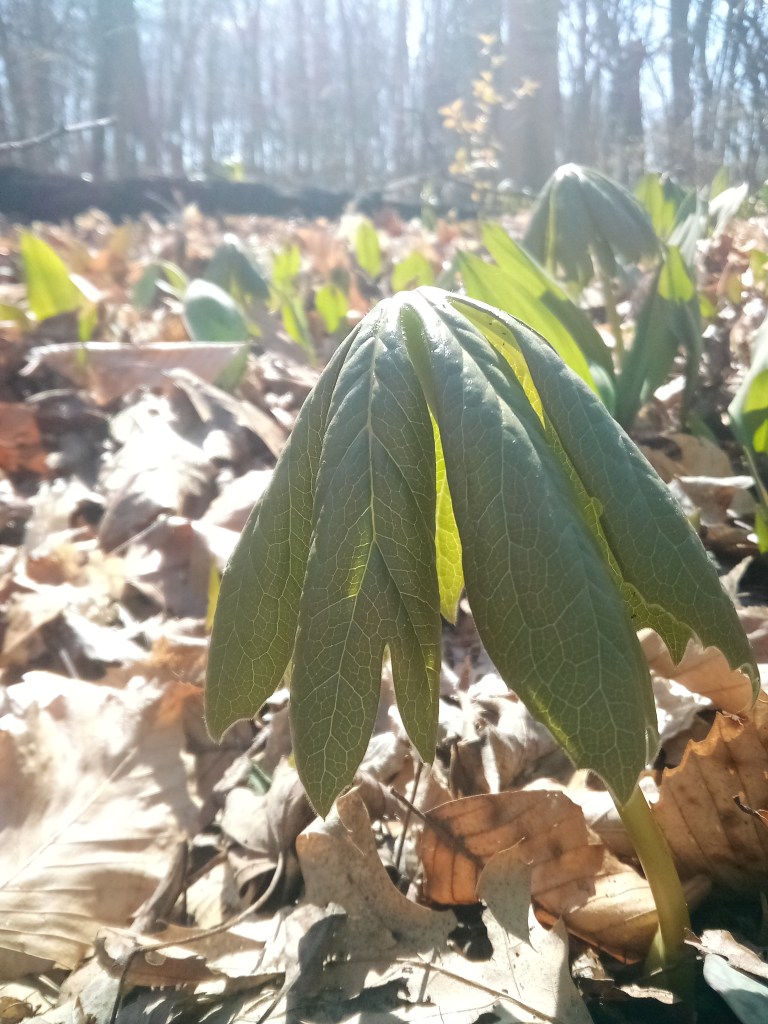
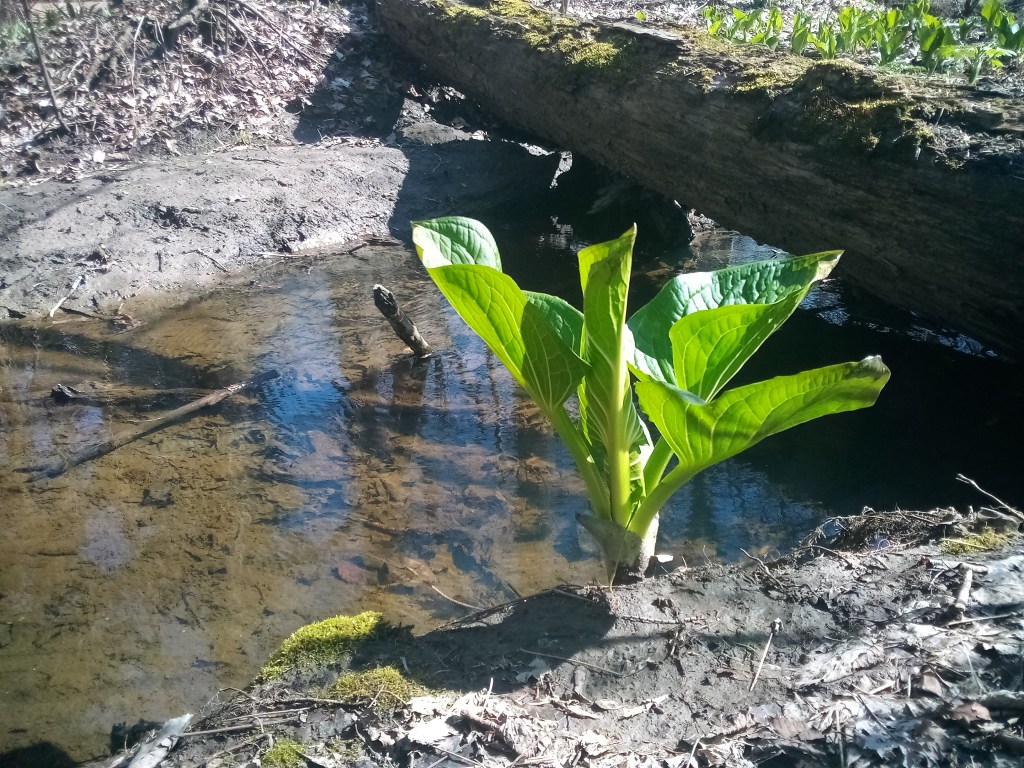
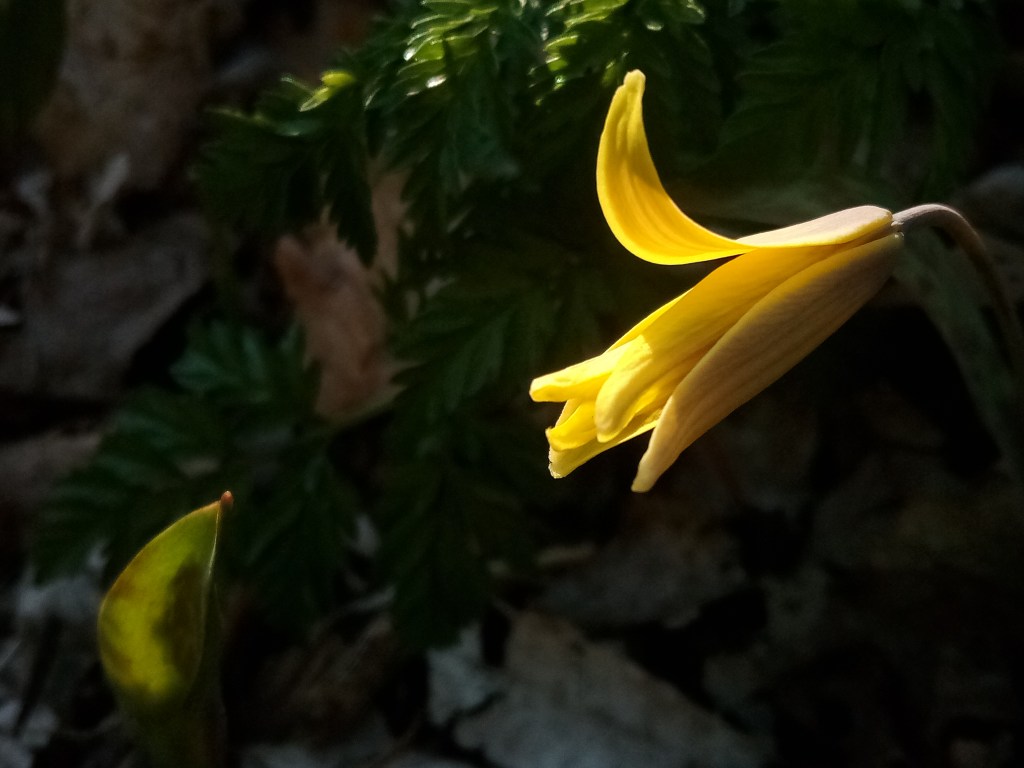
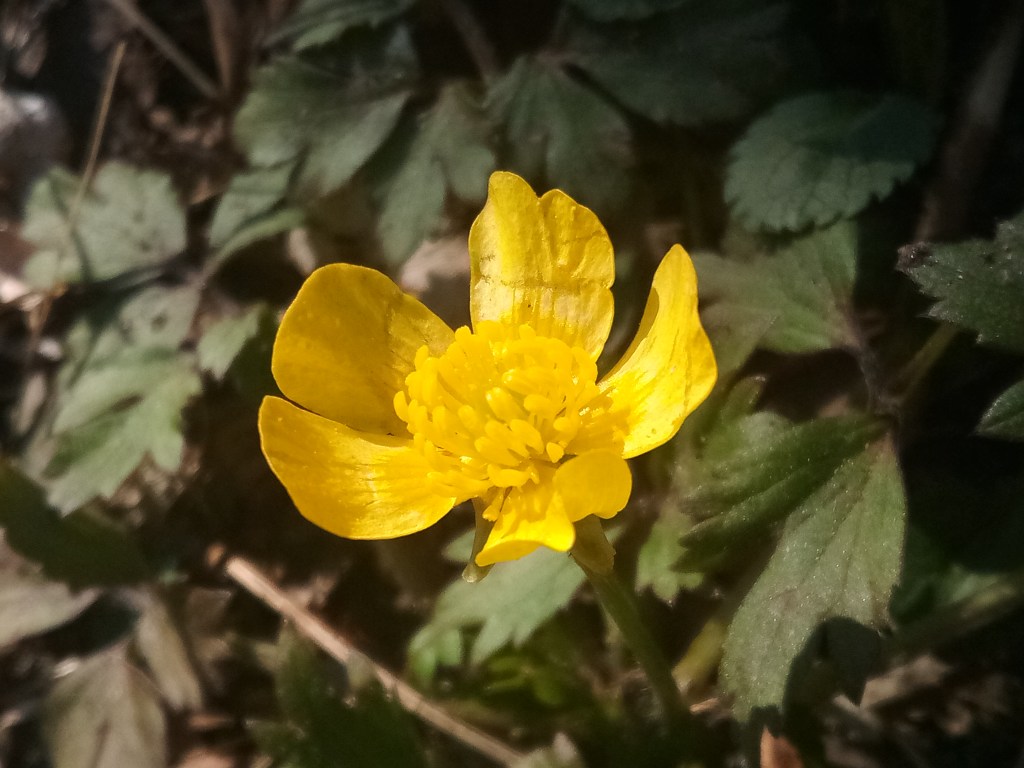
trout lilies and early buttercups coming up in all the usual spots; skunk cabbage leafing out in the stream bed and low areas, mayapple along the trail; a barred owl snoozing up in the leafless canopy. a good day.
a.
great horns craned to scratch
vernal sun
shines on buttercups
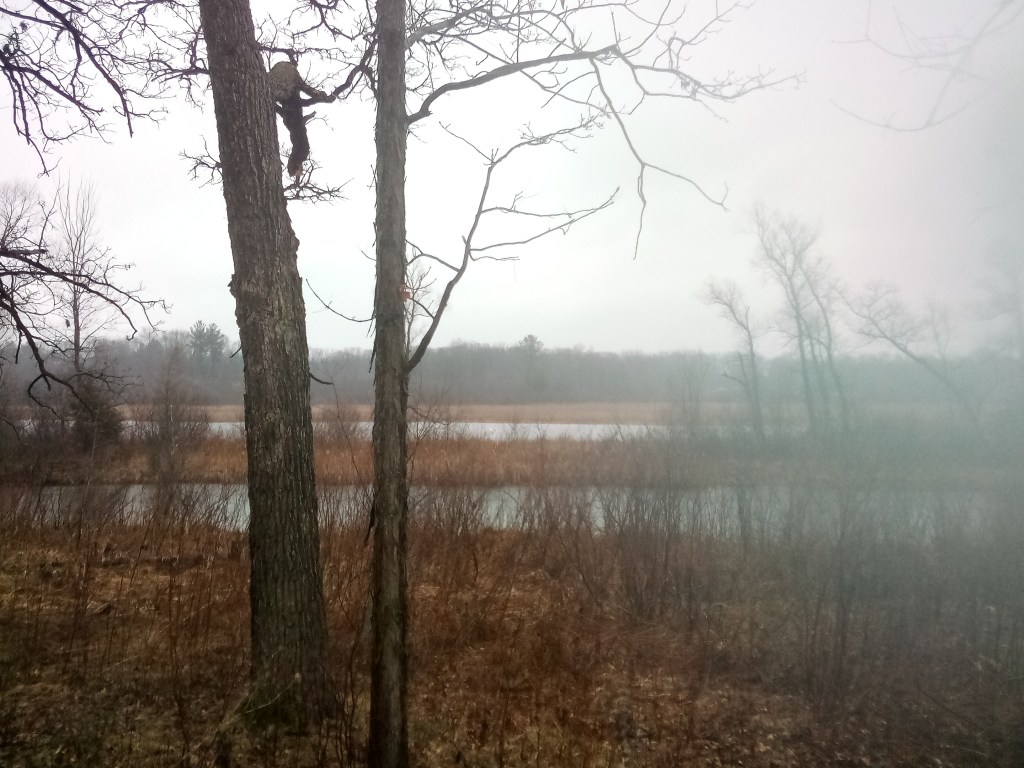
it’s difficult to see b/c i don’t have a good camera, but there is in fact a great horned owl toward the center (bit to the right) of this photo about a third of the way down.
this preserve is 652 acres donated by the meyers a ways back. there’s oak savanna, a wood, wetland, and small agricultural land that the nature conservancy is sprucing up back into prairie. they had just done a burn on some of the restored prairie before we arrived.
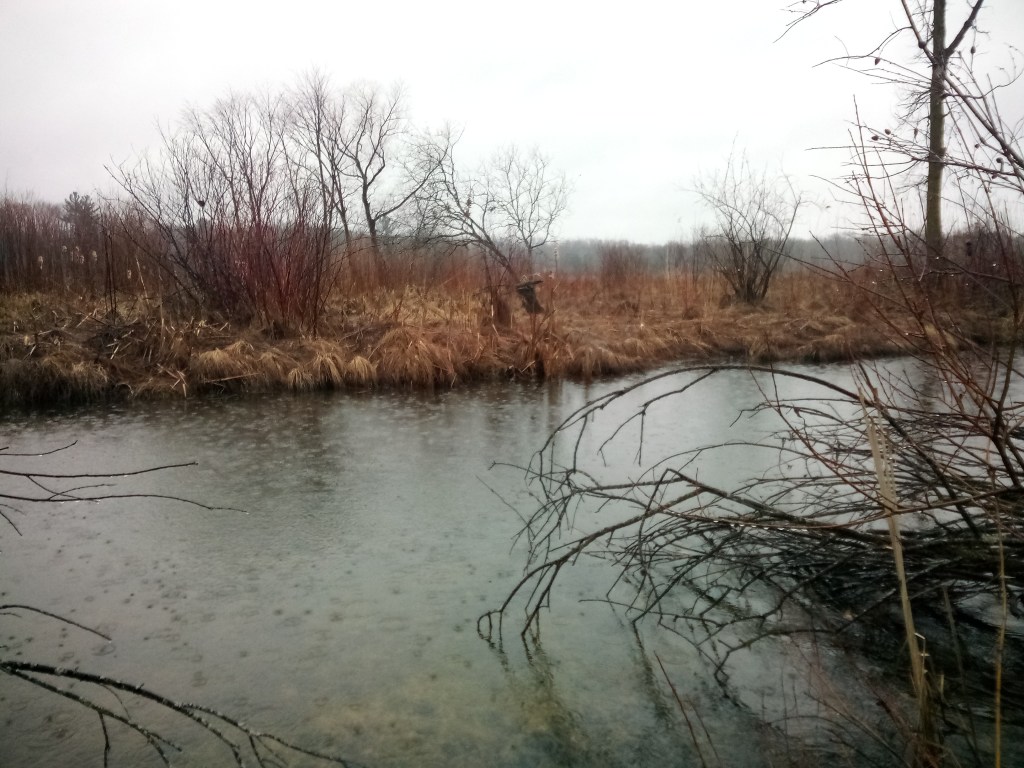
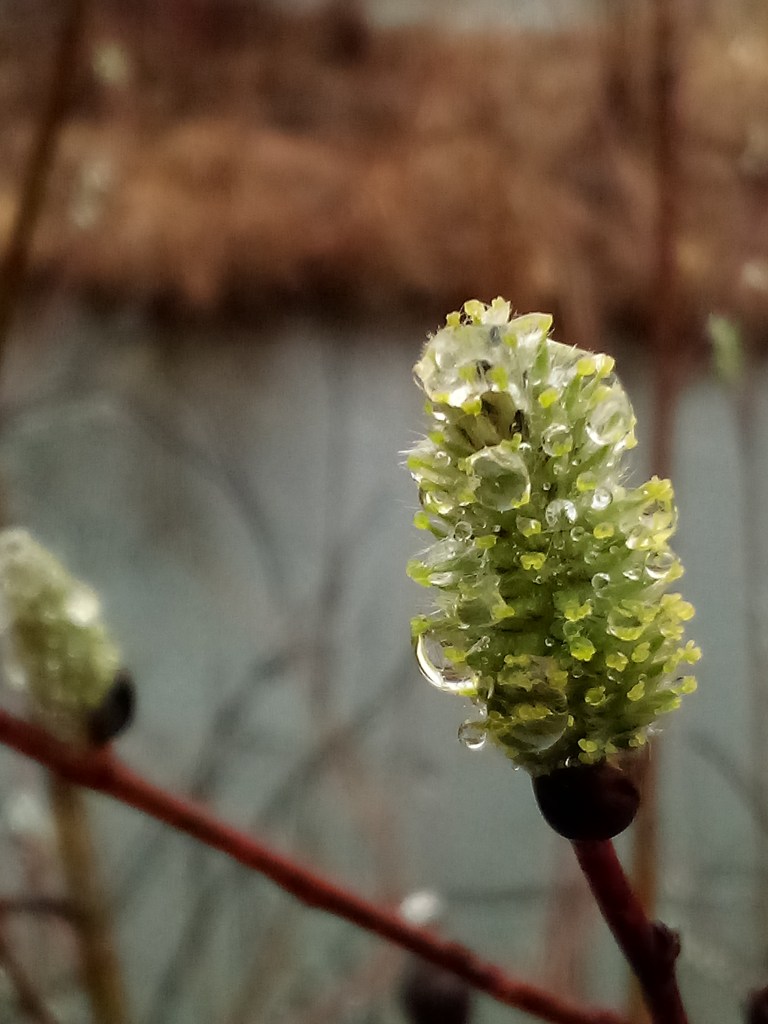
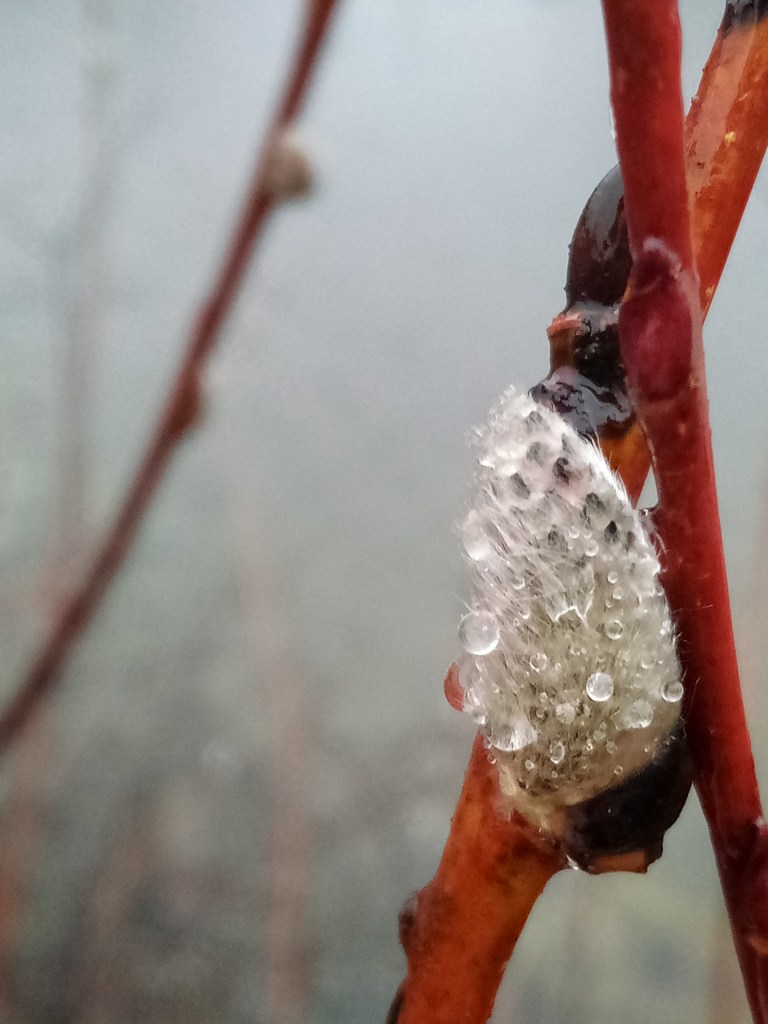
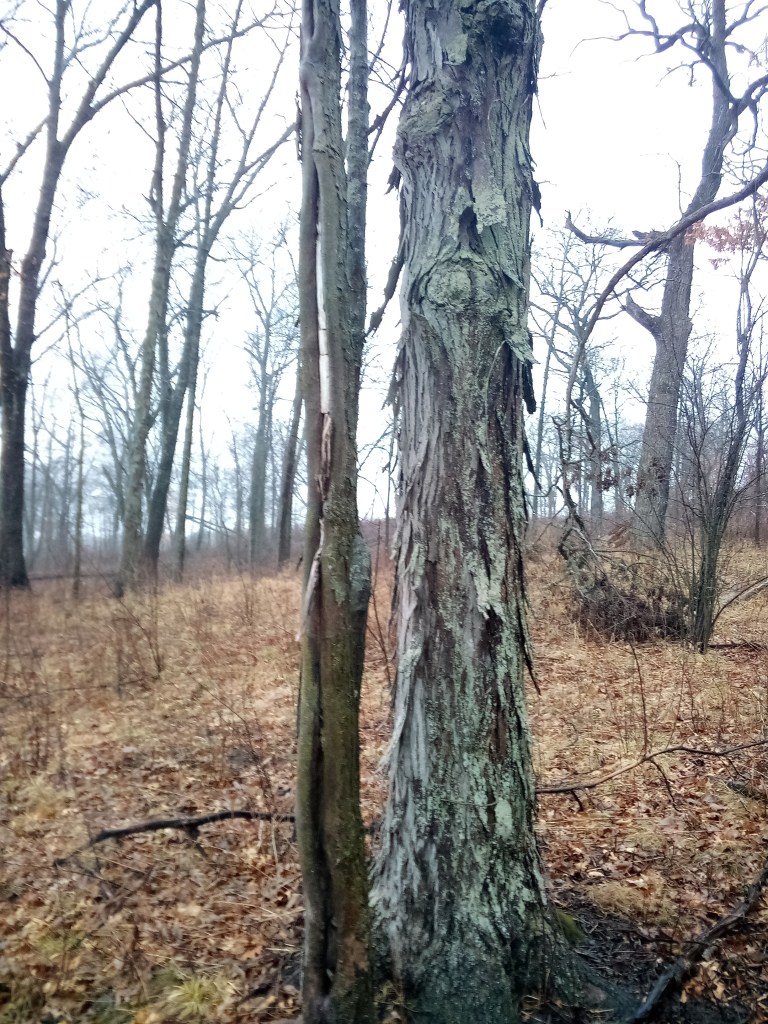
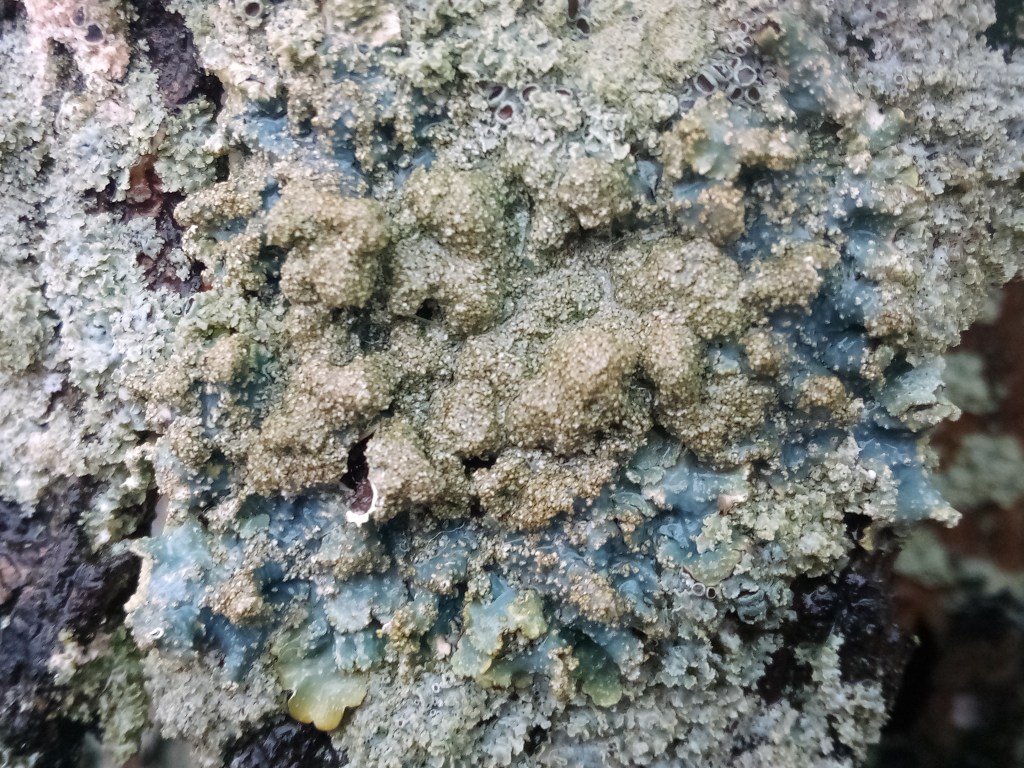
the morning was turning from sprinkly to downright rainy by the time we got there, and the rain only got heavier. but an enjoyable walk anyhow, and in ways even more so for all the wet. willows and hazels putting out catkins, lots of fungus, serious lichen colonies on the shagbark hickory, sandhills calling once again, and, most surprisingly, two swans flew into the wetland as we watched them from the wood.
first id of what i think is bark mycena (the tiniest mushroom you ever did see).
oh man, there’s been so much family health stuff going on! been a bit of a challenge to get out for a walk around the neighborhood let alone hiking hither and yon. took the chance on thursday to set out off west with my dad to get some walking in.
started with a light rain as we set out on i-94 but was a steady fall by the late morning when we left our second site. worth it, and a cold ride home.
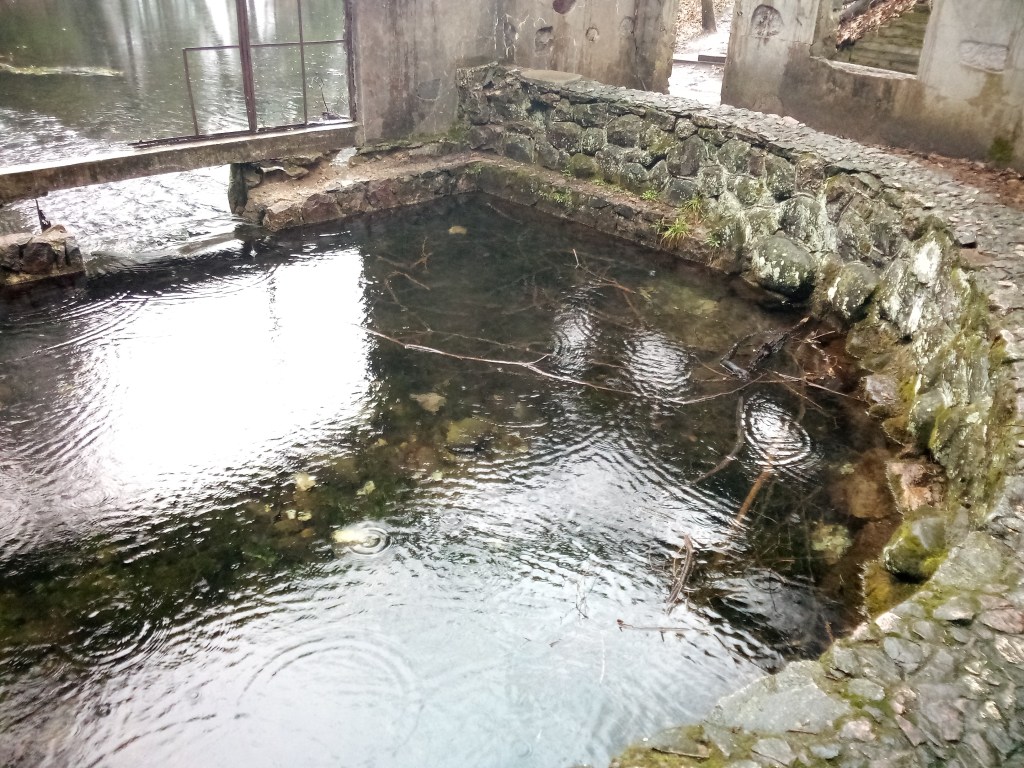
paradise springs is a spring site that goes back well over a hundred years with a spring house, dam, and mill that are all now in ruins. quite a place though—so much water coming out of the main spring; wild. a nice morning jaunt, none too strenuous but a nice little wood and pond. dad happened on a small community of chipmunks behind the spring house that were having quite a time running up and down the hill in back. lots of chatter.
on our way to the car, we noticed a birch that had immensely thick bark going 20-30 ft off the ground. by far the oldest birch i’ve seen. in awe.


























 Jacob Riyeff