just a brief meditation on the dogma of the trinity today in light of the upcoming birthday of swami abhishiktananda/dom henri le saux in august.
another longer essay in the ongoing saga of generative software/decomputing and higher ed coming soon!
just a brief meditation on the dogma of the trinity today in light of the upcoming birthday of swami abhishiktananda/dom henri le saux in august.
another longer essay in the ongoing saga of generative software/decomputing and higher ed coming soon!
in the thick part of the term amid other family stuff going on too, apparently i completely forgot to announce that i had an essay published in the benedictine magazine spirit & life back in march.
it’s on mortification, which isn’t a terribly popular topic of essay writing these days, but i find it fascinating. it comes out of my ongoing research on and reading of the 17th-century benedictine dame gertrude more. especially the talks i gave at dame gertrude’s foundation of stanbrook abbey back in october.
a little light reading!
hey folks—my interview for the new collection, Be Radiant, was posted today.
thanks to aaron lelito for the fun conversation! we talk kerouac and ginsberg, burning adolescent poems, old english as mother tongue, scholarship and art, earth and epistemology, and the artistic process.
in my ongoing walk toward what i’m now thinking of as a “renewed humanism” in education, the arts, daily living, wherever, here’s another contribution to the discourse on our ‘artificial information processing’ (or ‘machine training application,’ or anything but the usual obfuscatory advertising phrase the industry’s gotten so many of us to use) present.
this one’s on the contribution the catholic intellectual tradition can make to help us see clearly and maintain awareness of the difference between living creatures and machines, between minds and computers, etc. tho it doesn’t draw on any dogmatic aspect of that tradition—rather the anthropological aspects. i hope it’s accessible to anyone and everyone of good will, irrespective of (a)theological commitments.
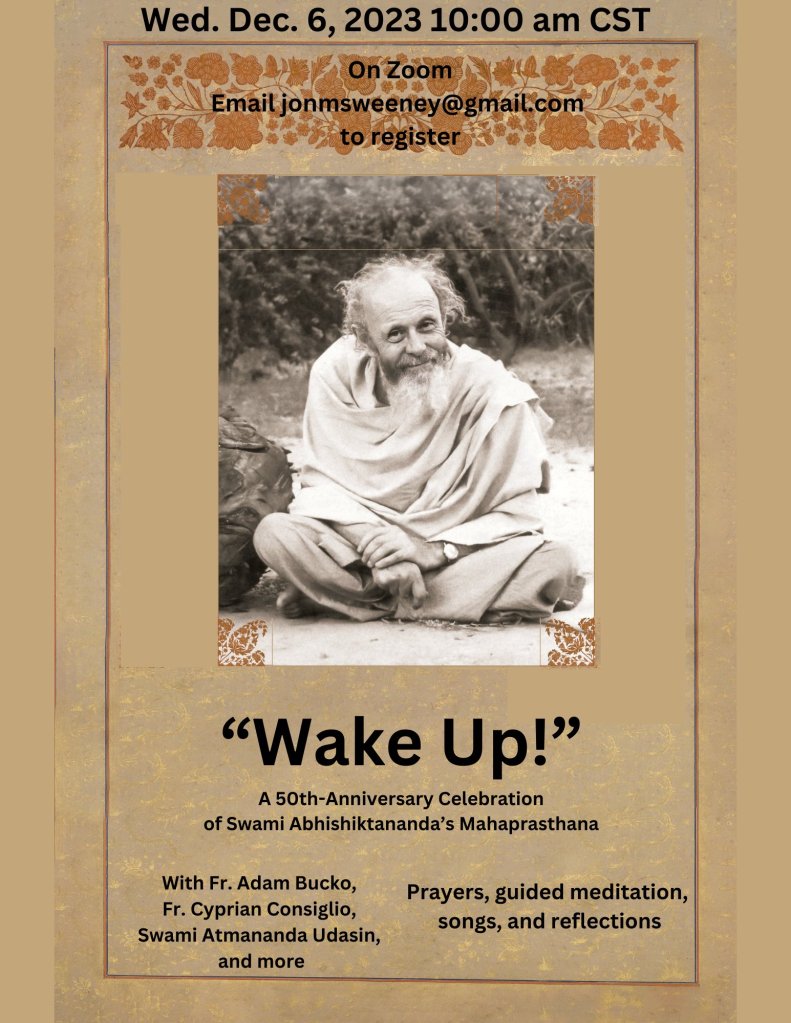
swami abhishiktananda (1910-1973; aka dom henri le saux) was a french benedictine monk and priest who felt called to live in india in order to set up contemplative monasteries there. he ended up staying the rest of his life and discovering more than he had bargained for in the general life of india and particularly in advaita vedanta. he never renounced his vocation as a monk or a priest, and he is said to have achieved final awakening right near the end of his life. i was introduced to swami abhishiktananda by my amma sr. pascaline coff and had the great privilege of collecting and translating his french poems a few years back.
this year on december 7th marks the 50th anniversary of swami abhishiktananda’s mahaprasthana (great departure). several of us who admire swamiji and his message of awakening and interreligious respect and affection will celebrate on december 6th at 10.00 am central standard time.
prior cyprian consiglio, fr. adam bucko, jon sweeney, and others will be gathering on zoom to share meditation, song, and talk on swamiji. if you’d like to attend as well, you can email jonmsweeney@gmail.com to receive the zoom link.
pax/shanti
a somewhat more direct take on things than i usually muster, this essay was a long-time coming and is indicative of a new direction i’m taking.
ruminations on the cognitive nature of contemplation and its situation within our social, somatic, economic, and mechanized lives.
thanks to focolare media for sharing this.

this year is the 50th anniversary of the passing of swami abhishiktananda, benedictine monk and sannyasi. and i was invited by dimmid to write an essay on how/why swamiji’s life and message are still important and instructive for their journal dilitato corde.
swami abhsihiktananda was, it’s said plenty but bears repeating, a pioneer of interreligious dialogue, leaving his native france in 1948 for india and never returning. his embrace of advaita and his struggle to articulate his spiritual message in terms honest to the reality of his “double belonging” to the church and to the vedantic tradition make him an immensely compelling figure.
as i did with fr. bede griffiths a few months ago, rather than focusing on the more outgoing aspects of swami abhishiktananda’s thought and life, i turned to the foundations of his formation in monasticism. in this essay i look at his close and at times fraught relationship with the psalms.
it was good fun to write, requested as more of a reflection than a scholarly essay, so i placed myself in this one more than i usually do. other interesting takes are being added as the issue fills up in celebration.
requiescat in pace et lux perpetua luceat ei.

a bit back i had an essay on fr. bede griffiths, osbcam appear in new camaldoli’s newsletter. the new camaldoli hermitage is a community of camaldolese hermit-monks who trace their spiritual heritage back to st. romuald and st. benedict. i’ve visited a few times now, and i’m never disappointed in the monks’ welcome, community atmosphere, and the tremendous land the hermitage sits upon overlooking the pacific ocean in the santa lucia mountains.
folks who write on bede usually focus on his more speculative and experimental views, his interreligious models, etc. given my own proclivities, i took the chance to write about bede as a simple monk, who was, despite all the changes in his life and spirituality, devoted to the divine office (liturgy of the hours), the public prayer of the church that’s been sung throughout the day every day in all sorts of communities since the early years.
other solid stuff in here too.

My essay on earth, death, body, and the myriad of species we share our home with is out now in Macrina Magazine. You can find it here, if you like.
Hope everyone is well!
pax inter spinas

Today Macrina Magazine published the first part of a two-part essay of mine entitled “We Are the Dreamer: Earth and Body in Times of Plague.” The essay is a longish meditation on encountering land and other species, my sna poems series, problems with the concept “nature,” contemplative anthropology in a Christian context, my own anxieties during the heights of the pandemic, death, and the unparalleled Middle English poem Pearl.
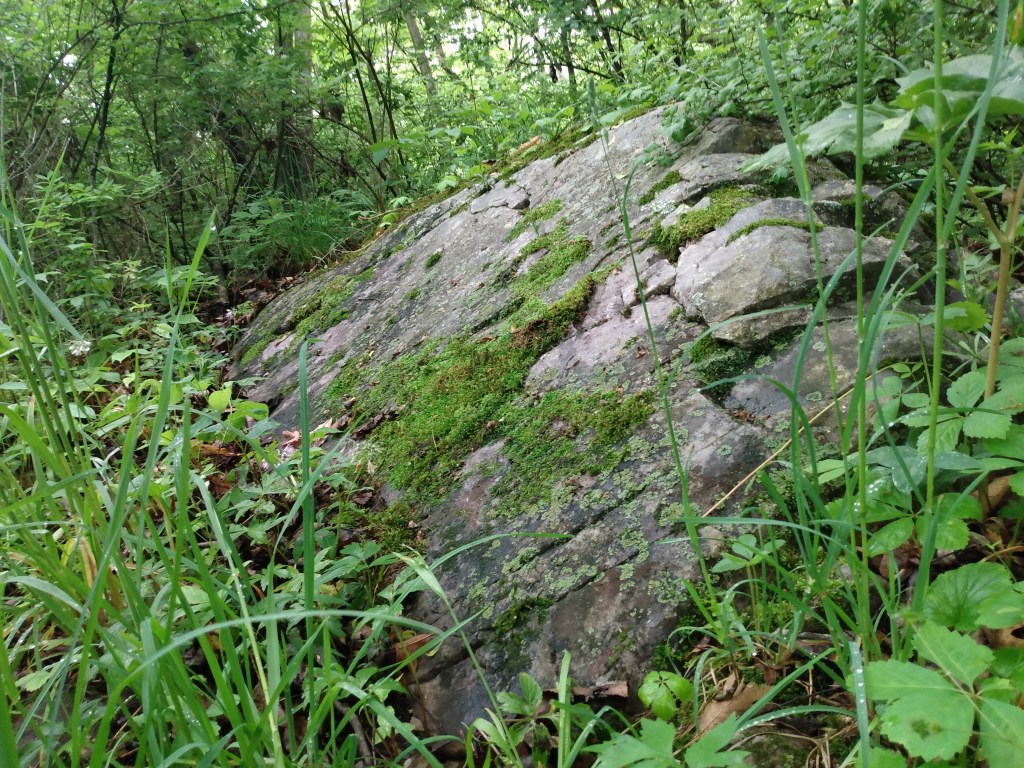
It’s got a lot more “me” in it than most of my essays, and I’m very grateful to Macrina for bringing it out. The essay is set at Waterloo Quartzite Outcrops SNA, and my sna poems entry for that spot can be found here.
I hope you might take a look and see what else Macrina is publishing too. And stay tuned for the second installment next week!
pax inter spinas
 Jacob Riyeff