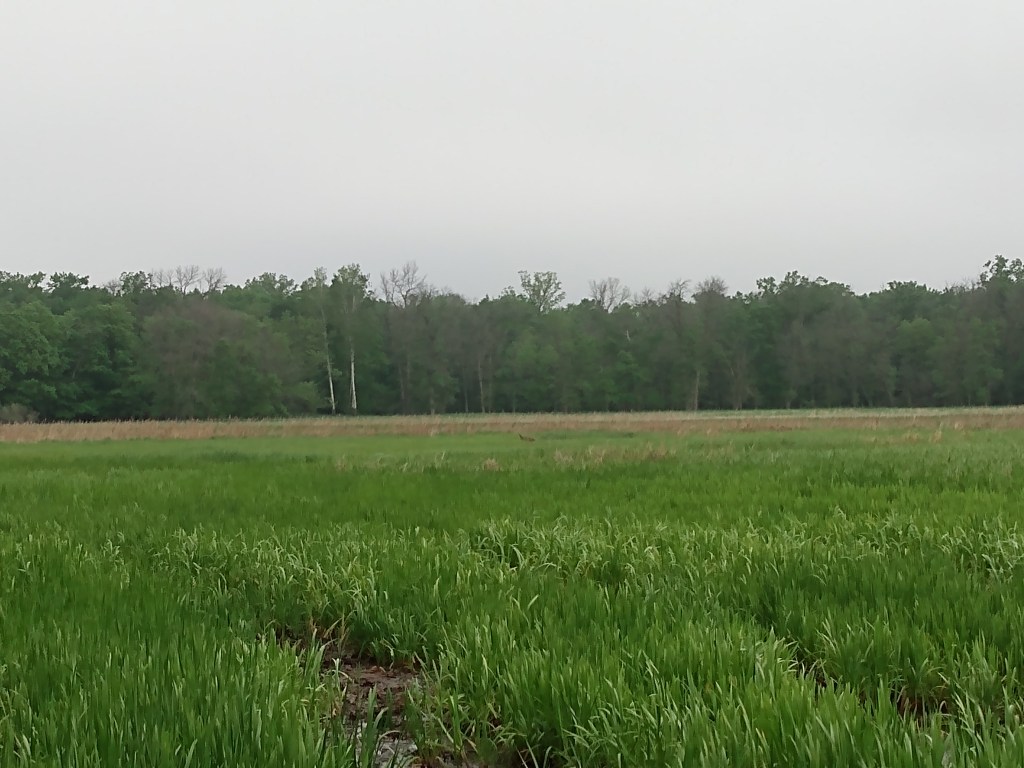
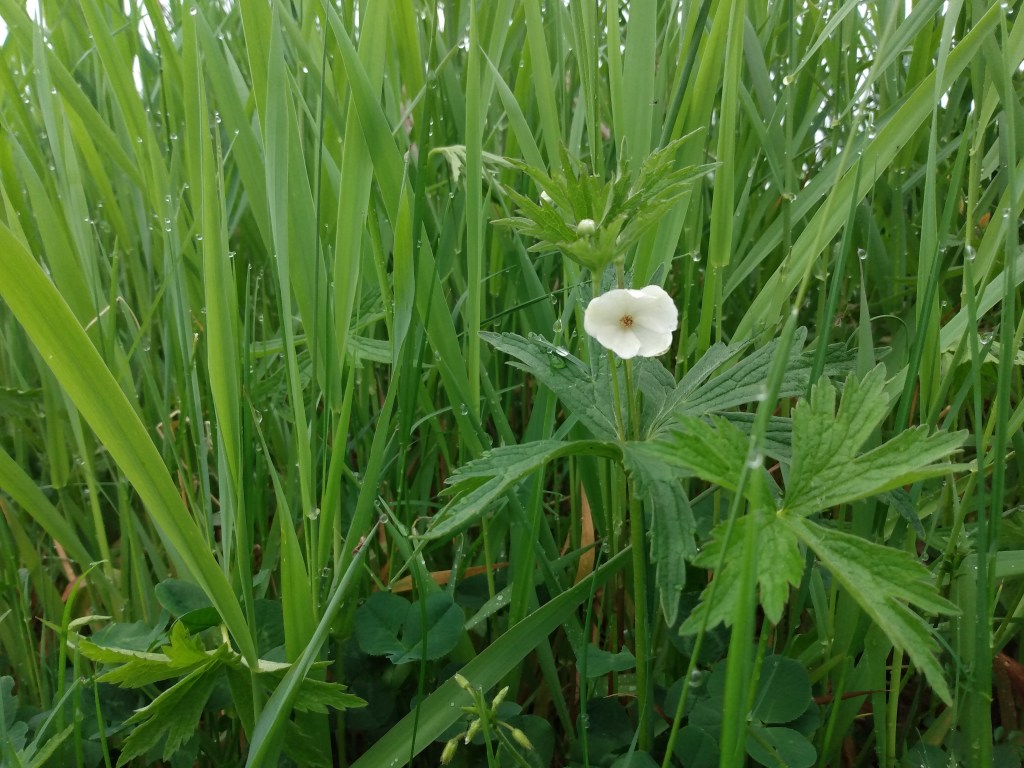
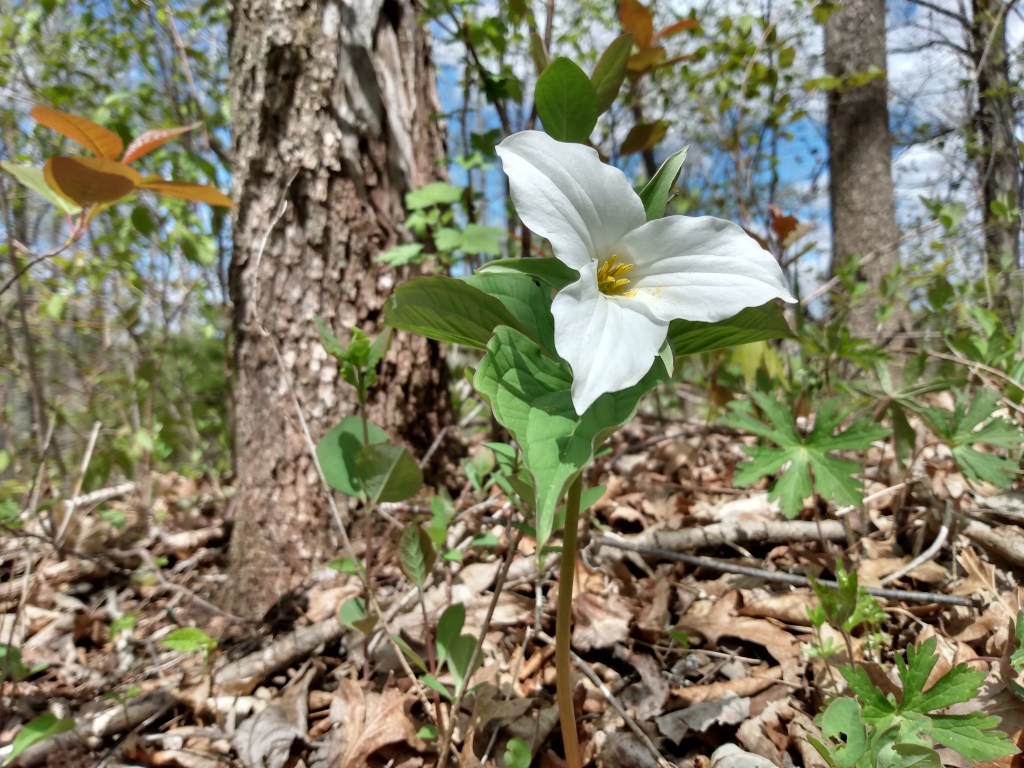
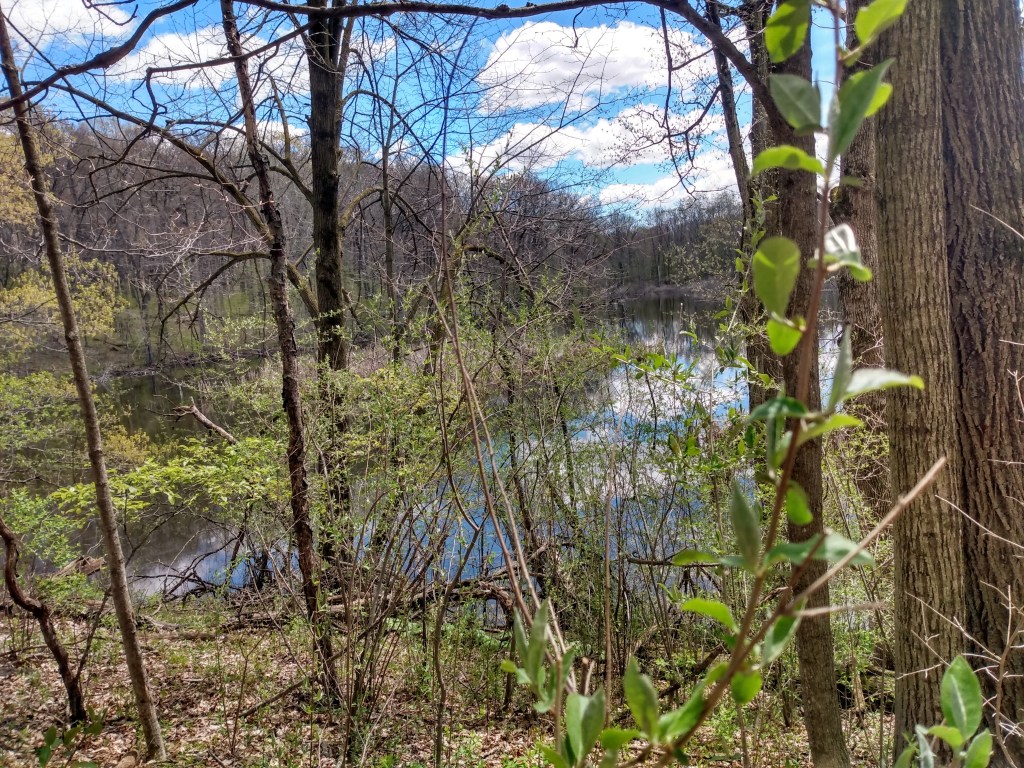
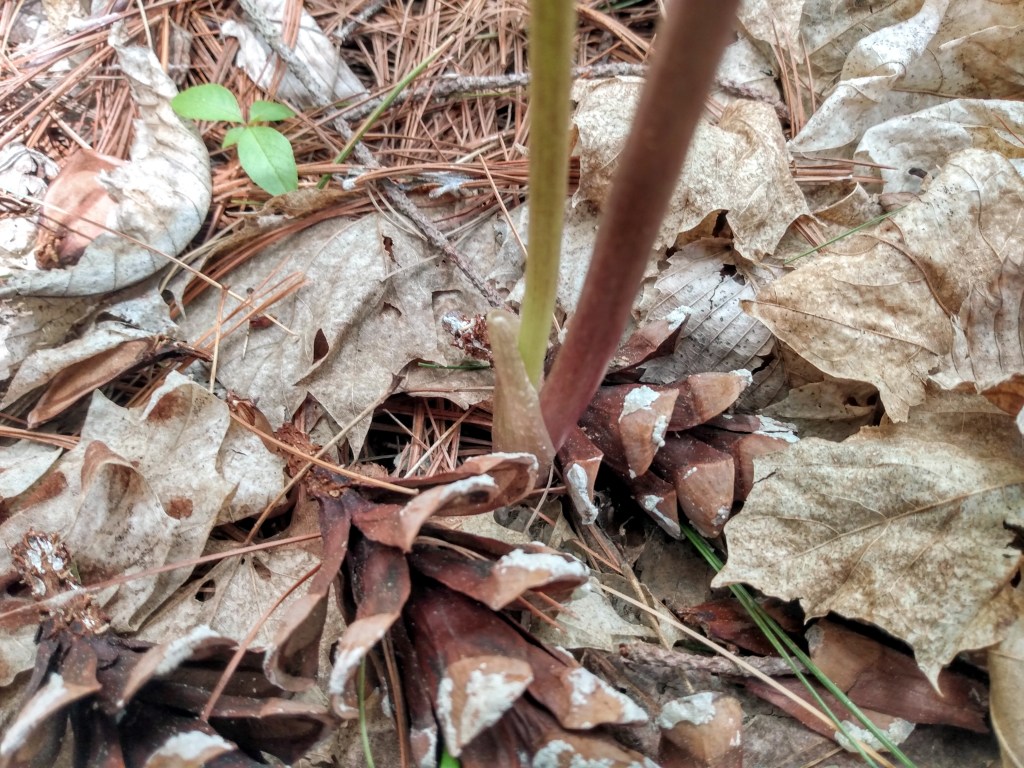
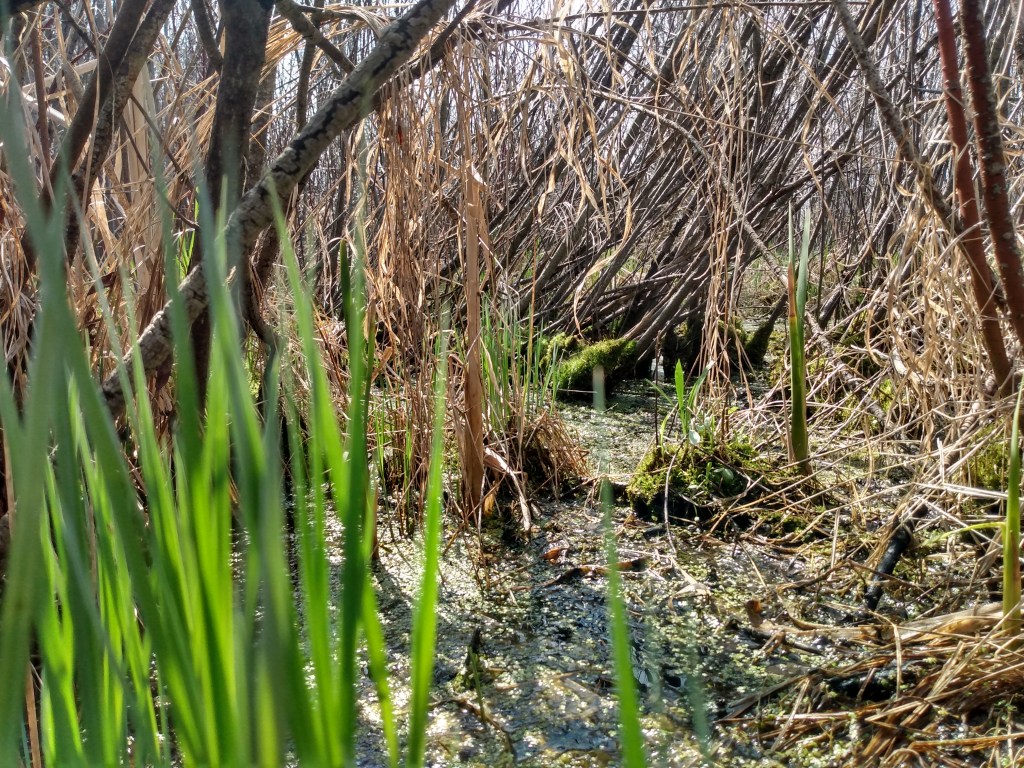
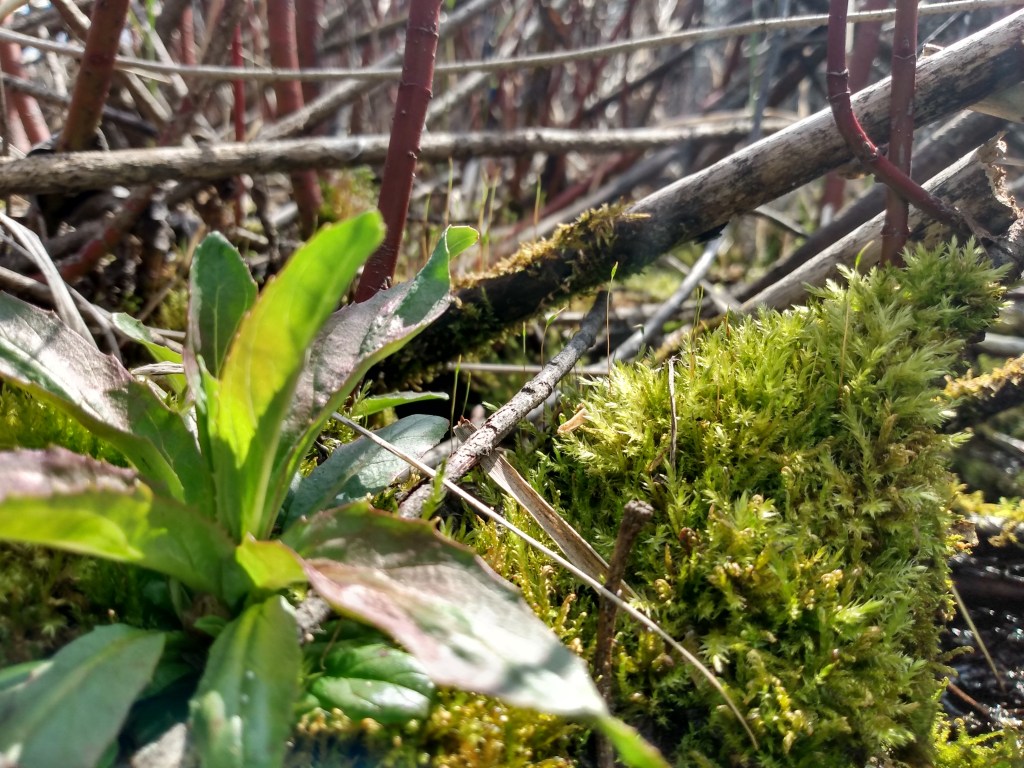
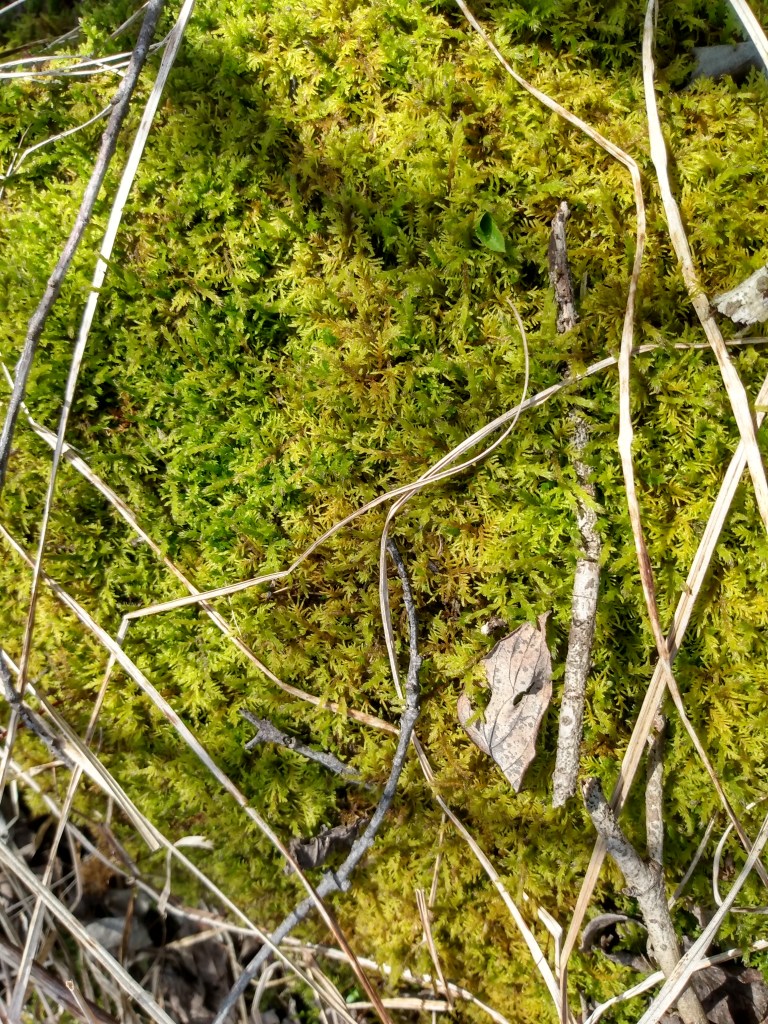
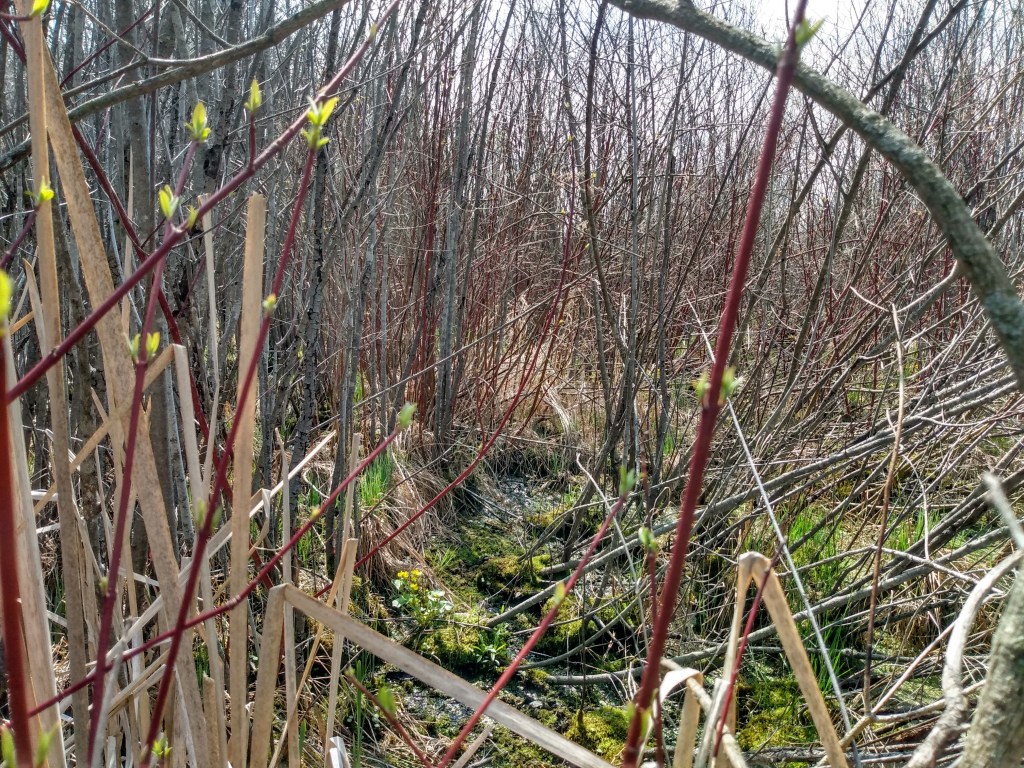
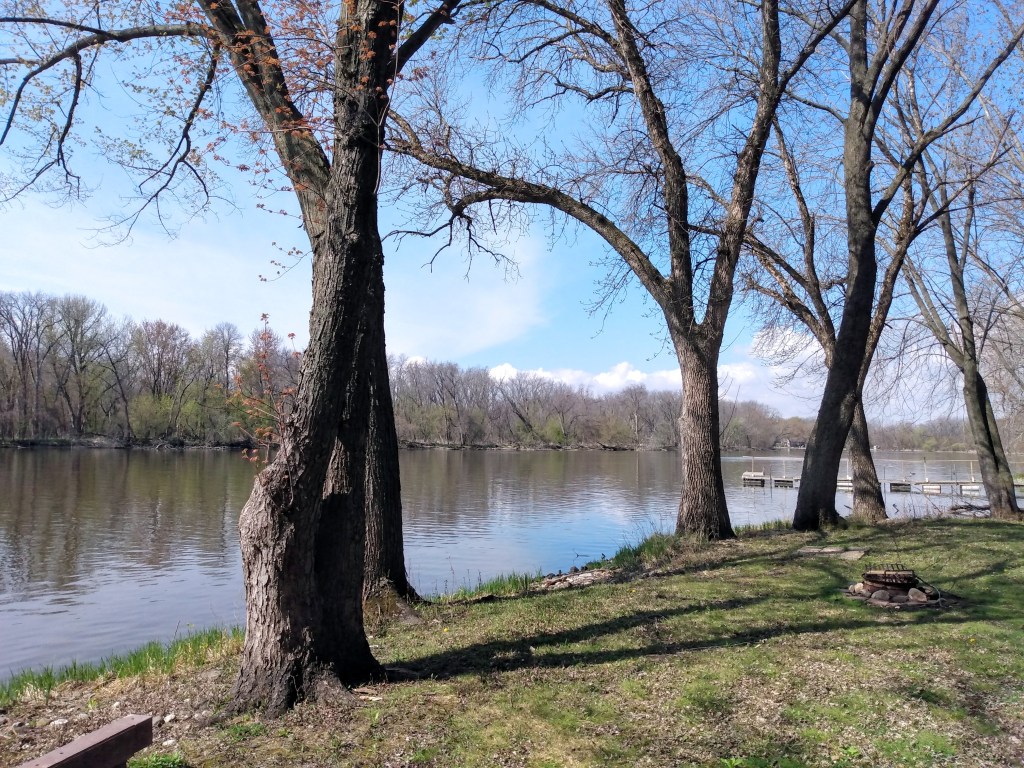
chub and mud lake riverine marsh is very much what it sounds like. a higher stretch of land between the crawfish river and the marsh near the parking area allows for a small wood with a close, winding path. many anemones and mushrooms, again cranes all around (but here unseen).
part of a 7,000-acre wetland in the crawfish and beaver dam river floodplain, there was certainly much more to explore here, but i had to be on my way to the southern shore of chub lake. (great name, by the way.)
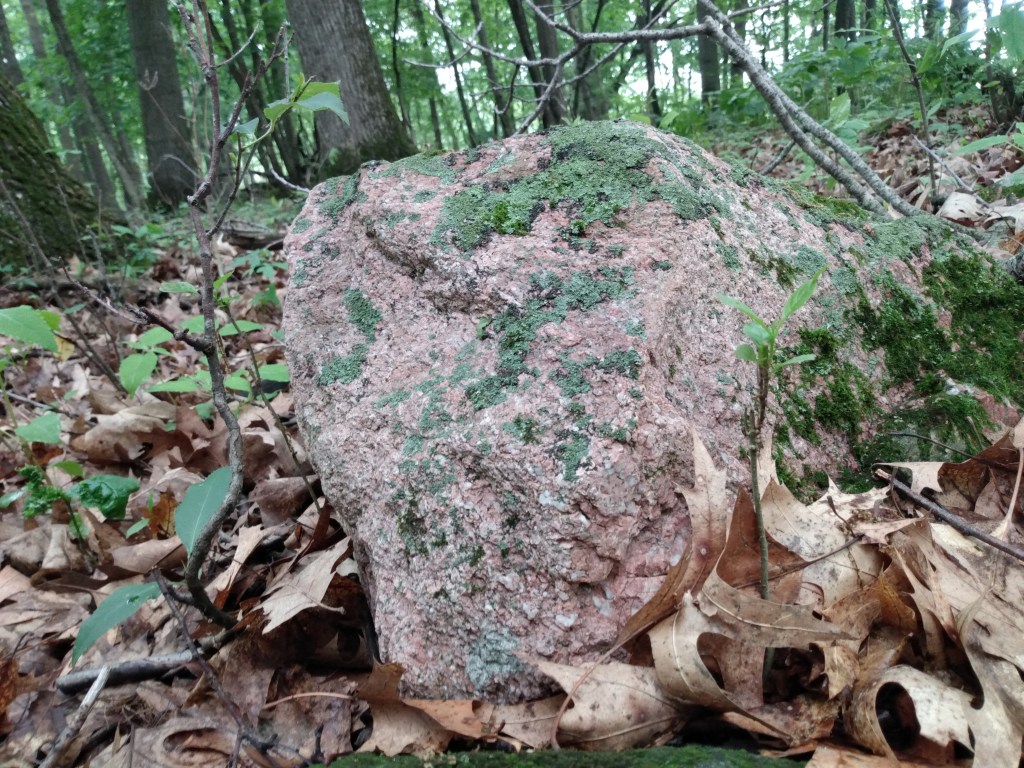
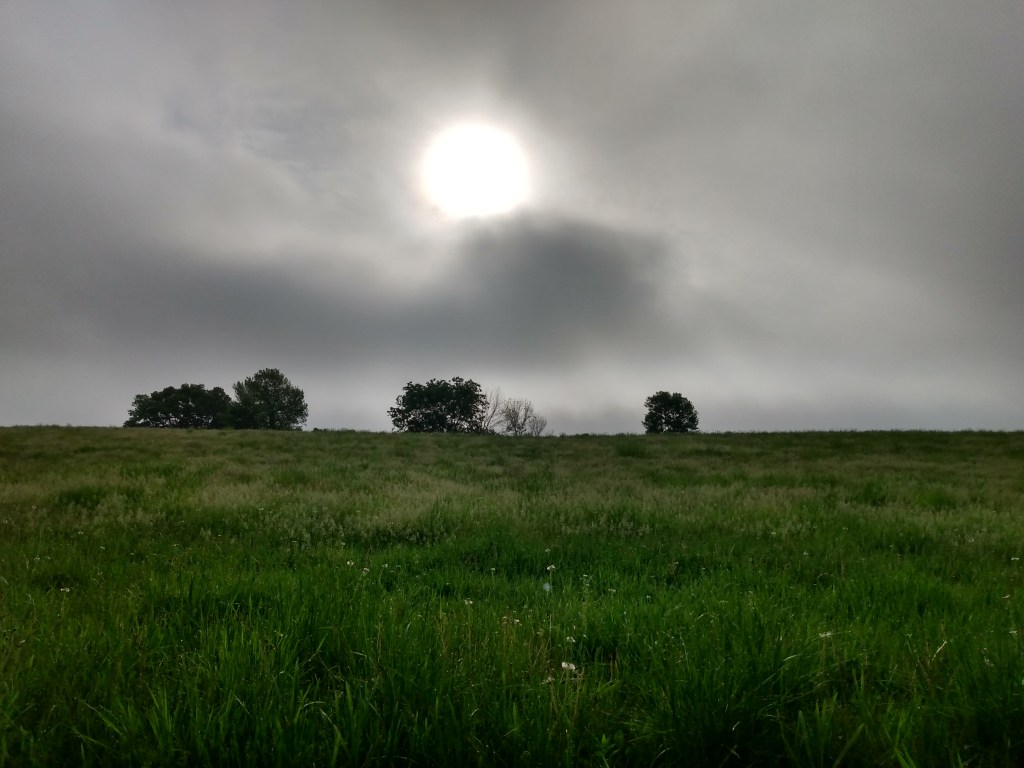
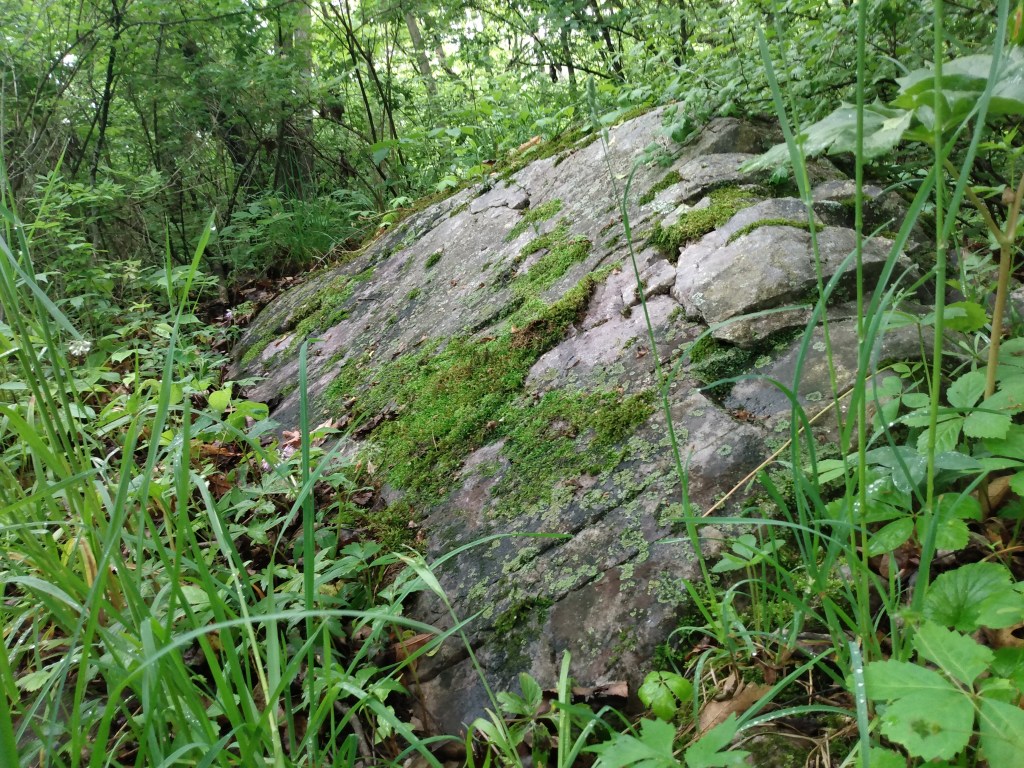
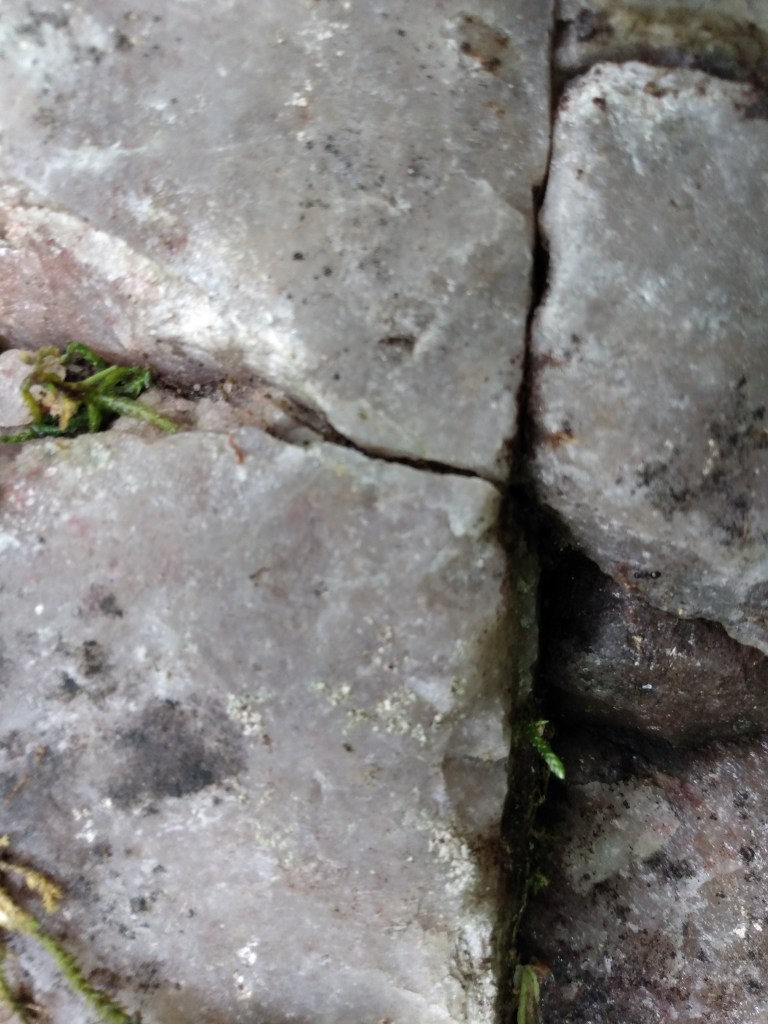
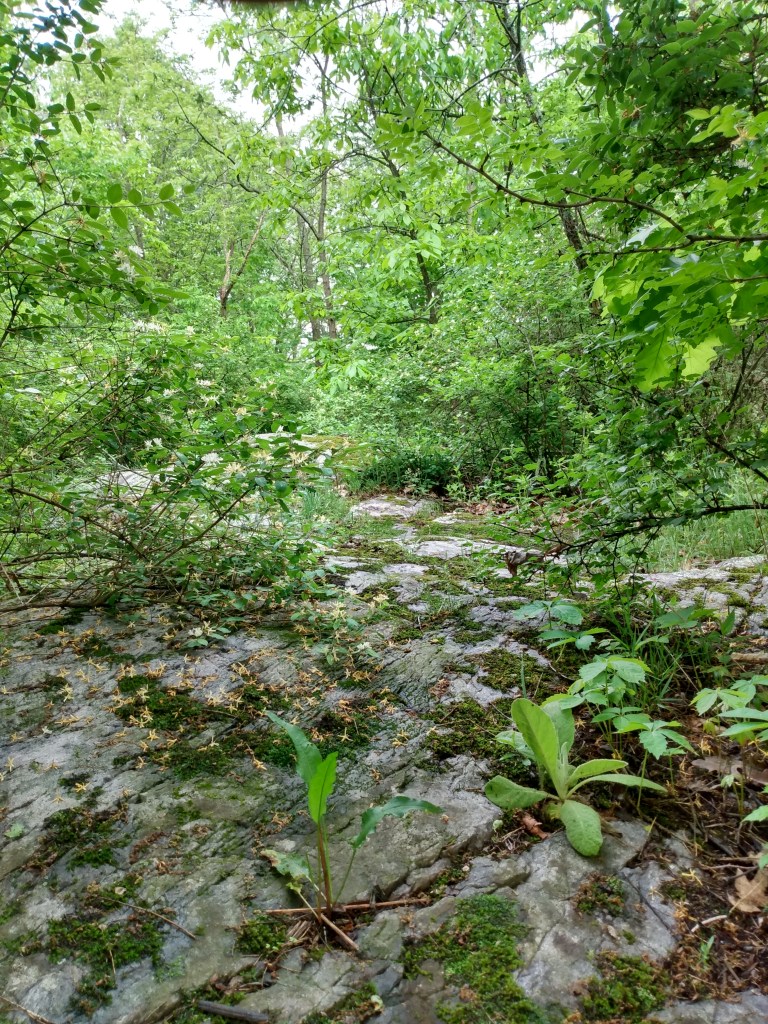
waterloo quartzite outcrops is a pair of sites with precambrian red quartzite and paleozoic conglomerate rock outcroppings. the northern site i visited is a clay loam island amidst wetlands along the crawfish river. the quatzite was apparently a manadnock (bare exposed rock uncovered by erosion) in the precambrian. this was my first visit in dodge county for this project, and a beautiful, foggy morning.
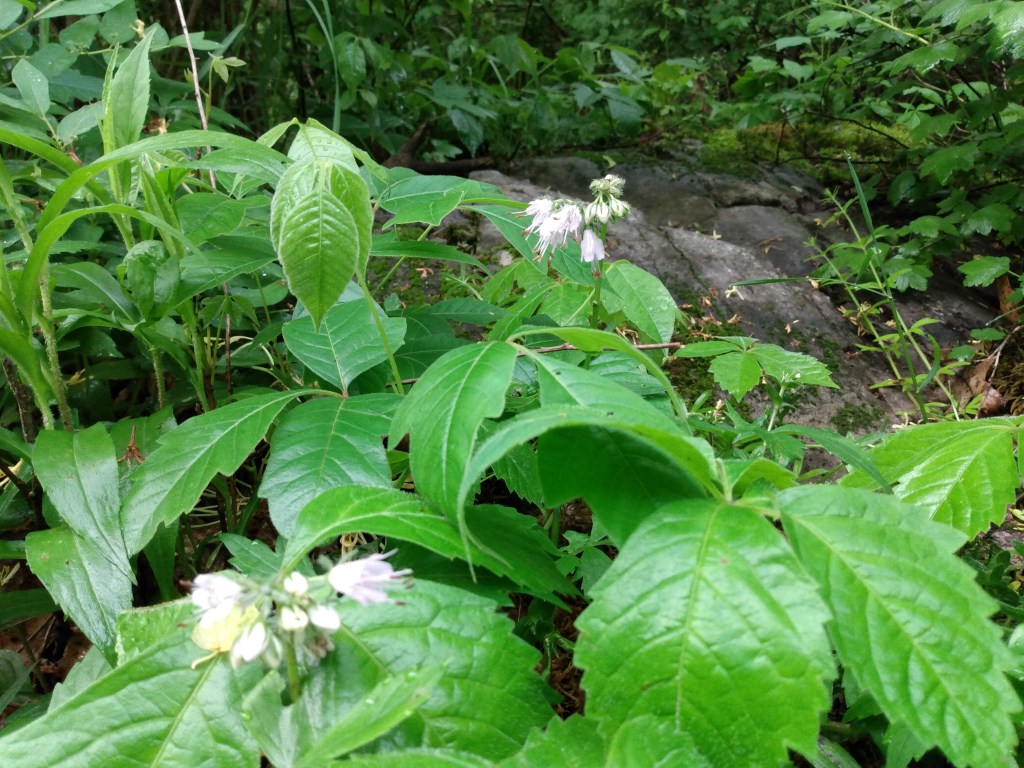
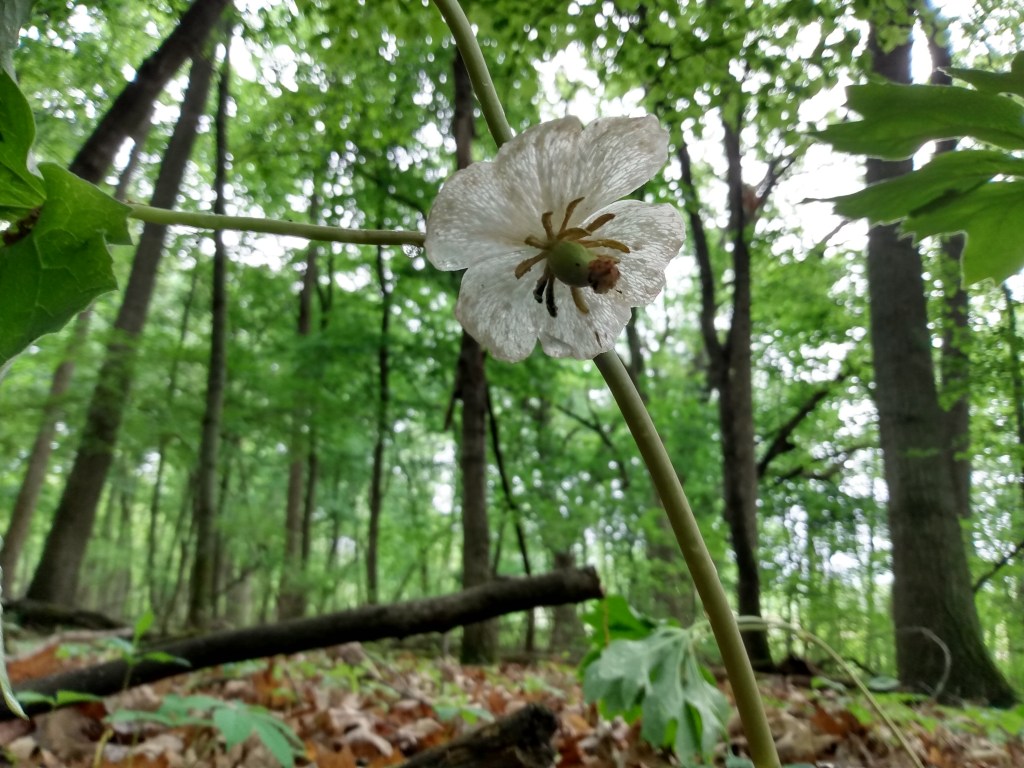
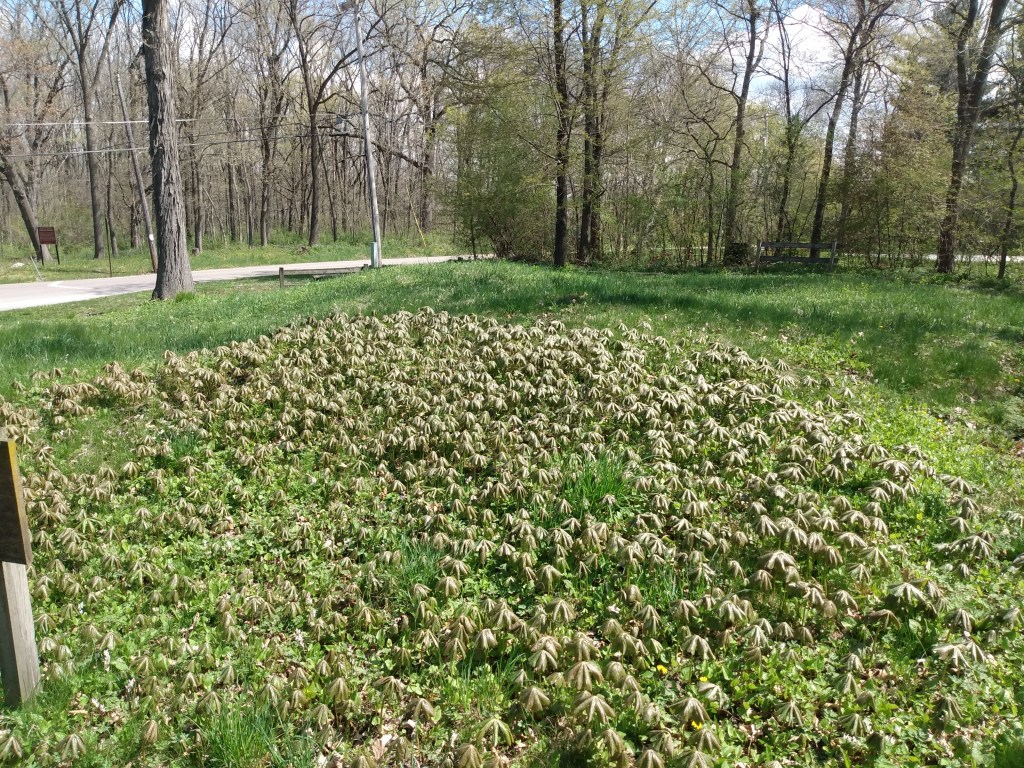
first i climbed the rise and saw my first mayapple blooming and a nice oak wood. on my way back to the river and amidst canada anemone, wild geranium, and virginia waterleaf stands, i came upon some of the outcroppings in secluded clearings. fabulous.
i caught sight of the first outcrop after spotting some stately mushrooms. i like when that happens. 🙂
veterans park lies along milwaukee’s lakefront and includes monuments to honor veterans, trails, shoreline, and a 14-acre lagoon. the lagoon is a favorite hangout for a number of water birds, and last year my wife and i discovered that green herons and black-crowned night herons find it attractive as a fishing hole.
this year there’s a siege of night herons hanging out, but who knows if they’ll linger over the summer (here’s hoping for our sake). i’ve visited them a couple times, and it’s mighty impressive just being in their vicinity as they roost and fly about. the lower water level lately has enabled me to walk out under their roosting trees over the water’s edge.
as i don’t have a “serious” camera, i’m not able to get really good shots of them, but i decided when i started doing this that i wasn’t going to let tech limitations prevent me from sharing and writing about things that i enjoy. so, not great photos, but i’m too excited about the night herons to care! 🙂 (tho’ p.s., i’m starting to look at serious cameras…)
crooked lake is a seepage lake surrounded by a diverse wetland complex all about (including open bogs, my favorite aside from fens…), forest, cedar lake, and other unnamed lakes—all settled amidst the interlobate morainal hills of the northern kettle moraine. crooked lake’s outlet forms a tributary of the east branch of the milwaukee river, which flows right down the hill from my place in milwaukee on its way out to lake michigan.
fantastic walk with perfect spring weather under glorious skies, and many spring ephemerals—some emerging, some at full tilt, and others already on their way out for the year. saw our first stand of bellwort, which i’ve been looking for since last march, so it was a sheer delight to lay in the soil and spend some time with them.
this was the last state natural area to explore in sheboygan county. good to have another county covered, but, as we say in wisconsin: forward!
a.
liverwort dying back
on each and every hillside
the lake only from afar
b.
streakt & frilling threeness
skirts trunk & frogcall
mayapple waiting to bloom
c.
legging it past kettle bog
and eureka! you’ve found me—bellwort
riding above the muck
since i haven’t stated this here in a while: this “state natural area poems” project began last year when lockdown happened in wisconsin, in order to have something to do with my kids as well as to keep us grounded in our local and regional habitats.
it started with the idea of visiting a state natural area (the preserves with the highest protections in wisconsin), going for a walk, taking a picture, and writing a three-liner about whatever we encountered there. and the original area was milwaukee county and adjacent counties. it’s now mushroomed into the main series and two sub-series, way more counties, and usually many more than one photo and one poem per site. the natural world just gives too much for such meager making!
i’ll keep going until we run out of sites to visit (not likely) or breath leaves the body.
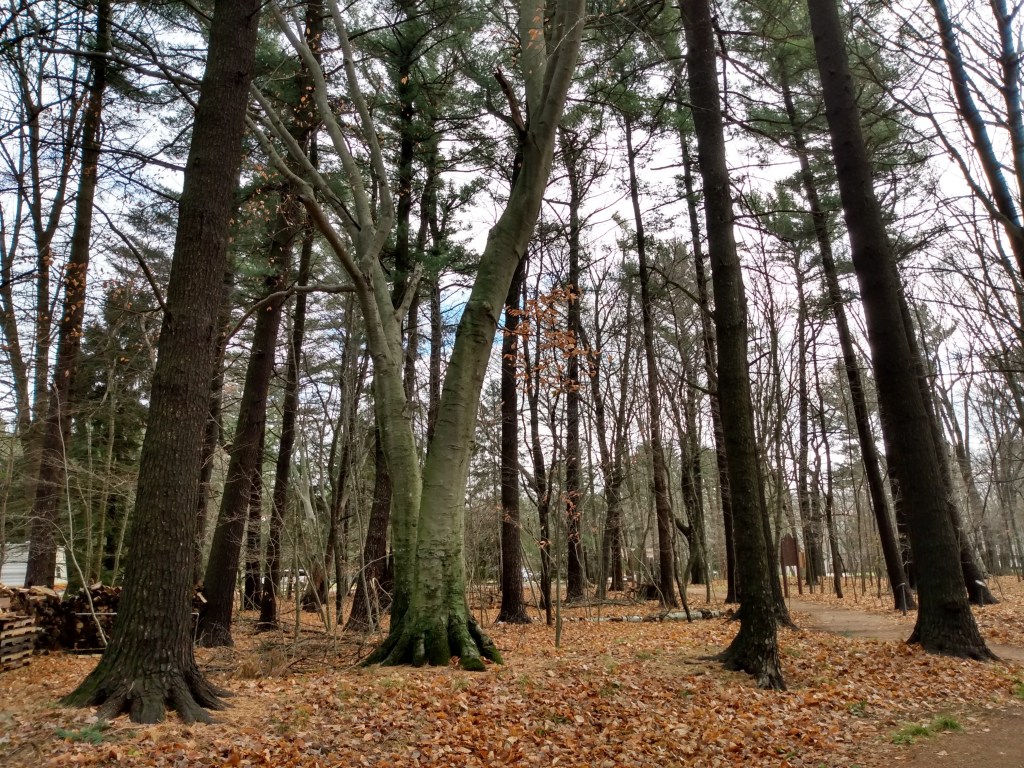
kettle hole woods is situated on a hill in the interlobate moraine formed by that glacier i have to keep referring to when i report on going up to the kettle-moraine in sheboygan county (which will have a resurgence once i start getting up to fond du lac county…).
it’s a nice secluded spot, open, with lots of geese at the moment who are not terribly amenable to visitors. the trees are shifting from oak-dominated to maple and beech. a lovely display of cloud and sky over the small unnamed lake.
indian mounds and trail park lies on a slope overlooking lake koshkonong in jefferson county. the rock river flows thru the lake and it once looked like a meadow because of all the wild rice and other wetland plants that grew in it.
the mounds here were built somewhere between ca. 200 BCE to 1200 CE by the woodland peoples. some of the mounds are “conical,” while others, like those above and below, are effigy mounds in the shape of birds, and still others in the shape of water spirits.
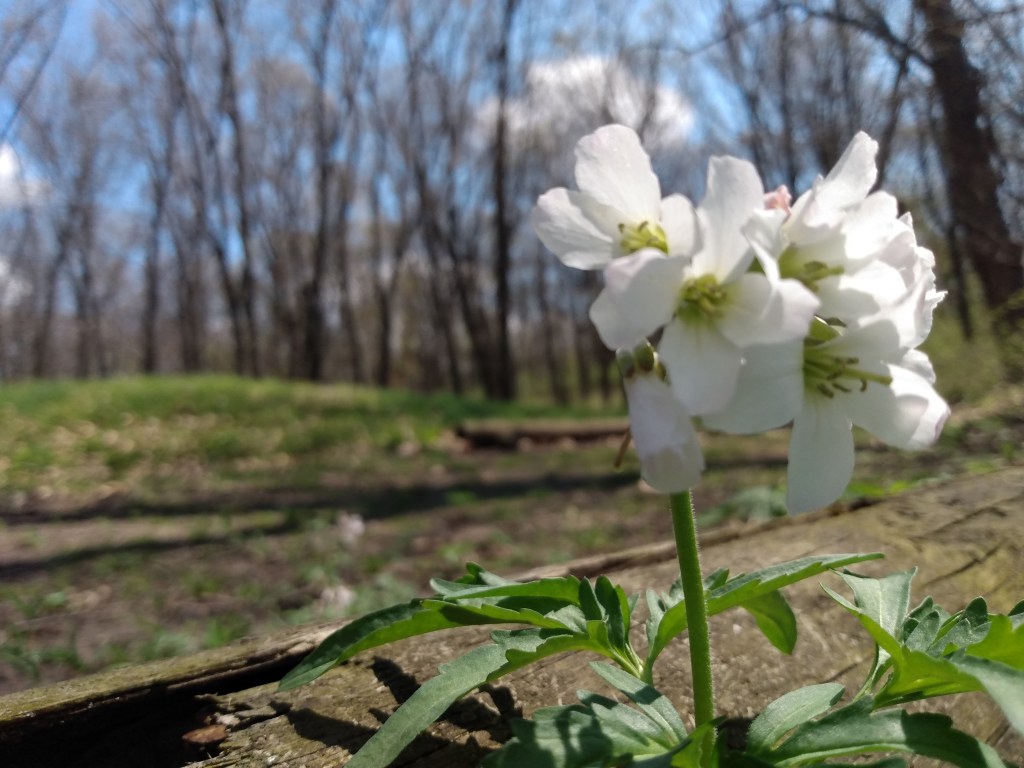
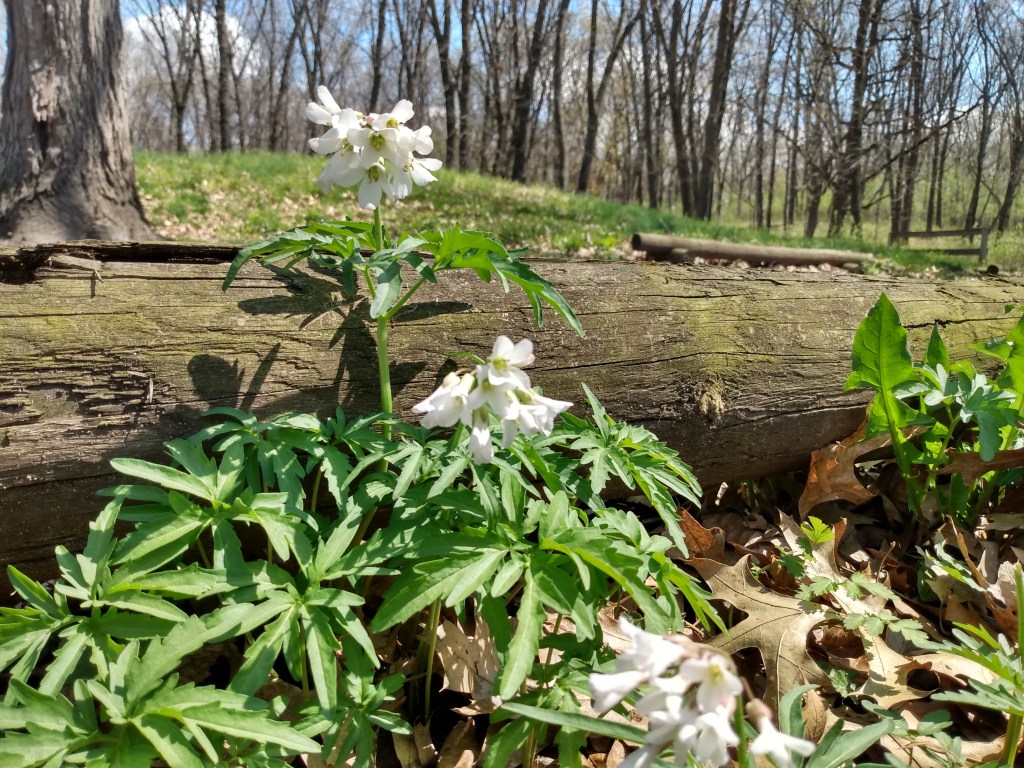
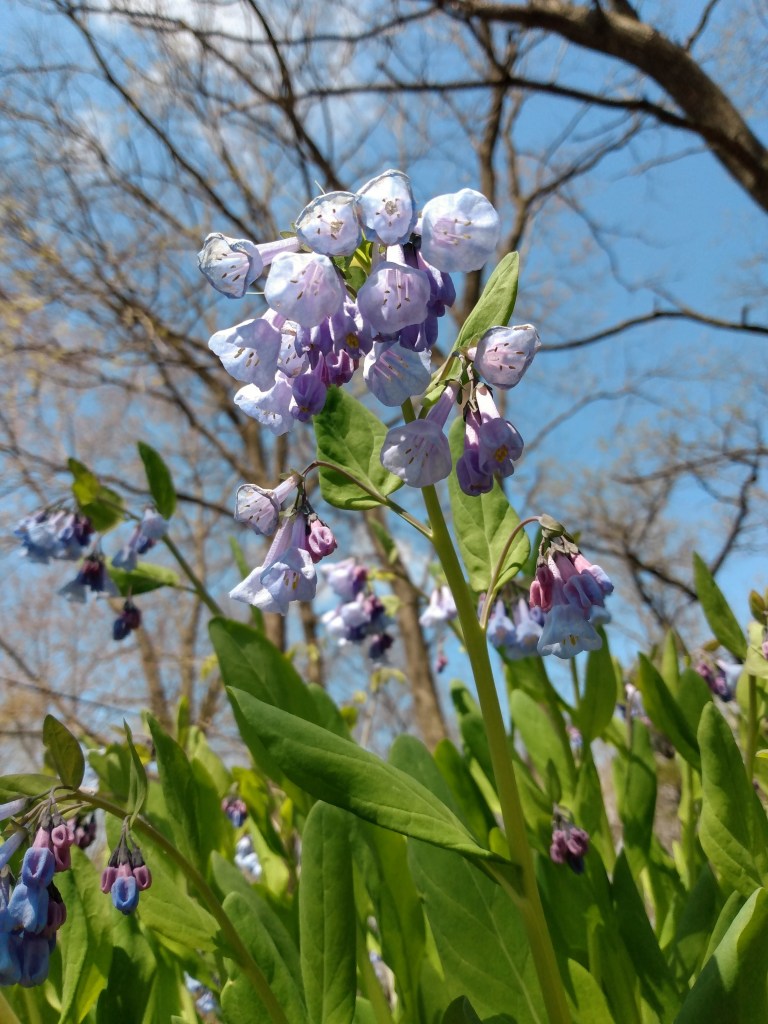
it was a perfect spring day for a hike with family, and so many spring ephemerals and other flowers were out on display: mayapple, cut-leaved toothwort, virginia bluebells, and the first of the jack-in-the-pulpit, et al. i’d been looking to find cut-leaved toothwort since last spring, so this was a particularly exciting stop.
The students in our college at Marquette staff a university literary review, and I’m glad to be included in this year’s issue with other faculty and students.
“Deer Camp” is a poem on a visit to the Late Woodland effigy mounds (deer and water spirits) in Sheboygan, Wisconsin, and here it is on the review’s new website!
In the interest of continuing to promote appreciation of Old English poetry and the anonymous poets behind the poems, and because it’s Friday, here’s a reading of an Old English poem.
This poem appears in the Exeter Book between the two big sets of riddles. It may not actually be a fragment, and you can see from the editorial title (“Homiletic Fragment II”) that it hasn’t received much love from editors and scholars of Old English literature. But I think it’s a nice little work, offering an exhortation to wisdom in light of the sweep of salvation history, and based in part on Ephesians 4:5-6. It does a lot in a little bit of room.
I thought it was interesting enough to have Br. Paul Quenon, OCSO and Sr. Sarah Schwartzberg do readings of the poem in a forum essay I did in the journal Religion & Literature too, and they mined monastic riches from it readily.
Anyhow, here’s the poem and my translation. It’s included in my chapbook Lofsangas: Poems Old and New, which features translations of oft-neglected Old English poems like this one.
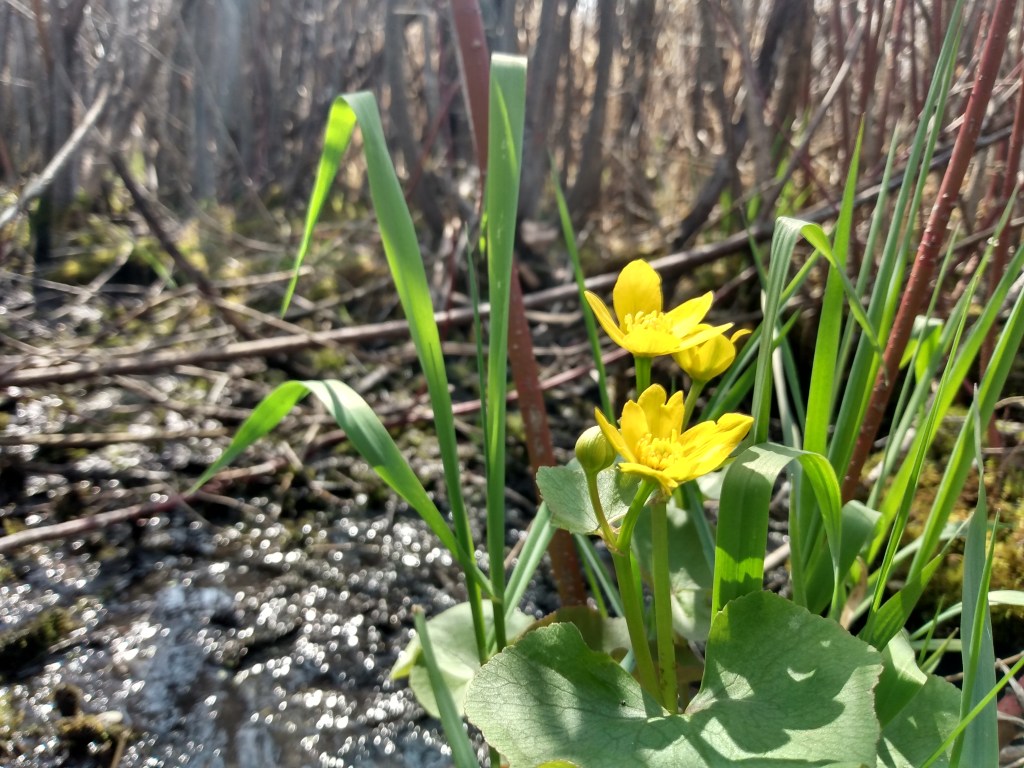
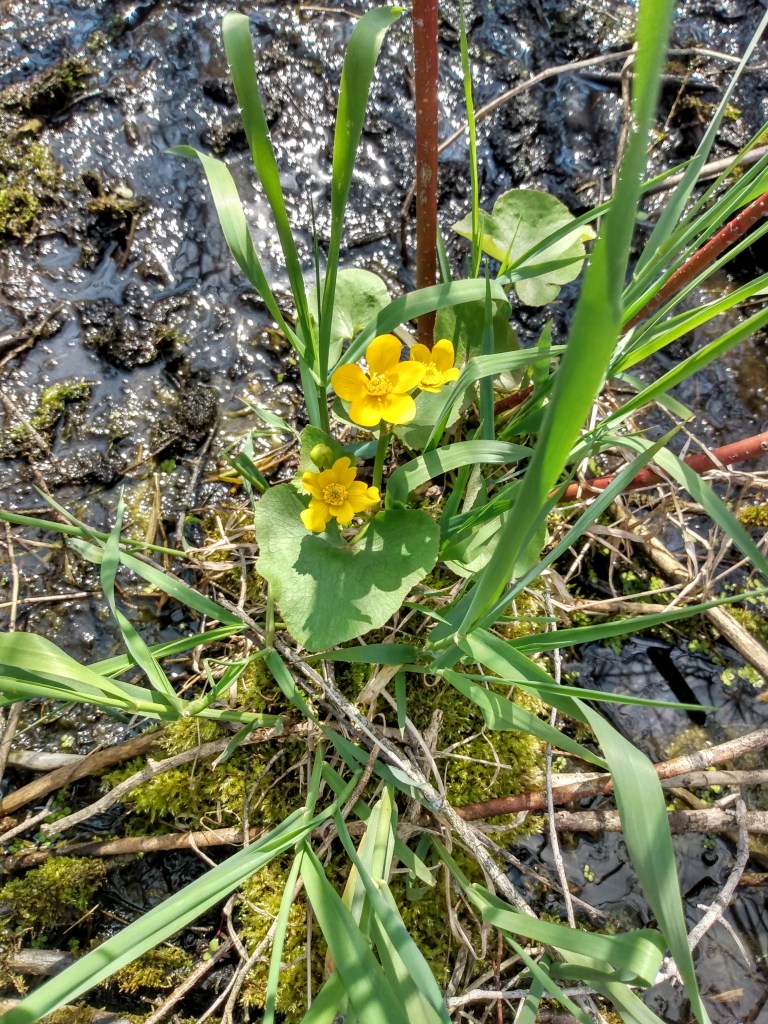
allen creek wetlands is a small wetland complex of wet sedge meadow, wet prairie, and fen along allen creek, which flows into the rock river a bit south of the site. access is limited, but we were able to have some fun interaction at the wetland’s edge. a lovely stand of marsh marigolds said ‘hi’ from the ditch on the other side of star school road.
black hawk island is a strip of low-lying land on the rock river near fort atkinson, wisconsin and lake koshkonong. it also just so happens to be the nearly life-long home of wisconsin’s preeminent poet, lorine niedecker. with my growing admiration of niedecker’s work over the last few years, it was a bit of a pilgrimage to visit her cabin and be physically present for the first time where her “life by water” occurred.
my own early life was supported and shaped by the same river, downstream, flowing past the edge of the glacial outwash fan i grew up on, and i admit to a certain naive camaraderie with lorine on account of this riparian confluence. either way, it was fantastic to have a few spare moments where she lived and made.