nichols creek east cedars lies on a morainal slope and the adjacent lowlands. the north-facing slope has springs and seepages that feed nichols creek and many white cedars. such a distinctive wood for this part of wisconsin. we walked thru much of the rise to the south of the cedars.
kamrath creek forest and fen is a tremendously kinetic set of natural communities to visit in the winter. while most areas now are quiet and still, here water seeps from springs and down spring runs into kamrath creek from forested slope and thru sloped fen, sometimes meandering from several seepages at once and with arms of the creek creating near-islands as the water rushes to get down the incline. can’t wait to get back in the spring. oh—and the yellow birches, my goodness!
thanks to the wisconsin dnr for tending this patch of earth.
kettle moraine red oaks is a 2nd-growth southern dry mesic forest that got its second life back in the 1880s. the oak-maple-hickory forest is situated on high interlobate moraine with lots of deep, dry kettles. dramatic topography.
thanks to the wisconsin dnr for tending this land!
Happy to report that a short poem of mine composed at one of the cafes on Marquette University’s campus during a February snowfall appeared yesterday in Green Ink Poetry‘s second collection: Safe Guard: Part 2.
Please do check out the issue here, and below is (very short) audio, because, as Hunter S. Thompson used to say: why not?
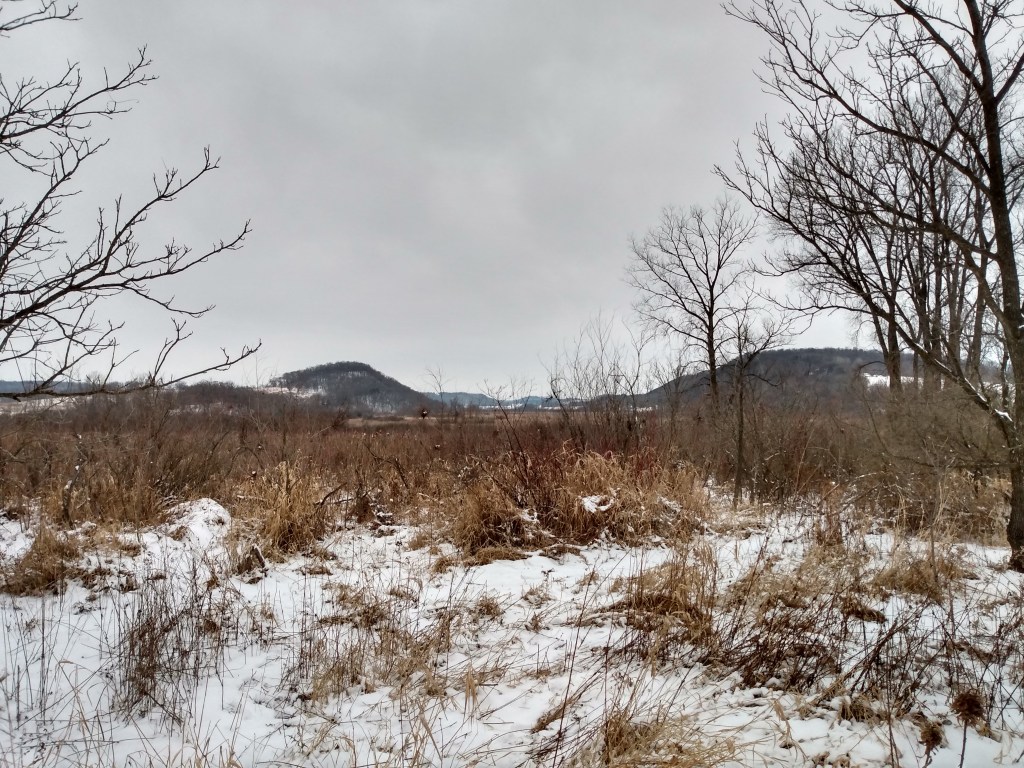
lodi marsh lies in a valley of glacial till, fed by springs and seepages. the hills to the west of the site frame the open marsh and sky dramatically. forest and prairie cover the southern knoll. the countryside around lodi is a wonder.
clover valley fen contains a series of 8-10 ft high peat mounds that began building around a set of springs 11,500 years ago(!). sedge meadow and woods surround the fen mounds, and whitewater creek runs thru it all. the iced-over wetland was a maze of frozen tussocks, some a foot over the ice. the fen mounds were spectacular, with spring water still visibly running off below the ice.
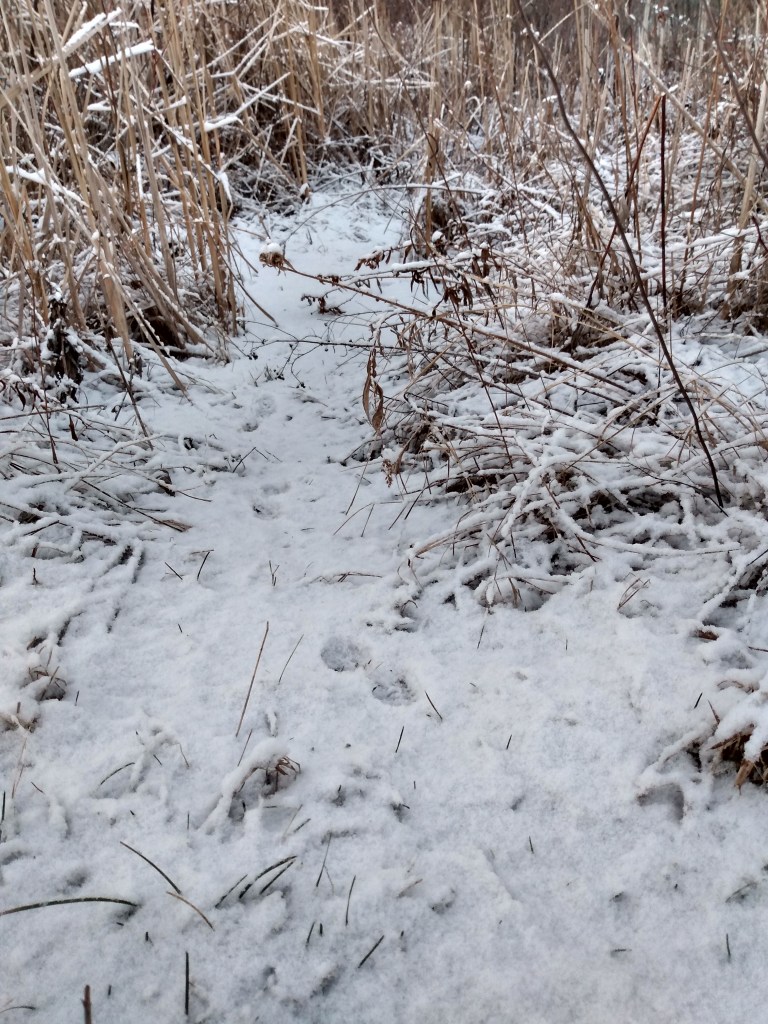
bluff creek is fed by hardwater springs and seepages from a morainal ridge. the surroundings contain mound fens, dry-mesic woods, wet-mesic prairie, and sedge meadow. it’s a watery and grassy melange! one of the season’s first sticking snowfalls decorated the terrain for the morning’s hike.
a.
wild thrushes over the spring run
and snow-capped goldenrod bowing
the fen-world opens its cold, wet arms
b.
waxwings in the birch grove, a crest
flexes and relaxes—to the branch,
buckthorn berry in beak
thanks to wisconsin’s dnr for tending this land and its many water features.
carver-roehl woods is a dry mesic wood with limestone cliffs cut by spring brook creek. (this spring brook feeds into turtle creek and is not to be confused with the spring brook that feeds into the rock river directly in janesville.) the cliffs support less common plant communities, while the woods have mature oaks, hop hornbeam, ash, and ironwood, with red and white pine on the high ridge above the eastern bank’s cliffs. the site lies on ground moraine from a glaciation before the last. gorgeous.
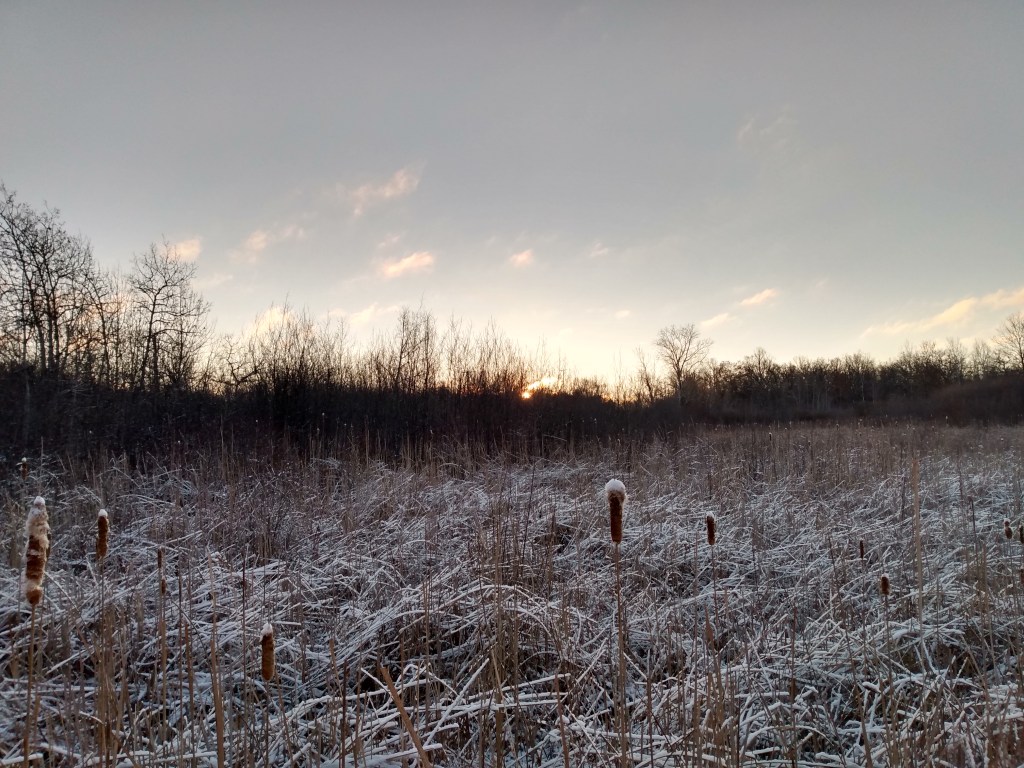
newark road prairie is a wet-mesic prairie remnant of the old pre-settlement rock prairie on the southern edge of rock county. over a hundred prairie species have been id’d here, with different habitat zones surrounding a sedge meadow. a winter walk in a wet prairie at sunset is something else.
a.
geese cut the purpling sky
the flowers pulpy stems
below a waxing gibbous moon
b.
bipeds on the ice
amid cattails—
not human habitat
and here’s a picture of the author/photographer doing his thing—why not?
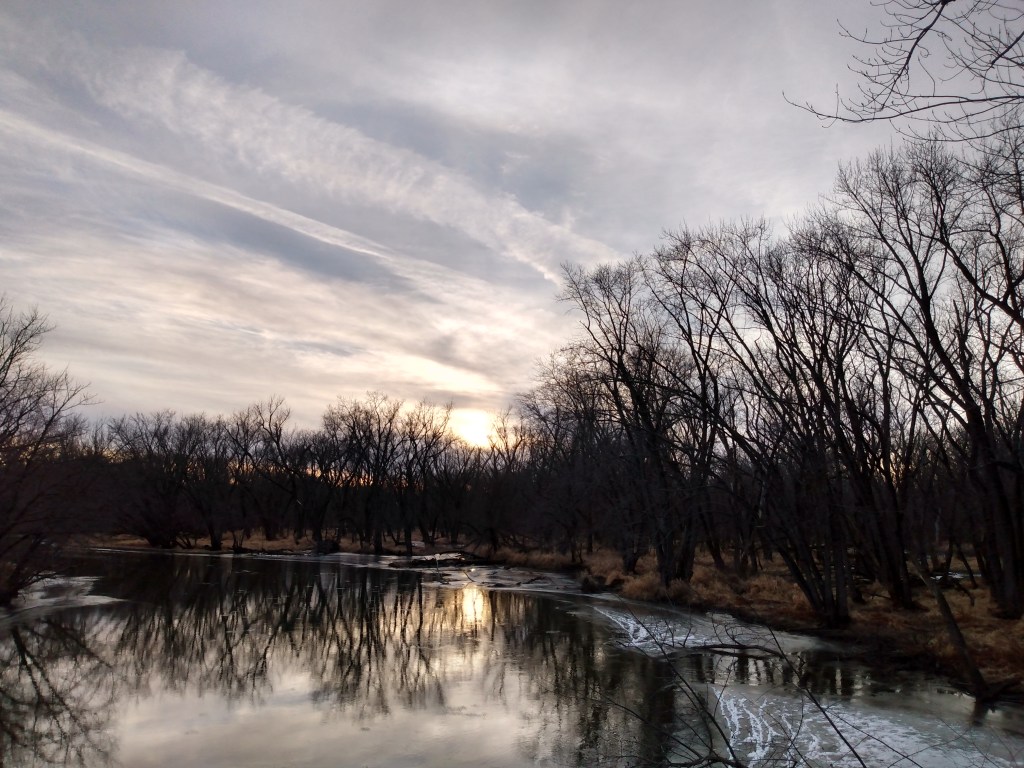
avon bottoms is a flat floodplain of the sugar river with a maple-oak forest. many southern-ranging species of plants find the northern edge of their range in the woods. swenson wet prairie s.n.a. is now part of avon bottoms as well.












 Jacob Riyeff