a rare personal entry written just here.

i was enjoying one of the quiet joys of life this morning, having coffee and conversation with a friend on a cool summer morning. he was (kindly) concerned for me, given that he’d seen the day before that i’d published yet another essay on generative software’s (“ai”‘s) intersection with higher ed.

i appreciated the concern, but i’ve mostly made my peace with our imperialist technologists’ ongoing hyping of their statistical probability software and their grand (half-baked) visions of technological glory.

i keep writing on it b/c, as a thinker and writer of an ecological, spiritual, and anti-imperialist bent, i think the counter-position to the mainstream techno-optimism and -complacency needs regular articulation, in order to offer genuine alternative ways of thinking and being that aren’t backed by mass amounts of capital, yes, but also b/c given my current role at a university i have lots of time to think and dialogue about the current set of problems and so can say some things others will agree with but may not have had the time to think out explicitly in their own day-to-day. also, it’s just cathartic for me to get all these ideas and critiques out of my mind, and i (deo gratias!) had gotten decent at the essay-form before this all went down.

anyway. as i was trying to say something to this affect to my friend the other morning, i struck on one notion i hadn’t come across before. (the rambling and enthusiastic conversation is another form i’ve practiced a lot with very generous interlocutors.) and that’s about humanism in the present moment. i’ve recently begun reading more about the origins of humanistic education in the italian renaissance, since i’ve recently also been embracing the ignatian tradition of my jesuit university. but that’s another story.

midstream, i made the association of our imperial technological moment with the humanist recovery of the 15th century with the monastics of the early medieval period i’ve studied and learned from for the last twenty years. the story of the “dark ages” has flipped somewhat, in scholarly circles due to further work on all the intellectual and artistic work happening during the early medieval period in europe and in popular circles due to books like how the irish saved civilization. basically, the idea is that while the monasteries didn’t make revolutionary strides in culture, intellectual and otherwise, they did keep the lamps burning during centuries in which it was difficult to do a lot beyond keeping folks fed and safe. and later on, the early humanists brewed up their own recovery of classical learning in direct response to and in defiance of the overly technical and professional nature of education in the medieval universities.
taken together, these movements (resisting utilitarian education and preserving a tradition of culture in the face of hostile social currents) give us a sense of where humanists are now. in the face of the whole technique-obsessed mode of civilization, the firehose of “content” in online spaces and the devotion of so many to the feed as a cultural form, and the techno-imperialist pushing of generative software (what we’re calling ‘ai’ in capitulation to industry), humanists cannot always get heard over the broiling cacophany. but we can trim the lamps and keep them burning—while software is trained without consent on artists’ and intellectuals’ work, while education is coerced into ham-fisted applications of industrial statistical-probability generators in their classrooms, while humans are conditioned into a culture that (at least in some sectors) sees interacting with certain software systems as “good enough” substitutes or at least corollaries to social and romantic relationships, etc. while the guys (and it’s largely guys) with capital spout off about colonizing space and “turbocharging” intelligence or whatever, we can keep the lamps of the long tradition of human art and thought burning. and, while not ideal, maybe it’s enough.

i’ll try to do more, and lots of folks (some of whom i agree with on lots, some of whom i would agree with on very little) will try to do more. but we’ll also hope that keeping the lamps is enough to get us thru to whenever larger groups of people want literature, philosophy, theology, history, and visual and aural arts in person again, when more of us want in-person culture again, when more of us want in-person communities that celebrate together again.

we’ll see. regardless, it was a good, convivial morning. +u.i.o.g.d.
new translation of old high german fragment in _new verse review_

after my second collection went to the publisher i’ve turned my eye toward finishing a couple other book projects, so not as much poetry writing of late, but the dry spell is broken momentarily as the new verse review just put out my translation of a fragmentary versification of the ‘christ and the samaritan woman’ scene from the gospels worked up in old high german verse likely in the 9th century. the general dialect (alemanic) is the same as where one of my maternal ancestral lines is from.

the meter has internal rhyme, which felt very clunky to me at first, but it’s grown on me somewhat. it was weirder when i found out about b/c my years of learning about dead germanic languages tended to assert that any rhyme in this literature was an import or quirky experiment. but plenty of old high german is written in this way, and before latin started rhyming regularly. huh.

anyway, maybe you’ll enjoy it. 🙂

NEW COLLECTION PUBLISHED TODAY!

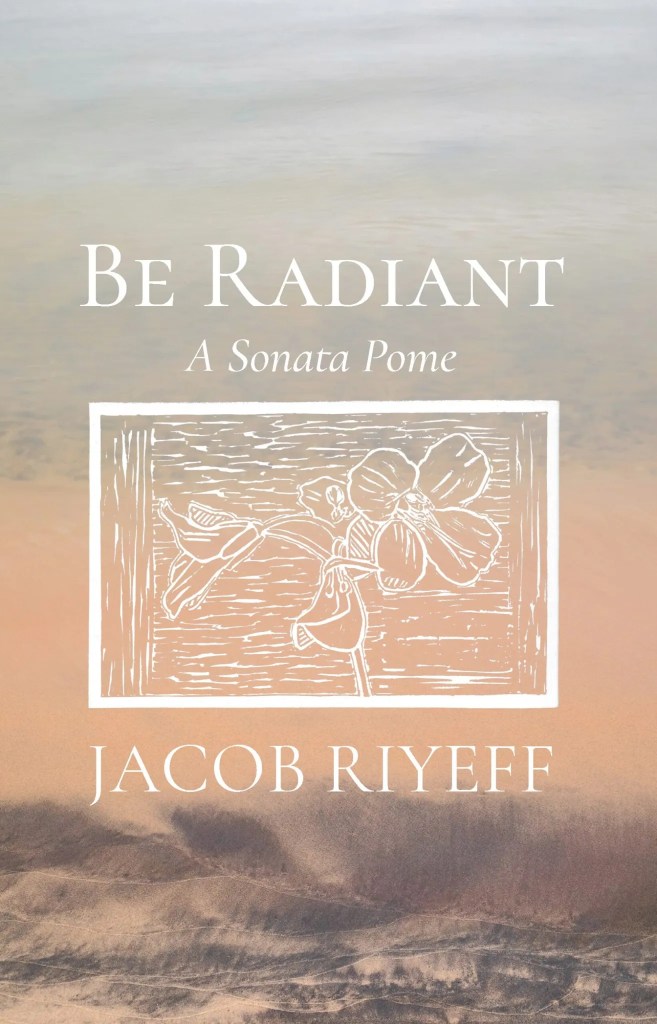
hey folks: it’s been a busy day, but i wanted to get this out before i retire for the evening. because today my second poetry collection, be radiant: a sonata pome, has been published by fernwood press!

this collection is everything from right before the pandemic to about a year ago, including some prints i’ve made for illustrations (was very pleased fernwood allowed me to get some visual work in the collection too). my copies are still en route, so i haven’t yet seen and held it, but today is the official release.

readers of this blog will see familiar material in a whole section of the collection devoted to the state natural area poems. 🙂

the blurbs (from very gracious fellow poets) are below, and you can order a copy here if you like and want to support my work. wishing everyone a peaceful night!

Faced by the specter of eco-catastrophe, what can we do to ward off anxiety and paralysis? We can contemplate and celebrate, as Jacob Riyeff does in this volume, that patch of the Earth which is our patrimony. Microscopically observed and lovingly curated, these lyrics articulate, layer by layer, a Midwestern landscape and time-scape radiant with the often-hidden beauty of life. Archaeology, geology, and botany fuse in a poetry that invites readers to unearth and reverence their own inheritance in our anything but common, Common Home.

Laurentia Johns OSB, Stanbrook Abbey, England

Jacob Riyeff’s Be Radiant does precisely what it proclaims. Riyeff’s poetry comes in a variety of styles and forms, but each poem radiates with a sense of time and place. Riyeff, like the fungi he loves so much, is a poet rooted in place. His poems reflect this rootedness. Riyeff, as a scholar, is also rooted in the English language. He weds these two in poems like “The Ruin,” which is a translation of an Old English poem, and yet Riyeff places it before a burial mound in his home of Milwaukee. Consume these poems, and you will find yourself radiant as well.

David Russell Mosely, poet and theologian

“Adaming creation beyond the Fall,” Jacob Riyeff-a Blakean hybrid of poet, mystic, and illuminator-brings us a new collection that visits “Paul the hermit in the desert”-but still has time to paddle his daughter out past the breakers under an afternoon sun. We see touches of earthy Kerouac, of nature-loving Wordsworth, all against a soaring, ancient spirituality. In “Spring Ephemerals,” he records, with telegraphic, haiku-like focus, intricate images of the damaged Wisconsin wilderness-dovetailing, later, with his translation of the Old English poem “The Ruin.” The sequence “Leads and Diggings” excavates his own family history through voice and narrative-and extends its core sample through the strata of geologic time. This poet is a hybrid of many pasts and worlds-in other words, an American original.

Amit Majmudar, author of Twin A and What He Did in Solitary

new essay on academic integrity in _jesuit higher education: a journal_

as some of you may know from things i’ve said, i’m the current academic integrity director at marquette university. it’s been a very active year in the office with the release of ‘generative a.i.’ chatbots to the general public. among other things.

but this new essay, thankfully, is a broader reflection on the nature of integrity in higher education generally, based in my first year’s observations and lessons learned. it explores integrity in three “keys”: medieval monastic (because it’s me), aristotelian/thomistic (which was a new endeavor for me), and existential (to round things out).

even if you’re not in higher ed at all, there are still reflections on integrity as a virtue (in the greek sense of “excellence”) in life generally here that could be of interest.

pax inter spinas

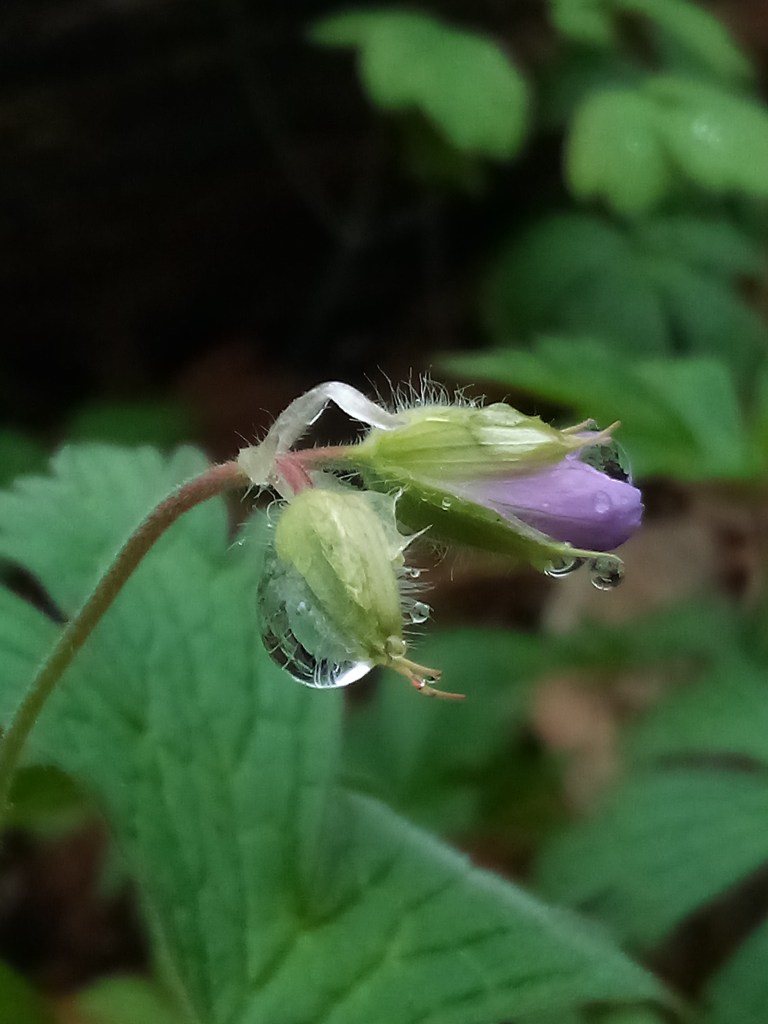
ps. included here are some images of wild geranium from this spring that didn’t get on here.

and now, for something completely different: “gen ai” and education

though i don’t talk much about it on here, i’m a teacher in higher ed. and i’ve been thinking a lot, given my duties, about the intersection of so-called “gen ai” (i’d prefer something like “probabilistic information processors,” which is less sleek but more truthful) and the human person. i think about these things from a critical perspective informed by folks like jacques ellul, marcel gabriel, and ivan illich. i’m also very glad for dr. emily bender and timnit gebru’s work in this area.

anyhow, recently i’ve had a couple things published on this, and i’m happy to be able to provide some countervailing measure to the current dominant discourse. basically, both “ai” boosters and doom-sayers all assume premises in their arguments about the intrinsic good of efficiency, quantitative productivity, automation, machines’ presence in human life, and the computational model of the human mind (not to mention what on earth to do about bodies!) that make their differences not that substantial. for my part, i’m concerned with the limits of what and who we are as humans, because it is those limits that make us precisely who we are. i’m also concerned with how technique (the rationalization of processes for ever-greater efficiency) forms and shapes us, reducing our capacities and ability to see, in general.

in this “ai” moment, this problematic conditioning (that machines are better at things than we are, that if we can make use of a tool to make something easier for ourselves we should) affects more of who we think we are than prior roll-outs from silicon valley. a key factor here is what gabriel calls “power at one remove”—the ability to discern for ourselves when it is in our genuine best interest to use tools for the power they provide us and when it’s not. this, he says, is what used to be called wisdom.

anyhow, i could go on, as you might have figure out by now. but dealing with this in various capacities is part of what has led me to need some distance from the digital world in general (see the sparseness of posts over the last few months). not the whole deal, but part of it. just needing space in my life from machines in general.

anyhow, if you made it this far, here‘s an essay of mine that’s more philosophically based that came out in conversations in jesuit higher education a bit ago, and i also had a part in an article from the milwaukee journal sentinel that i contributed to in a more practical capacity, though i see now that it’s behind the paper’s paywall, unfortunately. maybe you can still get to it here?

i’m guessing more will be forthcoming. 🙂

sna poems #148: waubesa wetlands

a couple updates for those reading. first, i don’t usually put much personal stuff on here, but my wife and i just bought a house in milwaukee, wisconsin about a month ago. been here eight years, and it feels good to be settling in for real. just to say, things happen but also that’s part of why i haven’t had much time to get out into the unbuilt spaces lately. second, for those enjoying the verse, my second collection of poems, be radiant, is coming out from fernwood press in january, so stay tuned for more info on that front. anyhow:

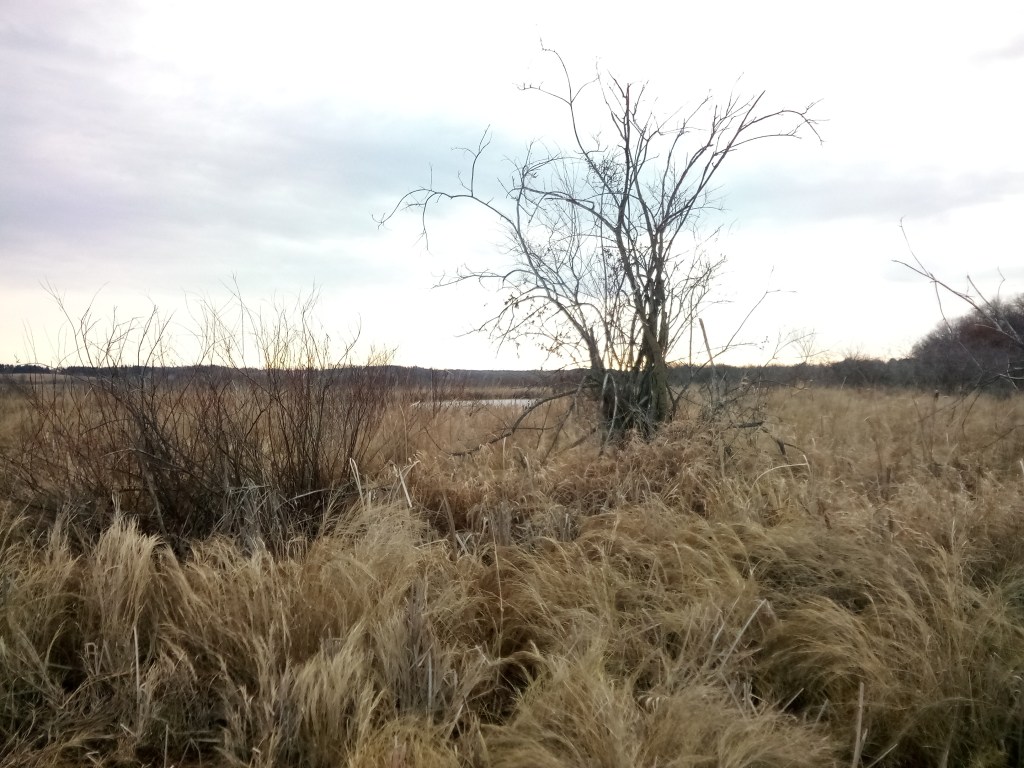
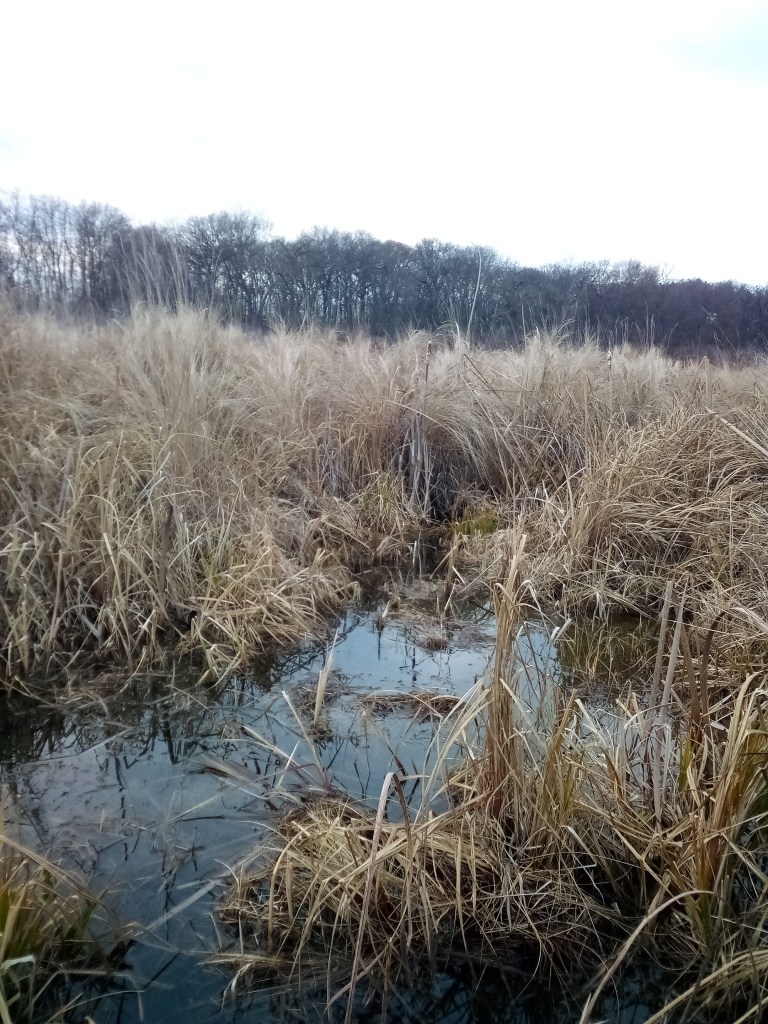
waubesa wetlands lie in a larger nature conservancy site, a sprawling fen-dominant wetland complex with springs and streams feeding. we walked in and were able to navigate the drier areas, but two steps out into the mud flat along one of the streams put me knee-deep in mud. (had waders on.) so we tramped back around along one of the spring runs instead and sat in the wooded edge before heading on. quiet due to winter and all, dock abundant among the grasses.

a.

the bird calls really

our foot-falls

but for one stray duck

b.

“all the dry grasses,”

snyder said:

but not these grasses

c.

cloud whisps in the sky

my children

gone for christmas break

willow cone gall midge:

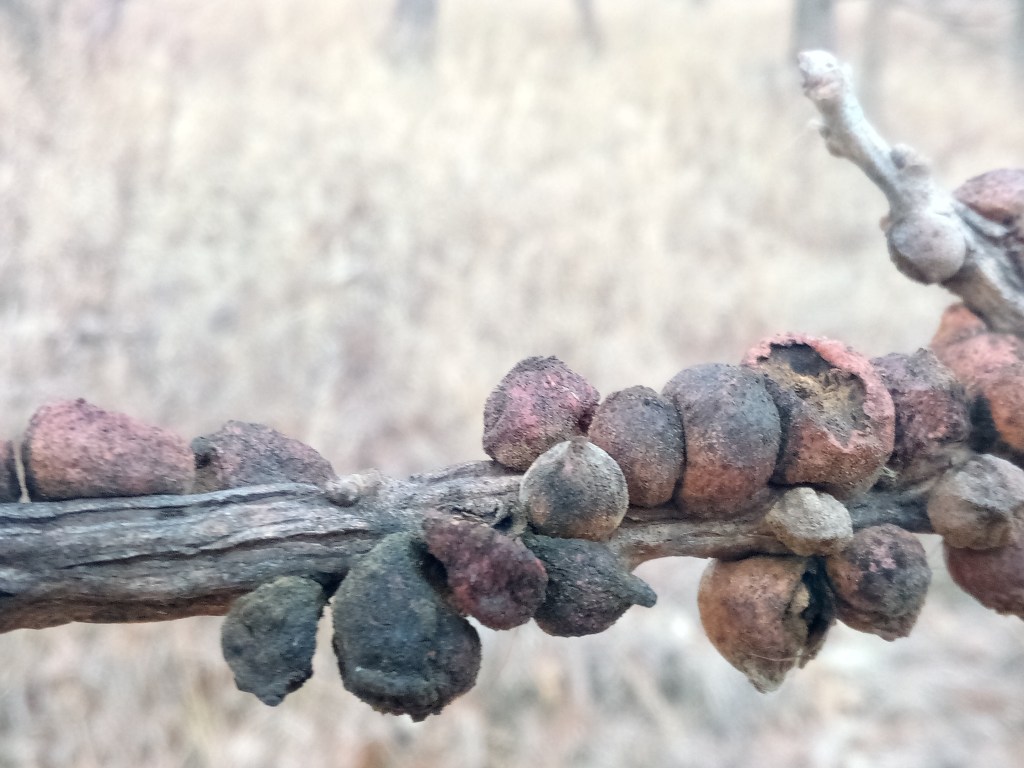
disholcaspis gall wasp on oak:

sna poems #147: badfish creek wet prairie and spring seeps

it’s been months since our last sna’s. so i took a christmas-octave interurban drop-off/pick-up to spend some hours walking in dane cty. first up was badfish creek wet prairie, a wet prairie that, while bordered by ditches running to badfish creek, has an intact interior hydrological system. since there’re precious few intact prairies in general in wisconsin, it’s important for understanding such habitats.

saw a couple pheasant on my way in, gatekeepers. they let me pass and i had about a mile walk to the actual site, and couldn’t stay real long as i had to meet my brother at the next site. but an enjoyable jaunt around in the dry grasses in the unseasonable warmth.

a.

the ditched wet prairie

and weak sun

kiss because they must

b.

among the grasses

a red bell—

winter without cold

c.

shocking red and green

in the ditch

stooped for midday meal

saw this on the way out:

closer: