sna poems, supplementum #22: indian mounds and trail park

indian mounds and trail park lies on a slope overlooking lake koshkonong in jefferson county. the rock river flows thru the lake and it once looked like a meadow because of all the wild rice and other wetland plants that grew in it.

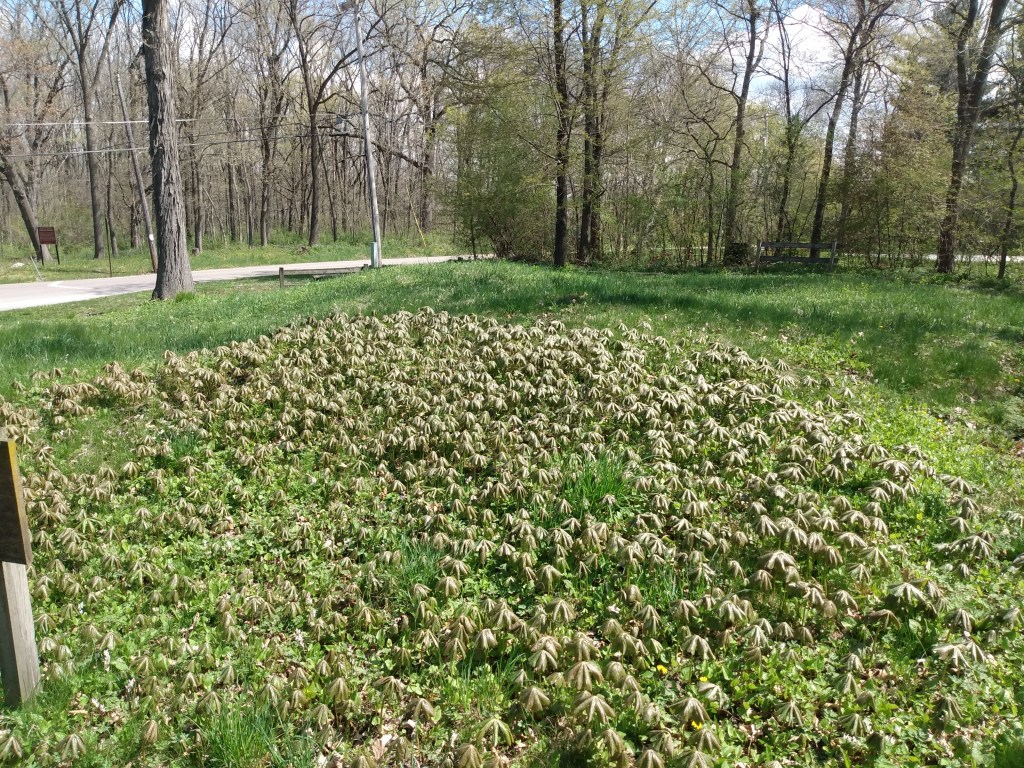
the mounds here were built somewhere between ca. 200 BCE to 1200 CE by the woodland peoples. some of the mounds are “conical,” while others, like those above and below, are effigy mounds in the shape of birds, and still others in the shape of water spirits.

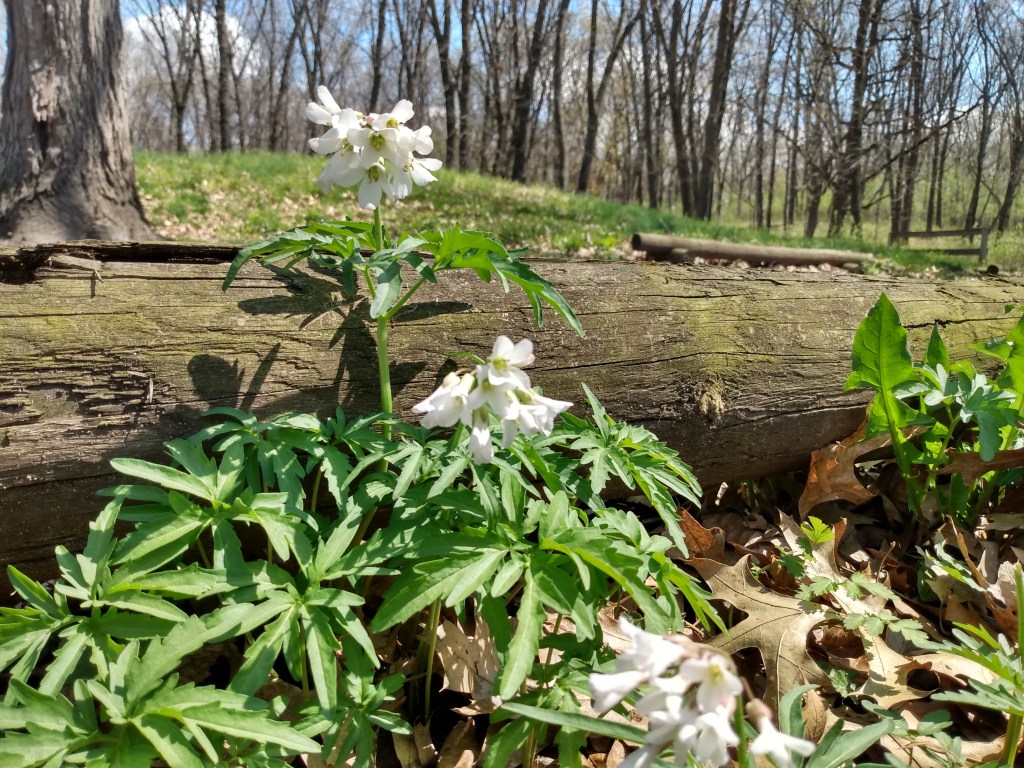
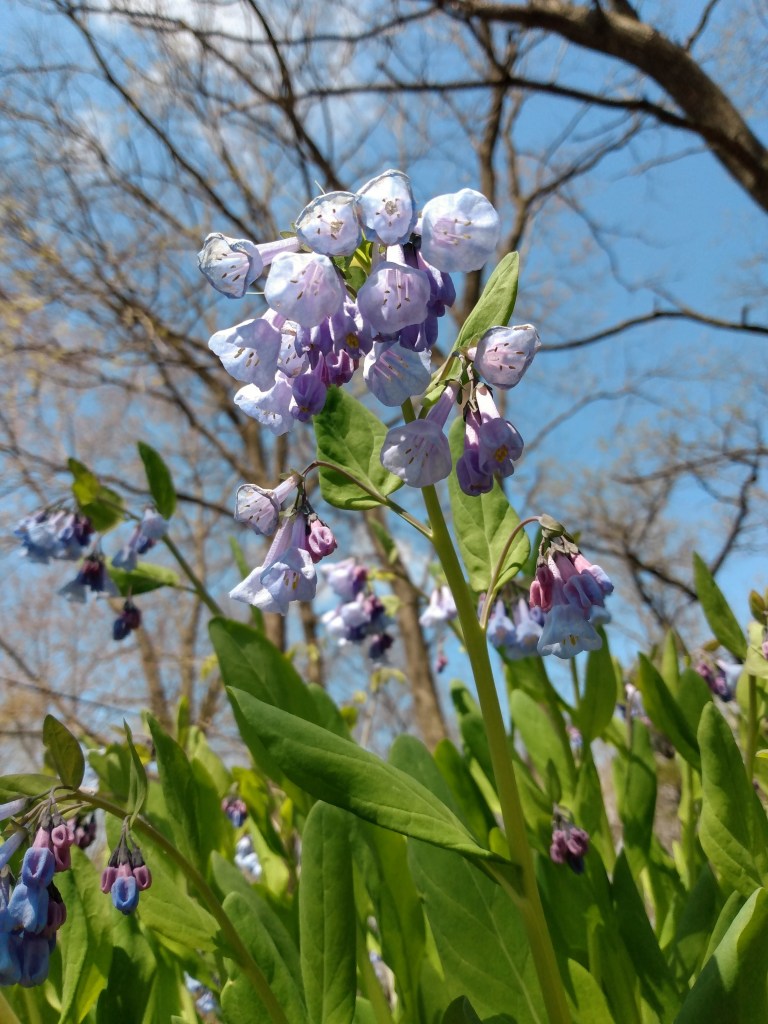
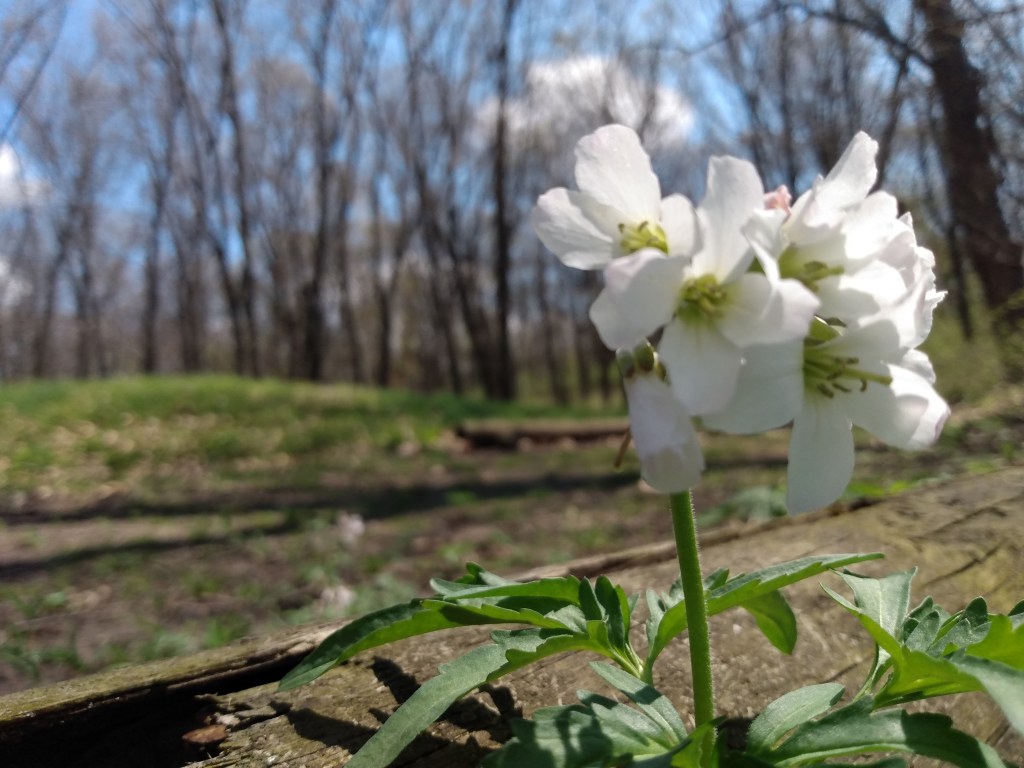
it was a perfect spring day for a hike with family, and so many spring ephemerals and other flowers were out on display: mayapple, cut-leaved toothwort, virginia bluebells, and the first of the jack-in-the-pulpit, et al. i’d been looking to find cut-leaved toothwort since last spring, so this was a particularly exciting stop.

.

among the mounds, sun

breaking in. cut-leaved toothwort

low petal shower
sna poems #77: allen creek wetlands

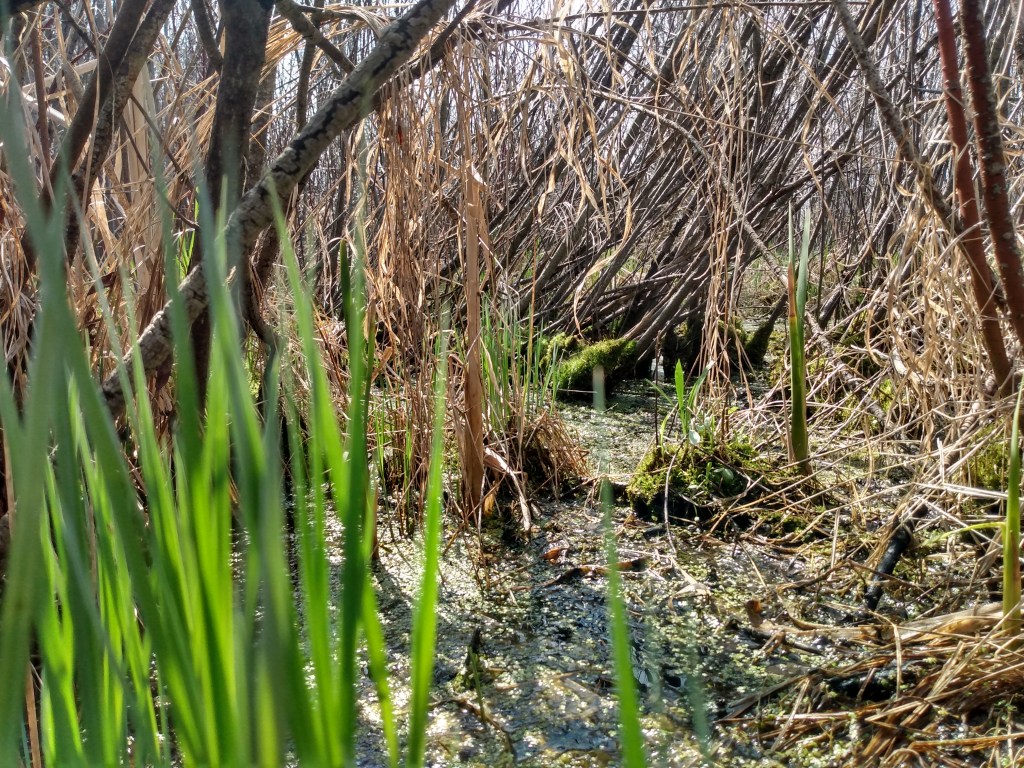
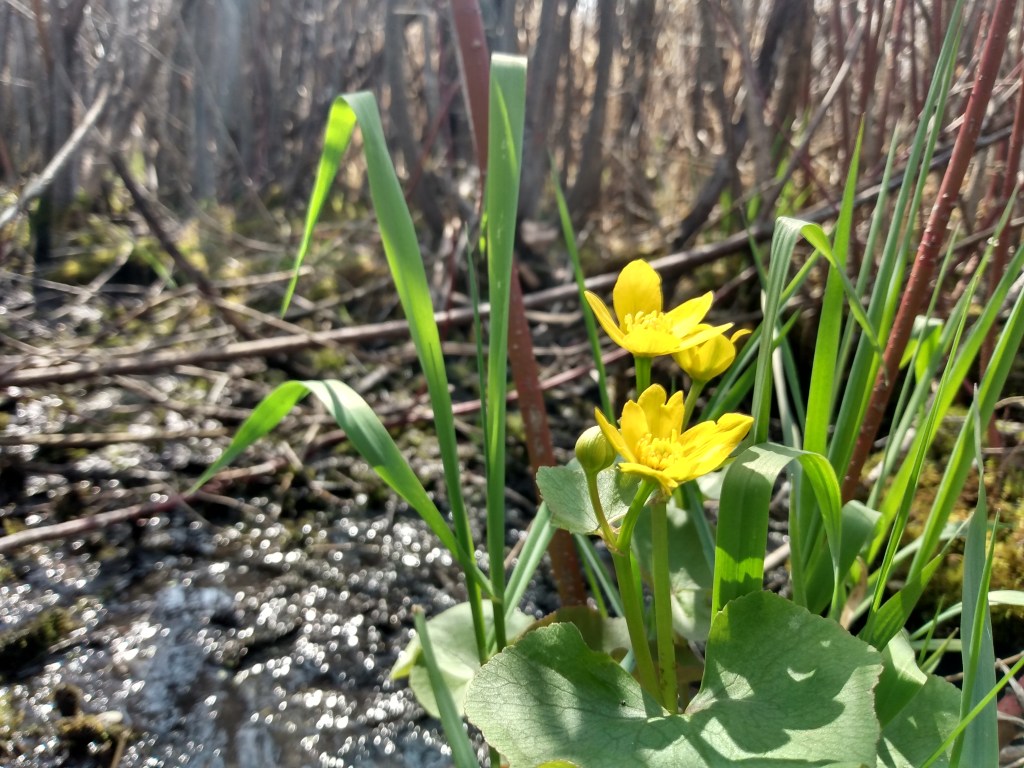
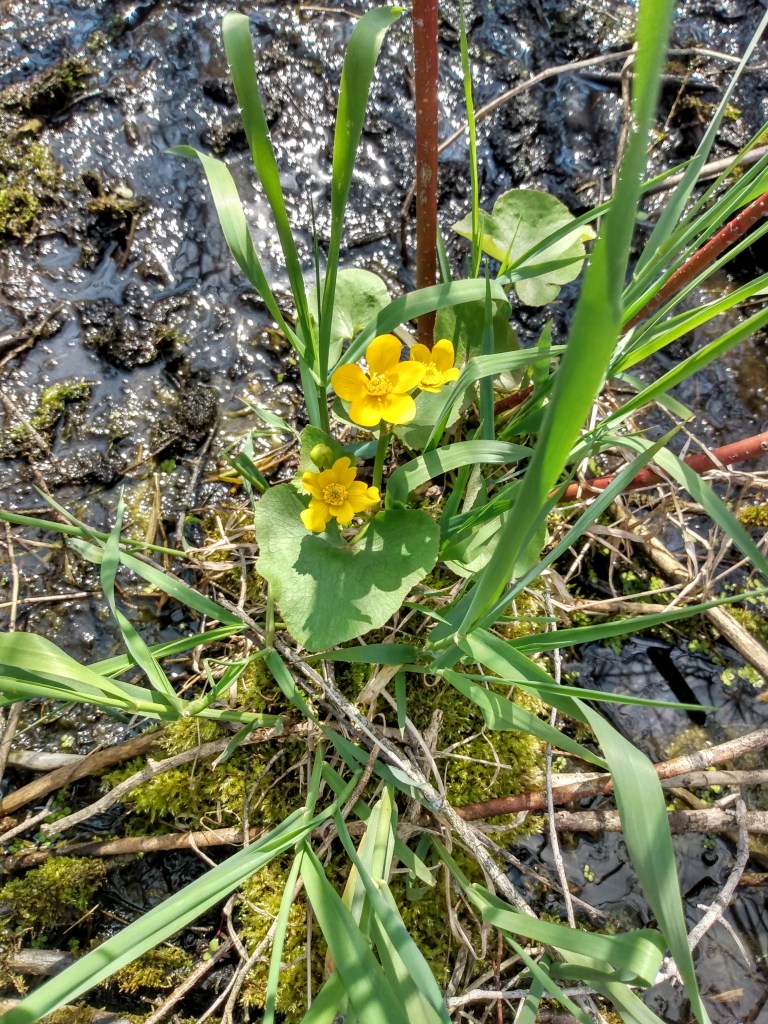
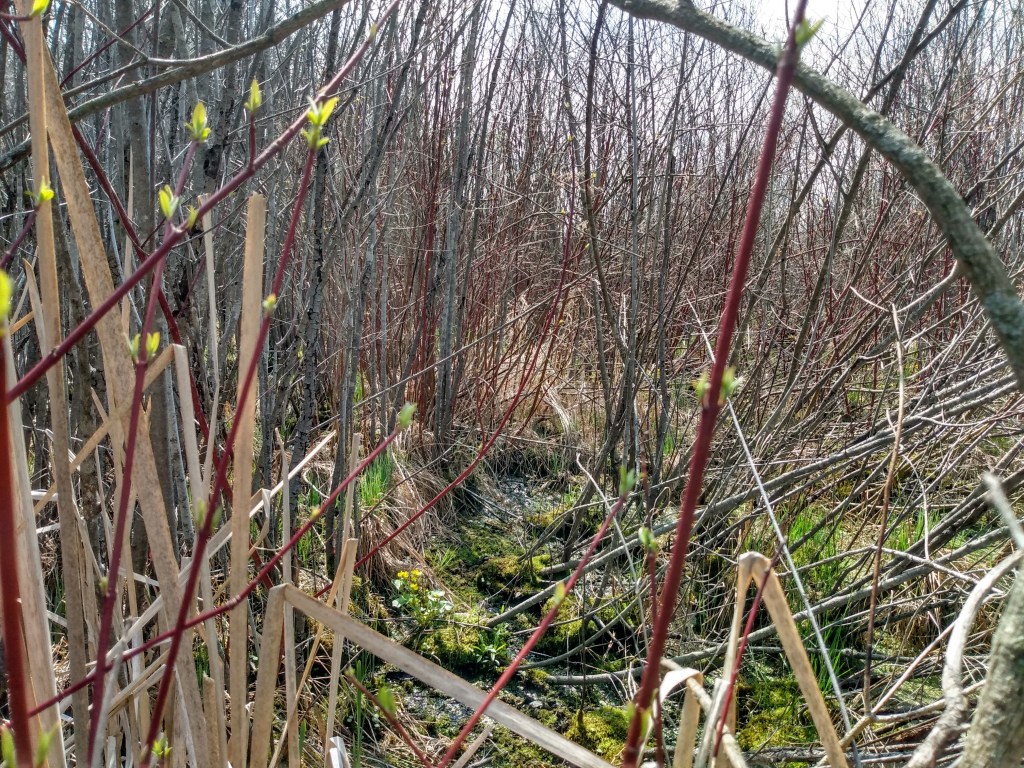
allen creek wetlands is a small wetland complex of wet sedge meadow, wet prairie, and fen along allen creek, which flows into the rock river a bit south of the site. access is limited, but we were able to have some fun interaction at the wetland’s edge. a lovely stand of marsh marigolds said ‘hi’ from the ditch on the other side of star school road.

a.

the ripe smell

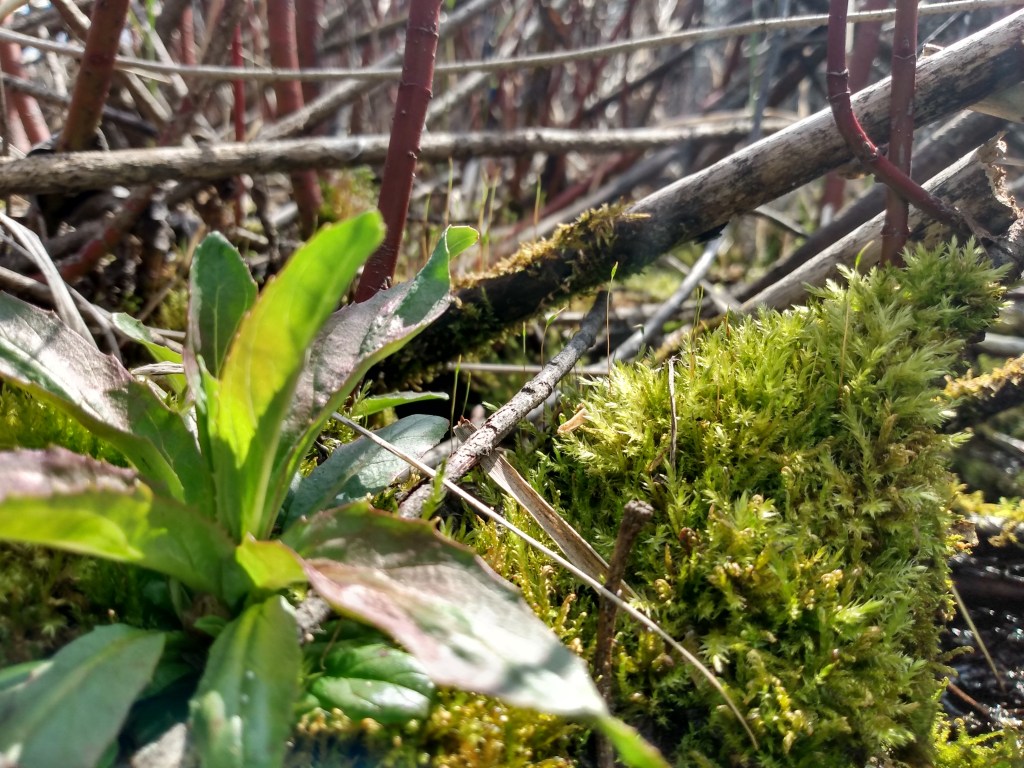
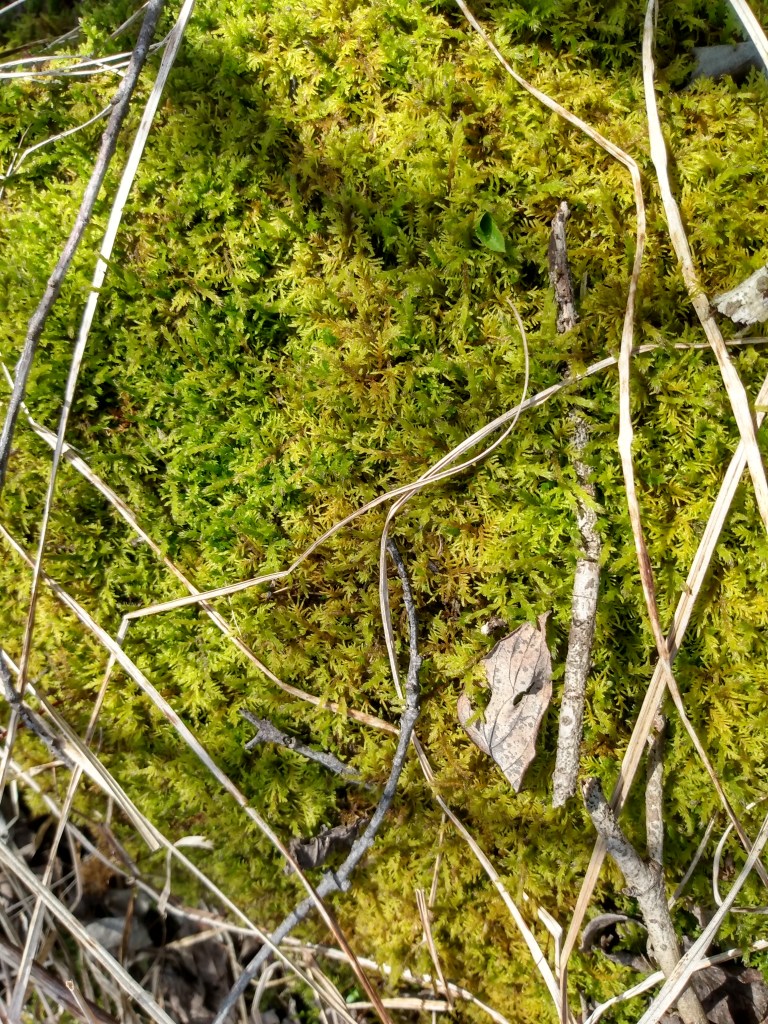
of ropey gametophytes—

kids on the moss

b.

the deeps of life

duckweed, branch

marsh marigold in sun

sna poems, supplementum anthropocenum #8: black hawk island

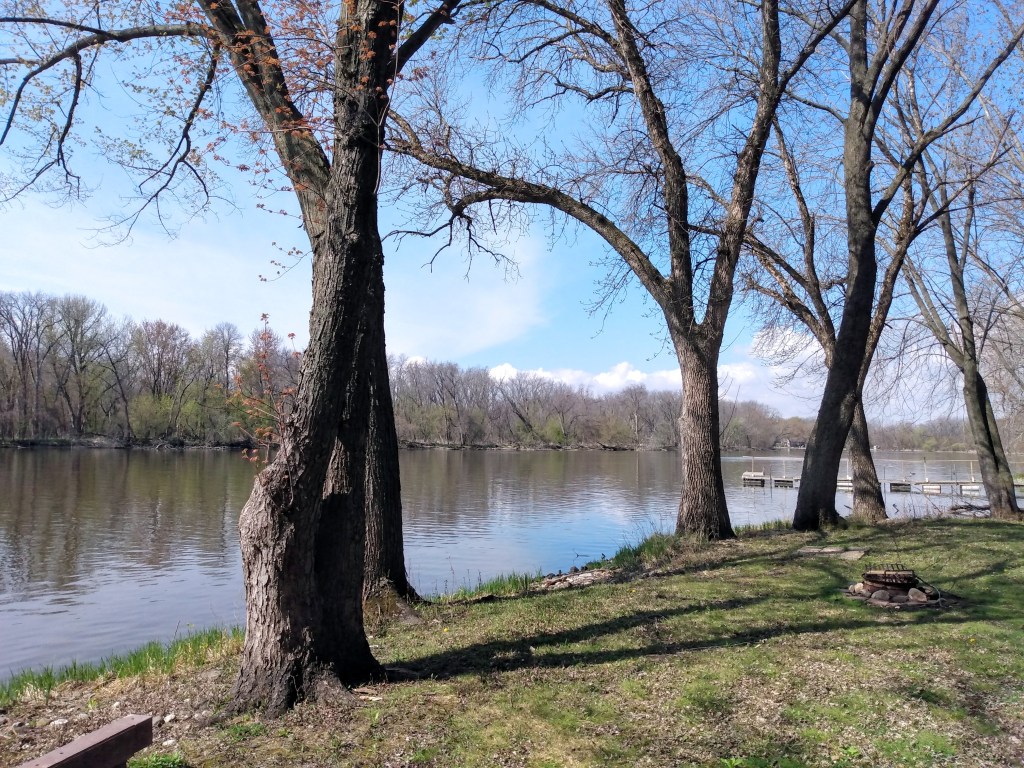
black hawk island is a strip of low-lying land on the rock river near fort atkinson, wisconsin and lake koshkonong. it also just so happens to be the nearly life-long home of wisconsin’s preeminent poet, lorine niedecker. with my growing admiration of niedecker’s work over the last few years, it was a bit of a pilgrimage to visit her cabin and be physically present for the first time where her “life by water” occurred.

my own early life was supported and shaped by the same river, downstream, flowing past the edge of the glacial outwash fan i grew up on, and i admit to a certain naive camaraderie with lorine on account of this riparian confluence. either way, it was fantastic to have a few spare moments where she lived and made.

we found

ourselves there—

water

everywhere

sna poems # 76: rose lake

rose lake is a shallow seepage lake surrounded by wetlands and hills. the western end has a large floating mat of sedge, grass, and rushes! lots of wildflowers sprinkled all over the forested hills skirting the shores. also, the wetlands and mudflats are teeming with birds—my son decided to try perfecting his goose call while we walked…

first confirmed sightings of dutchmen’s breeches and a couple anemone species for me, and we could hear sandhill cranes calling out from the other side of the lake, out of sight. a joy of a walk.

a.

cataracts white fluming

brushing the mucked lakeside

earth gives underfoot

b.

curving mineral

in mud & sluice

building into time

c.

new greening

low and lovely

anemone cousins

sna poems #75: butler lake flynn’s spring

set in kettle-moraine state forest’s northern unit, butler lake is a 7-acre marl-bottomed lake with surrounding sedge meadow, and flynn’s spring is a small spring brook that flows into the lake. a former tamarack swamp has all but died off, tho’ tamaracks are growing in other sites now.

rising above the western shore is parnell esker, which is four miles long, is 5-35 ft. tall, and was formed by a sub-glacial river that filled in with gravel and other sediment during the last glaciation.

i hope to get back to spend more time here some day, since i had to get back to the city fairly quickly after i climbed to the eskertop. (continuing note: this was the last flip-phone visit, so these images are still low-res.)

a.

the sedge’s show

quiet and waving

sun out from clouds

b.

footfalls and lamb’s ear

on the eskertop—

some are soft, some rough

c.

do you hear the tamaracks

sing as they drown?

birdsong on the water

sna poems, supplementum #21: kettle-moraine state forest northern unit, greenbush trails

the kettle-moraine state forest is a long, delightful gash of interlobate moraine that formed from the tussling of the green bay lobe and lake michigan lobe of the laurentide ice sheet as they advanced and retreated over thousands of years.

on this particular trip, i hiked to the top of a morainal ridge and sat on a rock to read phyllis walsh’s book river. if you’re a lover of short, dense poems, you should certainly check out walsh’s hummingbird press, if you haven’t already. and check out their HUMMINGBIRD: Magazine of the Short Poem. another wisconsin poet (in addition to lorine niedecker) inspired and encouraged to dense, imagistic poetry by cid corman. the poems below are imitative of those found in the river collection.

(note again: still the flip-phone trip; low res images.)

a.

april arctic air

crane-call answers to walsh’s

poems on the crest

b.

cloudy day

liverwort blooms

on ice’s relic

sna poems #73: muehl springs

muehl springs is largely a sedge meadow formed by springs, with some woods nearby. the whole is situated on rolling ground moraine and very near the more dramatic interlobate moraine that features so dominantly in the area.

it was a nice, quiet visit with mushrooms, mayapple, and lots of sedge.

a.

birch and oak share

a sloping glacier’s gift

of gravel and ten-thousand years

b.

the sedge-maze and cattail alleys

we defer to crane and goose—

redwing flashing trill

sna poems #72: rhine center bog

rhine center bog is a bog lake formed within a kettle, the depression left by a melting block of buried glacial ice. tamaracks to the south, a mesic hardwood forest on the uplands, and dense, boggy ground all about.

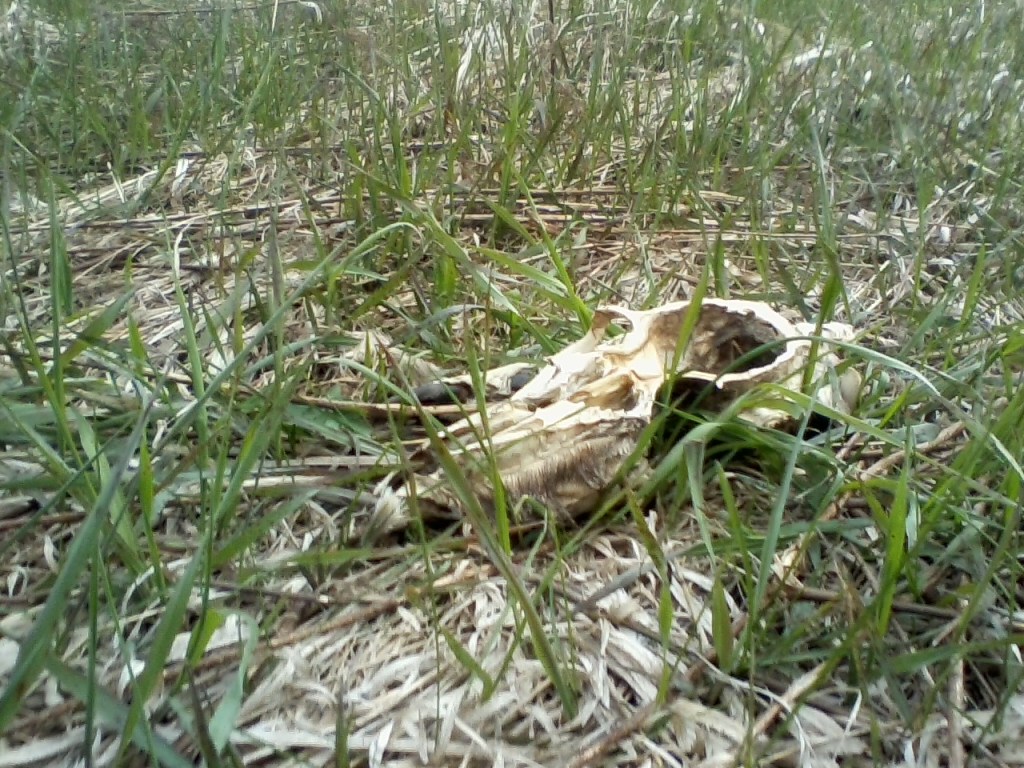
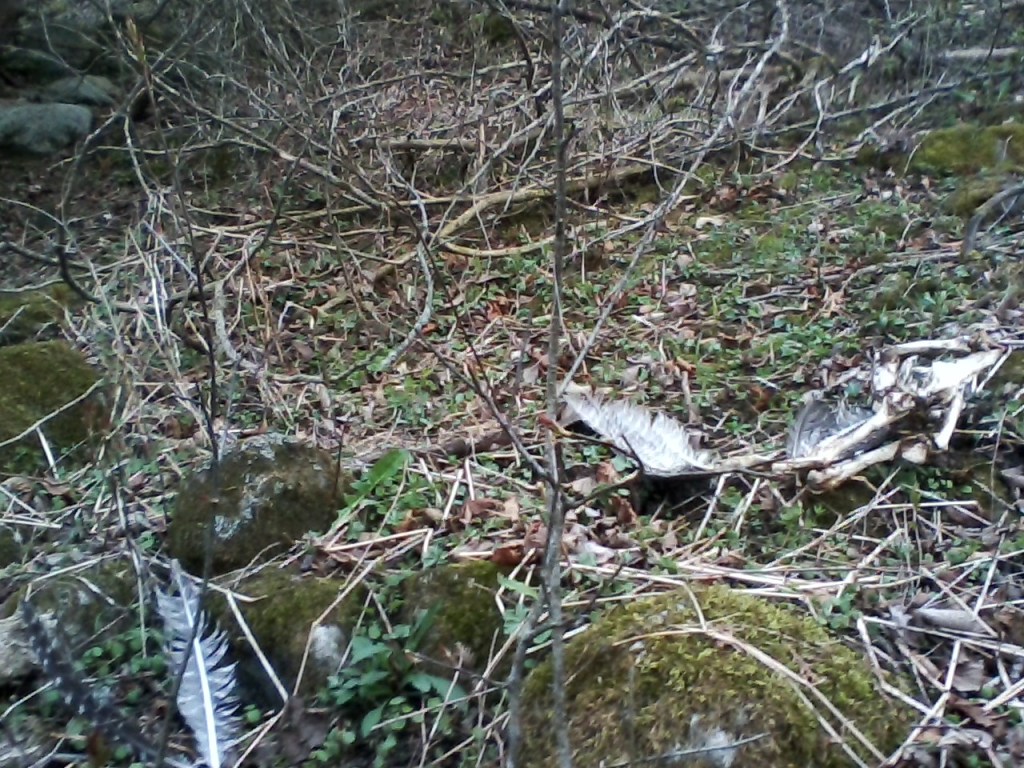
my trip was punctuated by light submersion in the peat (with appropriate footwear) and by the leavings of animal and bird corpses—the latter a poignant reminder of the aspect of nature walks we don’t often like to think about. and caution: a few pictures of the remains (not too graphic) appear after the final three-liner.

(note again: still on the excursion with the flip-phone, so photos aren’t all that clear.)

a.

the bog exhales with each step

under marsh wren’s tone-spray,

here where piling tussocks reign

b.

skunk cabbage

deer scat:

sphagnum perch

c.

yellow birch conspired with moss,

offered an island for human bones—

no names for birds all around

d.

fungus and tooth

would make quick work

if i fell and didn’t get up

sna poems #71: cedar grove hawk research station

positioned on a broad beach of glacial lake algonquin, cedar grove hawk research station is an active area for raptor migrations and has served as a banding and recording site for research for over 60 years. i learned that it has the longest running activity of banding and recording in north america, which is something.

there were a great many birds singing the day i visited, and while i’ll admit i couldn’t identify a number of them by their songs, i’ll also submit i simply didn’t care as i sat on the hillside in the morning air.

as this is a more sensitive site, i’m very grateful to the wisconsin dnr for permitting me to visit!

(note again: photo quality won’t be as high as normal here and in the next few posts, as i used the old flip-phone for this excursion. though in ways i like the lower res for this project sometimes; it seems to fit the immediacy and spontaneity i’m aiming for here. and i like to use old technology anyway—i still listen to audio cassettes and things like that…)

a.

past sand pipers

over graves to this place

where the downed trees lie

b.

i keep to the ridgeline

shore of a now-gone sea

grown thick and hoary with birdsong

c.

thorns pierce on hillside

gathering damp toward the pines

warbling on above

sna poems, supplementum #20: amsterdam dunes preservation area

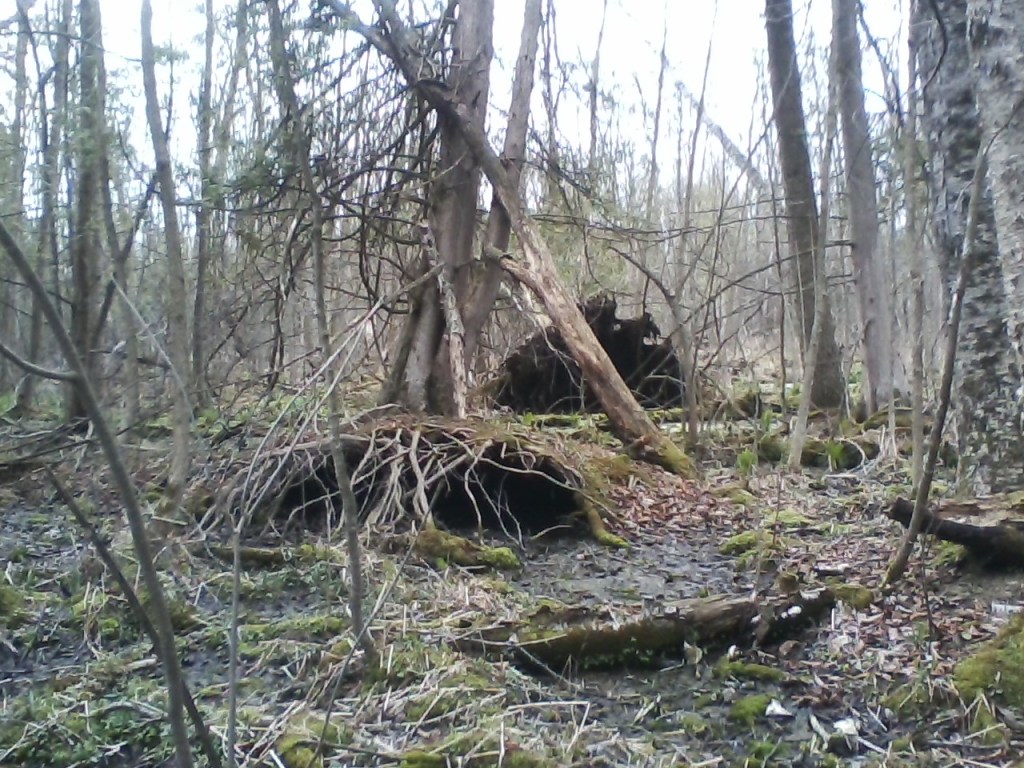
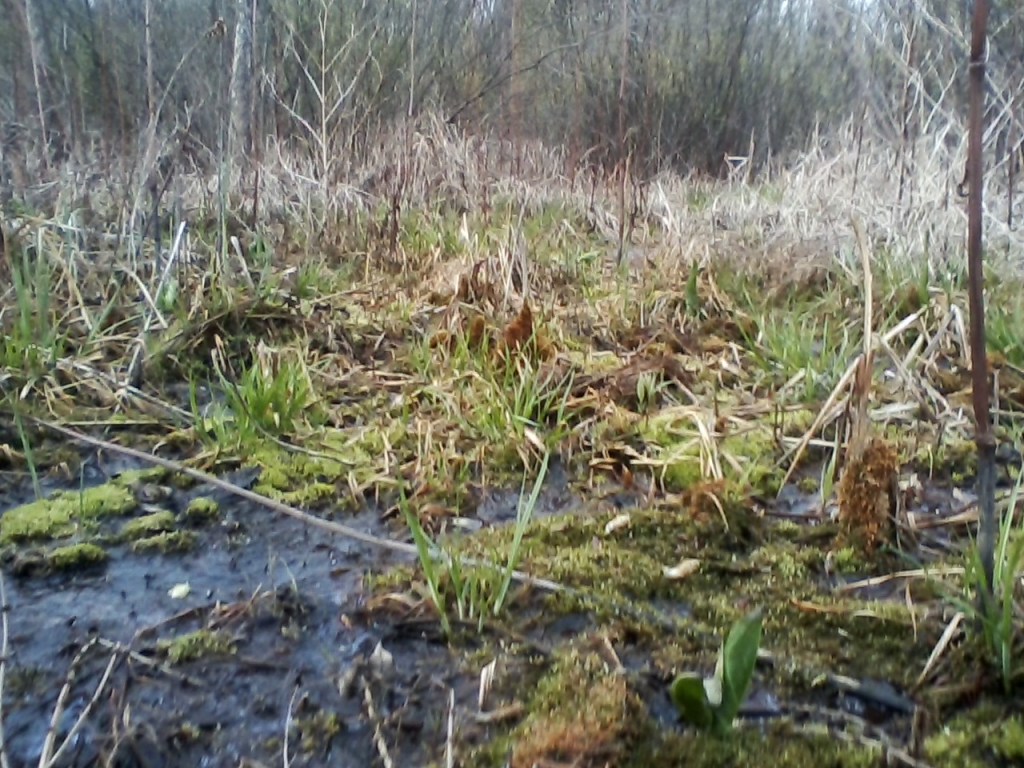
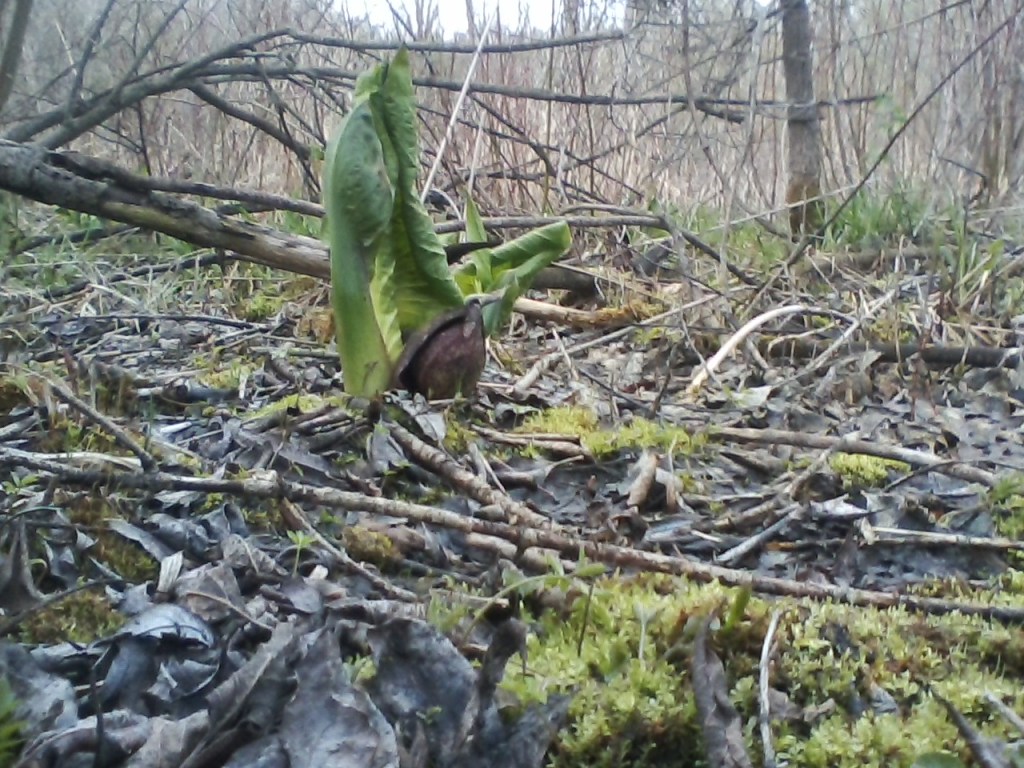
amsterdam dunes preservation area is a 328-acre preserve made up of lake michigan shoreline, rare sand dunes, forest, and wetland areas. somehow it avoided development. there’s also a little playground. direct access to dunes on lake michigan this far south in wisconsin is uncommon, so thanks to sheboygan county for tending this piece of land and opening it to the public!

(note: photo quality won’t be as high as normal here and in the next few posts, as i used the old flip-phone for this excursion. though in ways i like the lower res for this project sometimes; it seems to fit the immediacy and spontaneity i’m aiming for here. and i like to use old technology anyway—i still listen to audio cassettes and things like that…)
a.

spine against dune

cormorants over waves
the sun shining now

b.

thinnest ray of silver water—
field shifting slow downhill—

finds a linear tidal pool