in my ongoing concern for eco-spirituality amidst our machine- and efficiency-obesessed age, i wrote up a brief intro to the recent message from the bishops’ conferences of asia, africa, latin america, and the carribean calling out the need for real action at/from cop 30 later this year.
they really go for it, using words like “degrowth” and “colonial extractivism” and call out the financialization of the natural world and call for “alternatives to the capitalist model.” it’s important stuff that i pray regularly we folks in the global north will start taking seriously.
for what it’s worth.
also, a happy st. aethelwold’s day tomorrow to one and all!
i was enjoying one of the quiet joys of life this morning, having coffee and conversation with a friend on a cool summer morning. he was (kindly) concerned for me, given that he’d seen the day before that i’d published yet another essay on generative software’s (“ai”‘s) intersection with higher ed.
i appreciated the concern, but i’ve mostly made my peace with our imperialist technologists’ ongoing hyping of their statistical probability software and their grand (half-baked) visions of technological glory.
i keep writing on it b/c, as a thinker and writer of an ecological, spiritual, and anti-imperialist bent, i think the counter-position to the mainstream techno-optimism and -complacency needs regular articulation, in order to offer genuine alternative ways of thinking and being that aren’t backed by mass amounts of capital, yes, but also b/c given my current role at a university i have lots of time to think and dialogue about the current set of problems and so can say some things others will agree with but may not have had the time to think out explicitly in their own day-to-day. also, it’s just cathartic for me to get all these ideas and critiques out of my mind, and i (deo gratias!) had gotten decent at the essay-form before this all went down.
anyway. as i was trying to say something to this affect to my friend the other morning, i struck on one notion i hadn’t come across before. (the rambling and enthusiastic conversation is another form i’ve practiced a lot with very generous interlocutors.) and that’s about humanism in the present moment. i’ve recently begun reading more about the origins of humanistic education in the italian renaissance, since i’ve recently also been embracing the ignatian tradition of my jesuit university. but that’s another story.
midstream, i made the association of our imperial technological moment with the humanist recovery of the 15th century with the monastics of the early medieval period i’ve studied and learned from for the last twenty years. the story of the “dark ages” has flipped somewhat, in scholarly circles due to further work on all the intellectual and artistic work happening during the early medieval period in europe and in popular circles due to books like how the irish saved civilization. basically, the idea is that while the monasteries didn’t make revolutionary strides in culture, intellectual and otherwise, they did keep the lamps burning during centuries in which it was difficult to do a lot beyond keeping folks fed and safe. and later on, the early humanists brewed up their own recovery of classical learning in direct response to and in defiance of the overly technical and professional nature of education in the medieval universities.
taken together, these movements (resisting utilitarian education and preserving a tradition of culture in the face of hostile social currents) give us a sense of where humanists are now. in the face of the whole technique-obsessed mode of civilization, the firehose of “content” in online spaces and the devotion of so many to the feed as a cultural form, and the techno-imperialist pushing of generative software (what we’re calling ‘ai’ in capitulation to industry), humanists cannot always get heard over the broiling cacophany. but we can trim the lamps and keep them burning—while software is trained without consent on artists’ and intellectuals’ work, while education is coerced into ham-fisted applications of industrial statistical-probability generators in their classrooms, while humans are conditioned into a culture that (at least in some sectors) sees interacting with certain software systems as “good enough” substitutes or at least corollaries to social and romantic relationships, etc. while the guys (and it’s largely guys) with capital spout off about colonizing space and “turbocharging” intelligence or whatever, we can keep the lamps of the long tradition of human art and thought burning. and, while not ideal, maybe it’s enough.
i’ll try to do more, and lots of folks (some of whom i agree with on lots, some of whom i would agree with on very little) will try to do more. but we’ll also hope that keeping the lamps is enough to get us thru to whenever larger groups of people want literature, philosophy, theology, history, and visual and aural arts in person again, when more of us want in-person culture again, when more of us want in-person communities that celebrate together again.
we’ll see. regardless, it was a good, convivial morning. +u.i.o.g.d.
here’s my latest, now up at inside higher ed, on the ways in which irreality is mediating between (interfering with?) students and instructors in higher ed.
how do we scrutinize reality together (the university’s general institutional mission) when we aren’t seeing it?
i’m realizing more and more that the humanist tradition of western education needs to constantly be clarifying how statistical probability software isn’t going to magically form knowledgeable, grounded, savvy humans and in fact throws them off the scent. if neoliberal productivity for its own sake is the goal, sure; but i can’t agree with that as a desirable end for education of any sort.
in the thick part of the term amid other family stuff going on too, apparently i completely forgot to announce that i had an essay published in the benedictine magazine spirit & life back in march.
it’s on mortification, which isn’t a terribly popular topic of essay writing these days, but i find it fascinating. it comes out of my ongoing research on and reading of the 17th-century benedictine dame gertrude more. especially the talks i gave at dame gertrude’s foundation of stanbrook abbey back in october.
the arbor ridge segment of the ice age trail (wisconsin’s state-wide trail more or less along the terminal moraine of the wisconsin glacier) goes thru my hometown of janesville. found out a few years ago that the ‘arbor ridge’ segment runs thru land that used to belong to my wife’s great grandfather. they used to run cattle there.
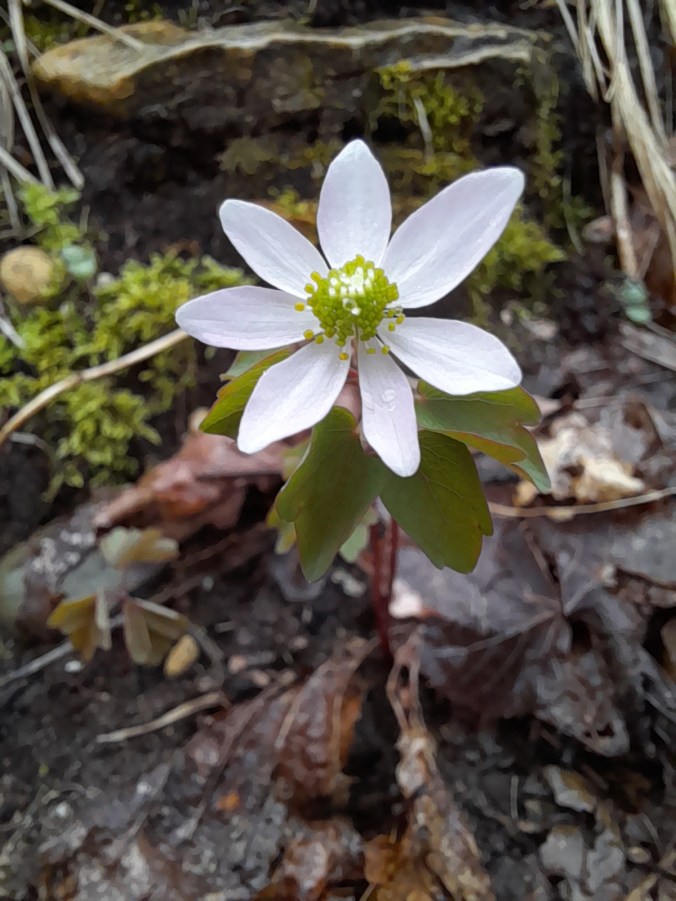
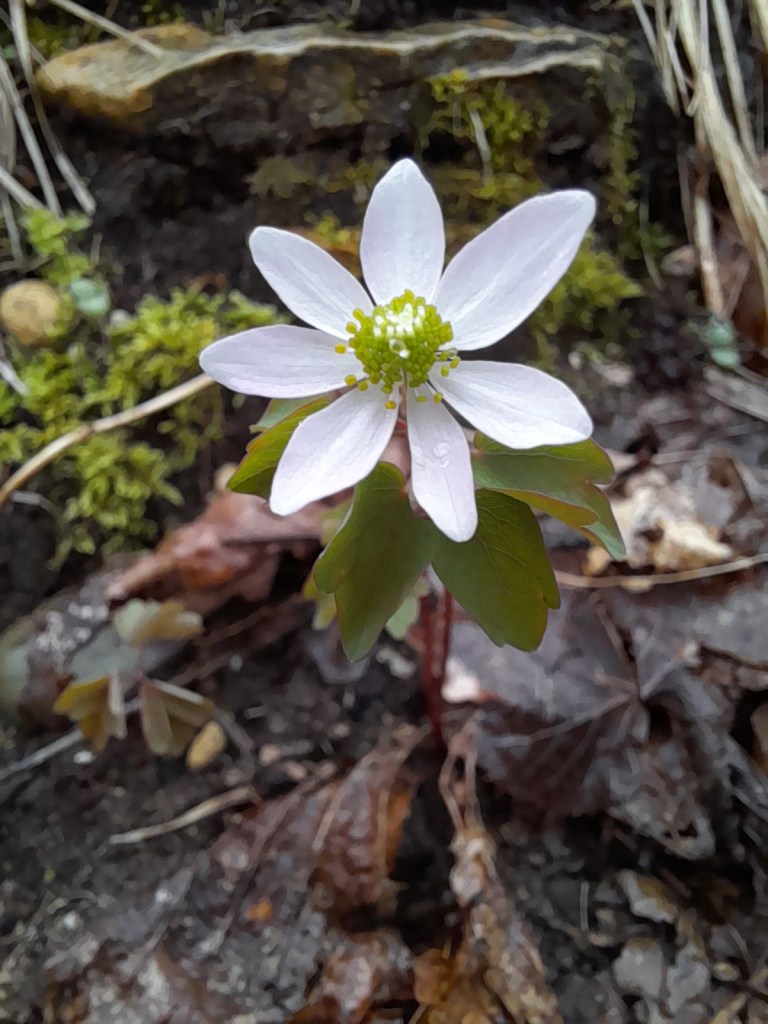
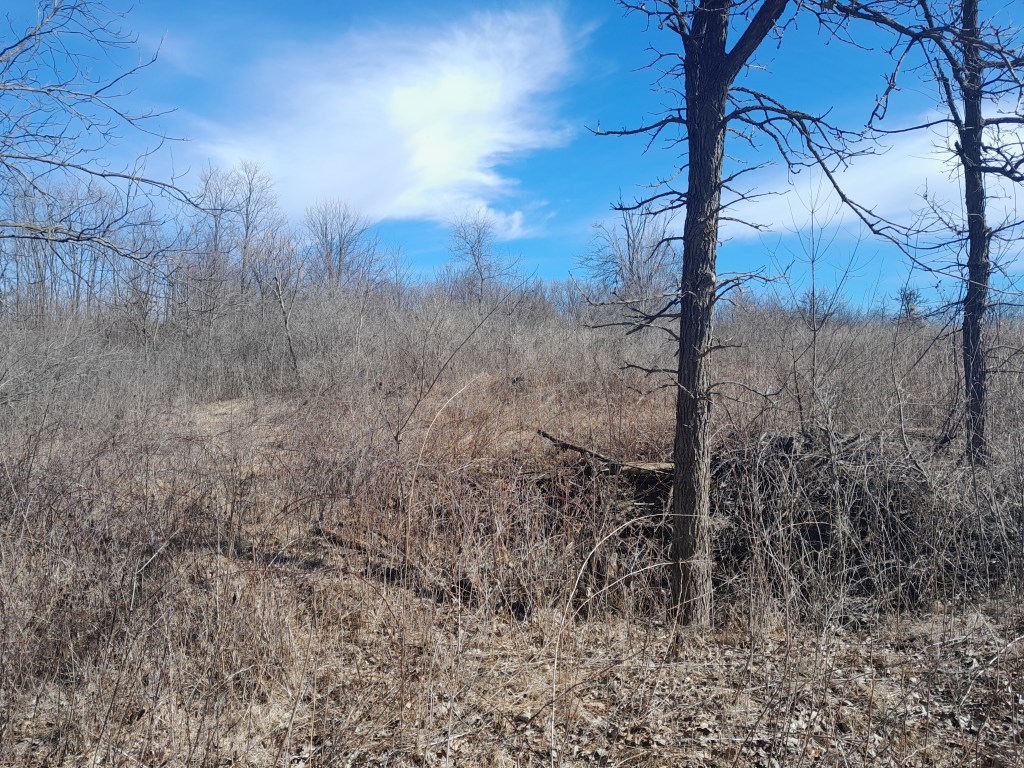
a beautiful walk on easter, tho the rain started coming down pretty good about half-way thru. can tell they didn’t plough due to the rue anemones all over–though i suppose you’d know from the steep ravine anyway. first id of carolina wren, and fun to realize that her great grandfather knew these trees (at least one massively old oak) and marsh creek.
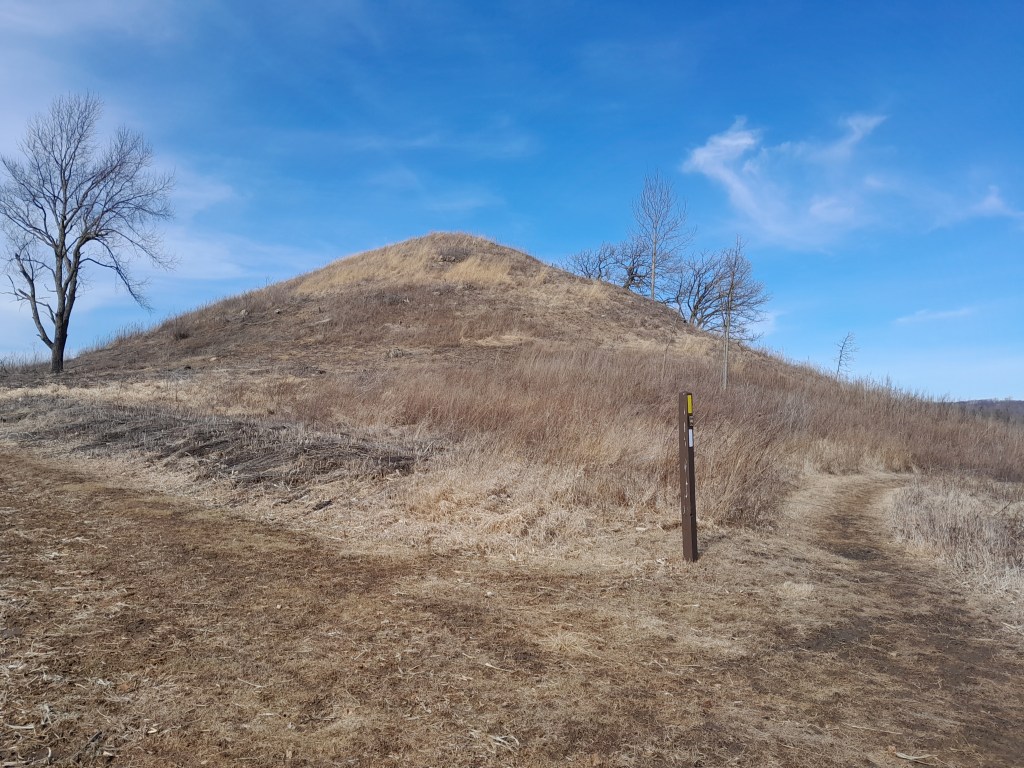
driving back from mineral point and cave of the mounds, we saw this dramatic bedrock hill that was fairly recently acquired for the wisconsin ice age trail. (would guess the bedrock is st. peter sandstone here, but couldn’t confirm.) this is just west of the johnstown moraine, where the wisconsin glacier stopped and retreated.
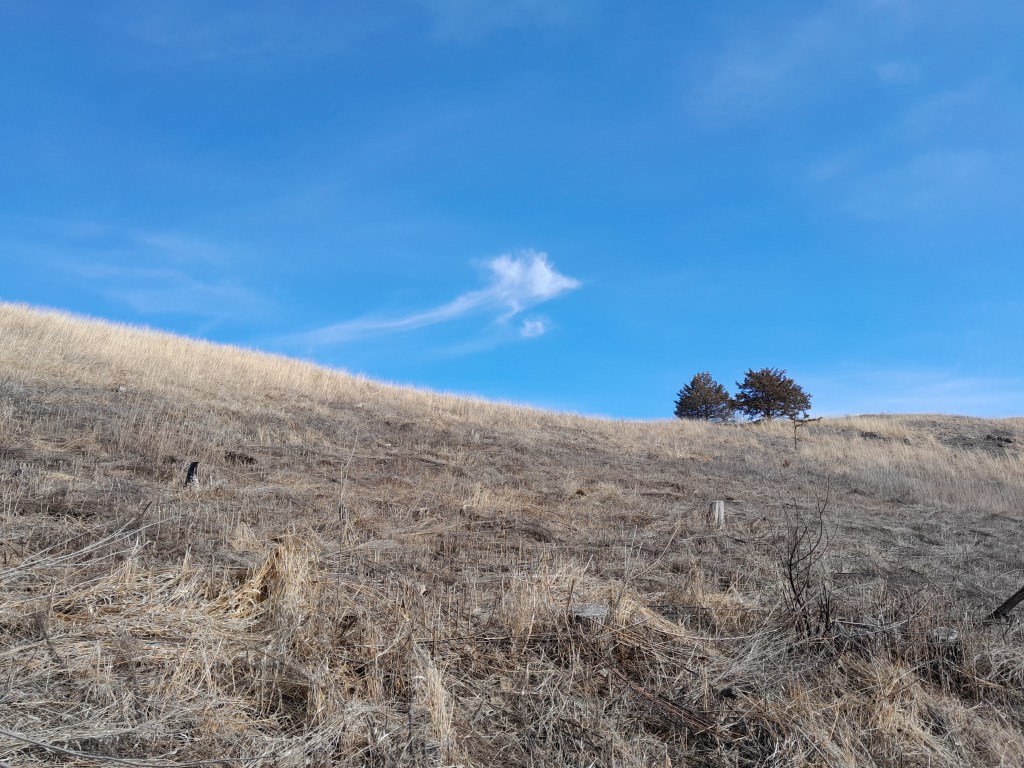
a nice and muddy circumambulation of the hill with remnant prairie on it set between farm fields. a bit of a bummer not to be able to climb up and see the surrounding terrain, but signs posted that they’re doing restoration work, so we celebrated being able to help support lots of other creatures having some space instead.
on my spring break we headed west. not too far west, but over past the johnstown moraine that marks where the last glacier stopped, into what we call round these parts the drifltess area.
lit out to mineral point and merry christmas mine, where early wisconsin settlers mined galena (a lead mineral) and dug the holes in the side of the hill to live in. this led to our nickname as “the badger state,” b/c they lived like badgers in holes in the ground, for a while at least. the depression in the picture above is an example of what’s left of them.
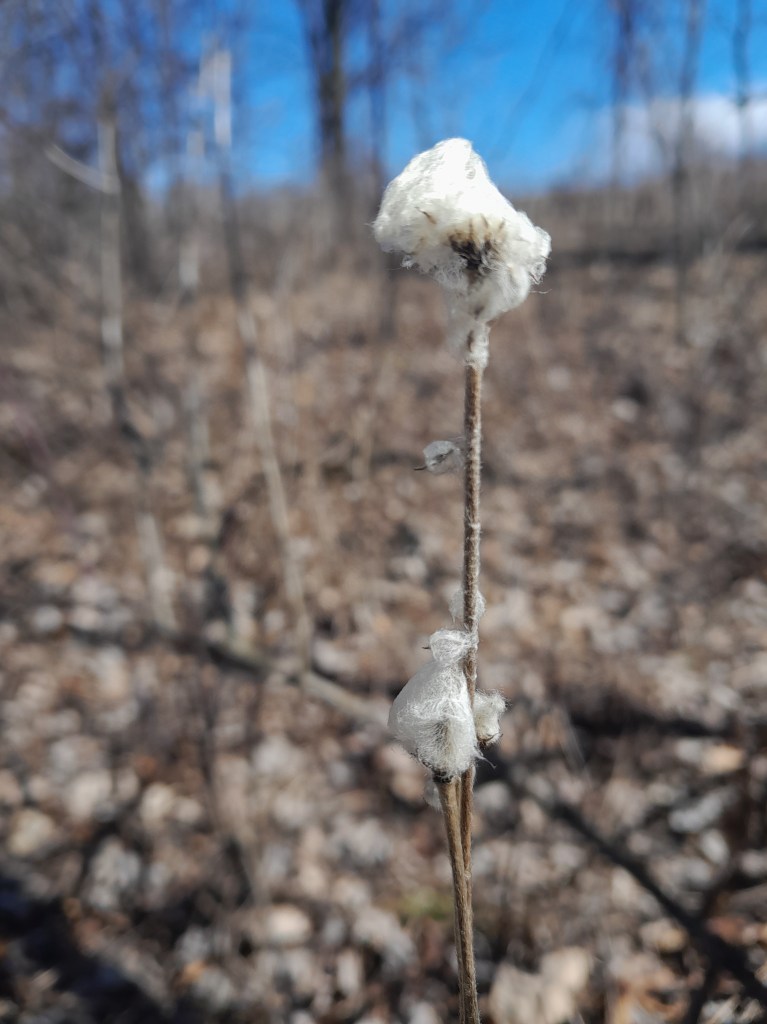
nice stop, lots of fun. hadn’t sat under the sun surrounded by plants (dead or alive) for a few months, so no complaints here. sandhill cranes coming back over head.
thanks to aaron lelito for the fun conversation! we talk kerouac and ginsberg, burning adolescent poems, old english as mother tongue, scholarship and art, earth and epistemology, and the artistic process.










 Jacob Riyeff