The students in our college at Marquette staff a university literary review, and I’m glad to be included in this year’s issue with other faculty and students.
“Deer Camp” is a poem on a visit to the Late Woodland effigy mounds (deer and water spirits) in Sheboygan, Wisconsin, and here it is on the review’s new website!
In the interest of continuing to promote appreciation of Old English poetry and the anonymous poets behind the poems, and because it’s Friday, here’s a reading of an Old English poem.
This poem appears in the Exeter Book between the two big sets of riddles. It may not actually be a fragment, and you can see from the editorial title (“Homiletic Fragment II”) that it hasn’t received much love from editors and scholars of Old English literature. But I think it’s a nice little work, offering an exhortation to wisdom in light of the sweep of salvation history, and based in part on Ephesians 4:5-6. It does a lot in a little bit of room.
I thought it was interesting enough to have Br. Paul Quenon, OCSO and Sr. Sarah Schwartzberg do readings of the poem in a forum essay I did in the journal Religion & Literature too, and they mined monastic riches from it readily.
Anyhow, here’s the poem and my translation. It’s included in my chapbook Lofsangas: Poems Old and New, which features translations of oft-neglected Old English poems like this one.
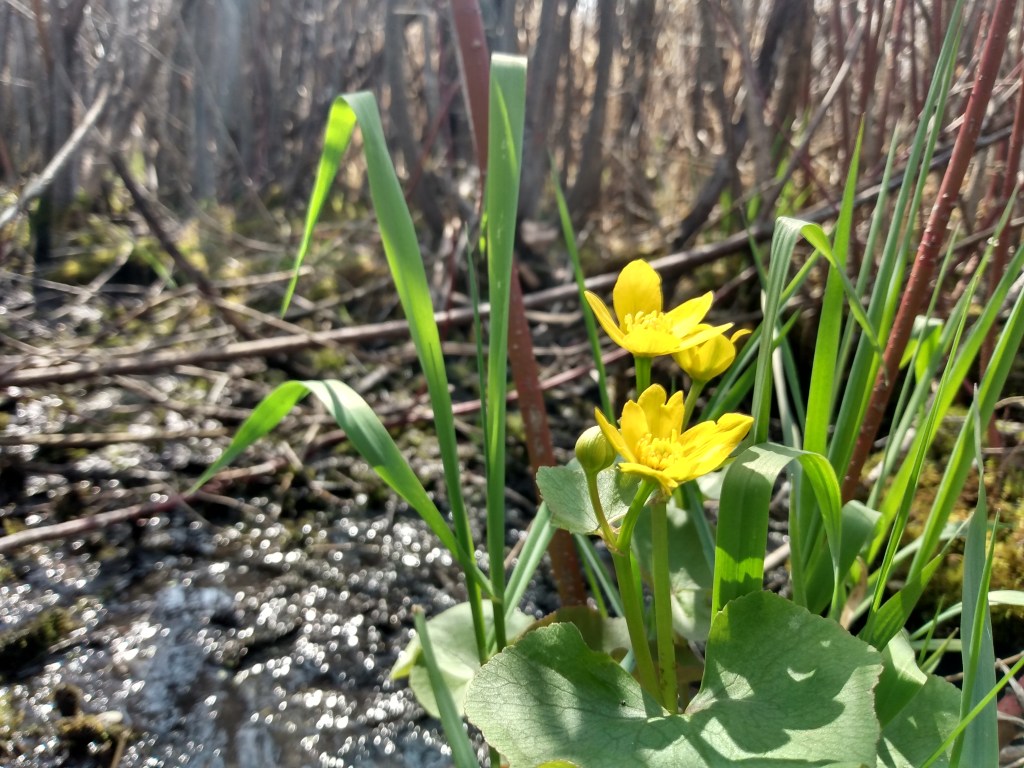
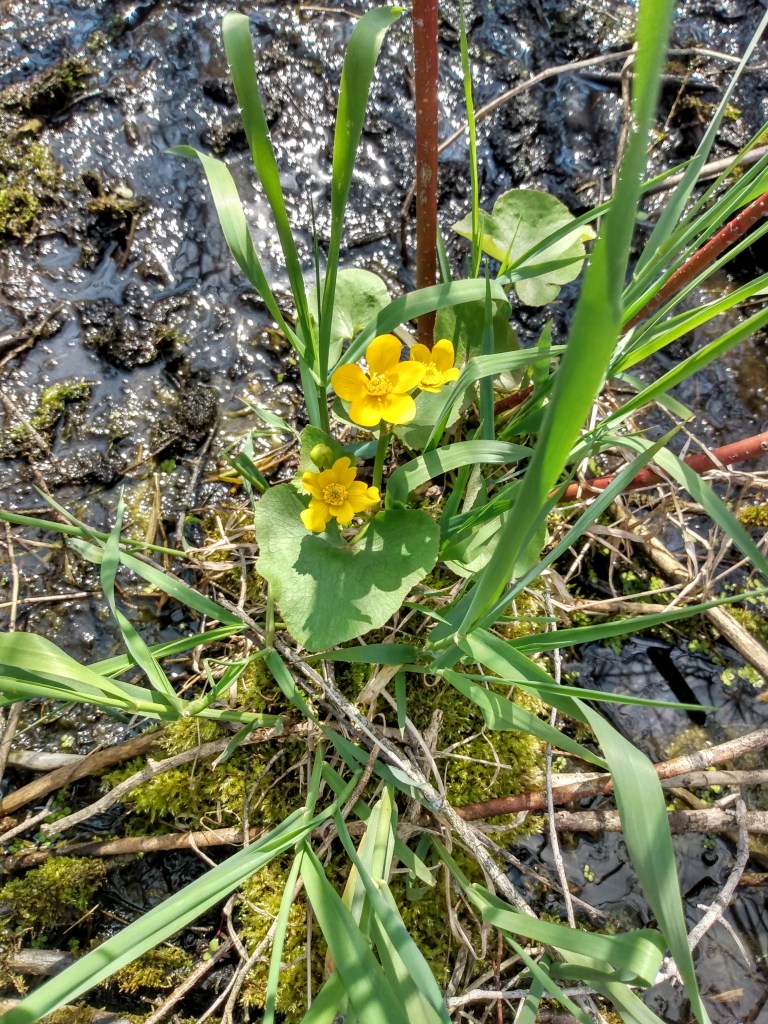
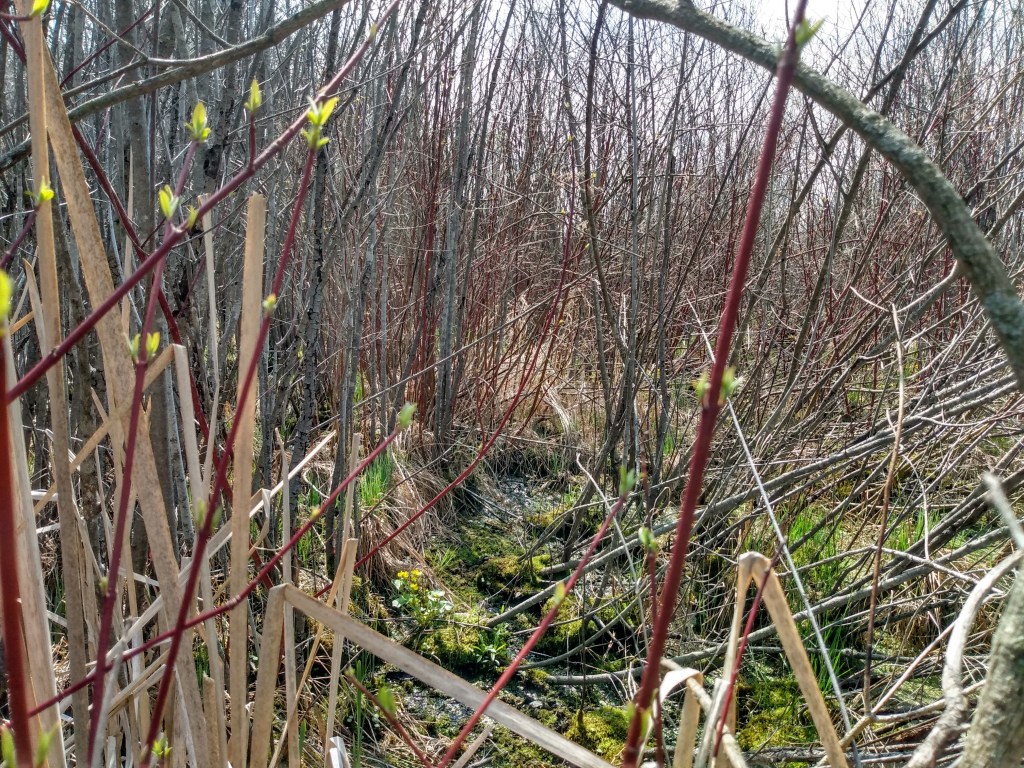
allen creek wetlands is a small wetland complex of wet sedge meadow, wet prairie, and fen along allen creek, which flows into the rock river a bit south of the site. access is limited, but we were able to have some fun interaction at the wetland’s edge. a lovely stand of marsh marigolds said ‘hi’ from the ditch on the other side of star school road.
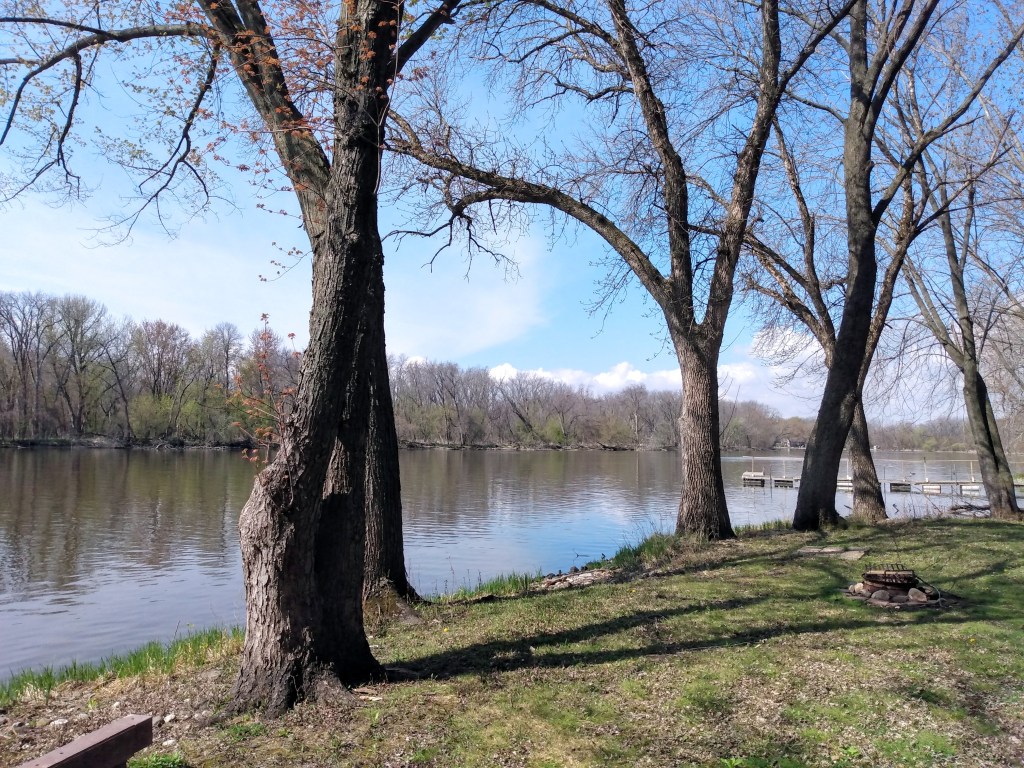
black hawk island is a strip of low-lying land on the rock river near fort atkinson, wisconsin and lake koshkonong. it also just so happens to be the nearly life-long home of wisconsin’s preeminent poet, lorine niedecker. with my growing admiration of niedecker’s work over the last few years, it was a bit of a pilgrimage to visit her cabin and be physically present for the first time where her “life by water” occurred.
my own early life was supported and shaped by the same river, downstream, flowing past the edge of the glacial outwash fan i grew up on, and i admit to a certain naive camaraderie with lorine on account of this riparian confluence. either way, it was fantastic to have a few spare moments where she lived and made.
rose lake is a shallow seepage lake surrounded by wetlands and hills. the western end has a large floating mat of sedge, grass, and rushes! lots of wildflowers sprinkled all over the forested hills skirting the shores. also, the wetlands and mudflats are teeming with birds—my son decided to try perfecting his goose call while we walked…
first confirmed sightings of dutchmen’s breeches and a couple anemone species for me, and we could hear sandhill cranes calling out from the other side of the lake, out of sight. a joy of a walk.
located at the headwaters of nichols creek, nichols creek cedars and springs is in the same preserve as nichols creek east cedars sna (see prior entry). this parcel has many springs and seeps running right into the creek, which is lined at parts with northern cedar. it was wonderful to visit a rushing stream as spring really ramps up, especially one with the scent of cedar all around.
(continuing note: this visit was still with the flip-phone, so pictures are low-res.)
set in kettle-moraine state forest’s northern unit, butler lake is a 7-acre marl-bottomed lake with surrounding sedge meadow, and flynn’s spring is a small spring brook that flows into the lake. a former tamarack swamp has all but died off, tho’ tamaracks are growing in other sites now.
rising above the western shore is parnell esker, which is four miles long, is 5-35 ft. tall, and was formed by a sub-glacial river that filled in with gravel and other sediment during the last glaciation.
i hope to get back to spend more time here some day, since i had to get back to the city fairly quickly after i climbed to the eskertop. (continuing note: this was the last flip-phone visit, so these images are still low-res.)
the kettle-moraine state forest is a long, delightful gash of interlobate moraine that formed from the tussling of the green bay lobe and lake michigan lobe of the laurentide ice sheet as they advanced and retreated over thousands of years.
on this particular trip, i hiked to the top of a morainal ridge and sat on a rock to read phyllis walsh’sbook river. if you’re a lover of short, dense poems, you should certainly check out walsh’s hummingbird press, if you haven’t already. and check out their HUMMINGBIRD: Magazine of the Short Poem. another wisconsin poet (in addition to lorine niedecker) inspired and encouraged to dense, imagistic poetry by cid corman. the poems below are imitative of those found in the river collection.
(note again: still the flip-phone trip; low res images.)
muehl springs is largely a sedge meadow formed by springs, with some woods nearby. the whole is situated on rolling ground moraine and very near the more dramatic interlobate moraine that features so dominantly in the area.
it was a nice, quiet visit with mushrooms, mayapple, and lots of sedge.
rhine center bog is a bog lake formed within a kettle, the depression left by a melting block of buried glacial ice. tamaracks to the south, a mesic hardwood forest on the uplands, and dense, boggy ground all about.
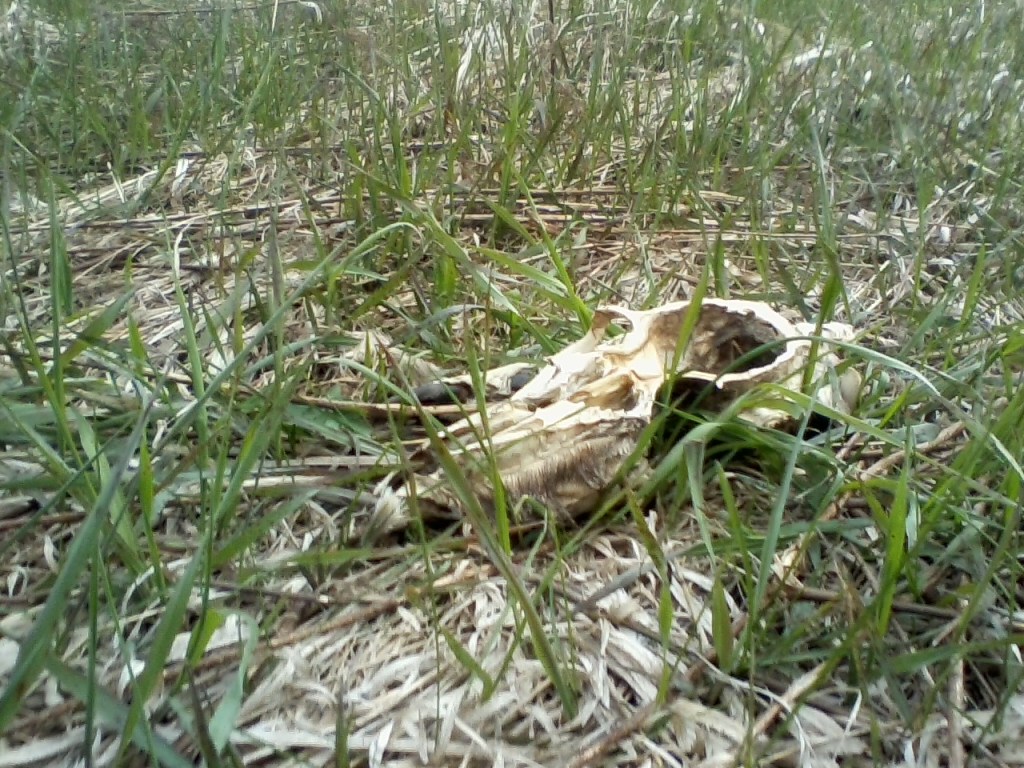
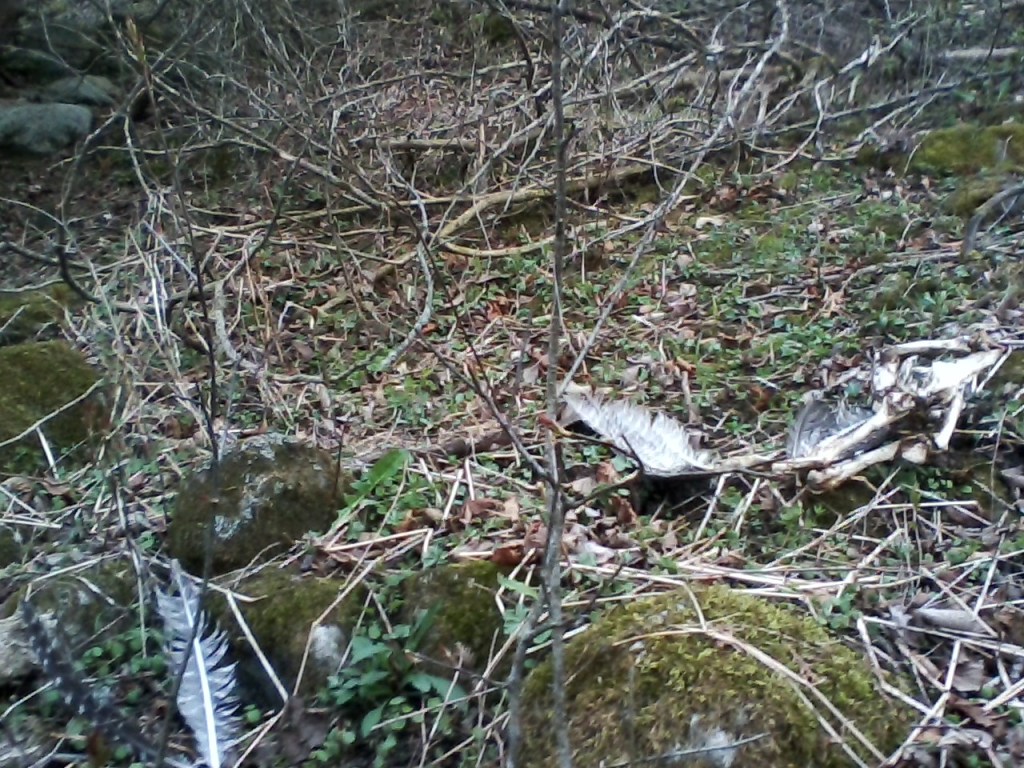
my trip was punctuated by light submersion in the peat (with appropriate footwear) and by the leavings of animal and bird corpses—the latter a poignant reminder of the aspect of nature walks we don’t often like to think about. and caution: a few pictures of the remains (not too graphic) appear after the final three-liner.
(note again: still on the excursion with the flip-phone, so photos aren’t all that clear.)